REVIEW · TURKEY
Authentic Turkish Antioch Breakfast with Local Sisters
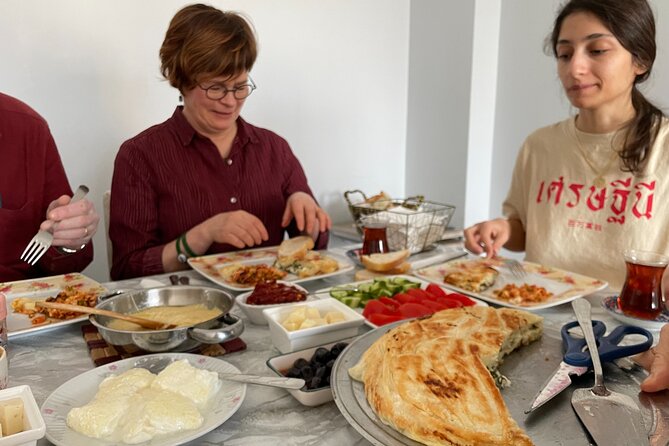
This is breakfast with real family energy. In a small home class, you learn how classic Turkish dishes come together, then you eat them right there. I love the chance to make menemen and the warm, genuinely local conversation that comes with it, but it can feel heavy if you are not into eggs, cheese, or sausage.
I also like the format: a max of 6 people means you get hands-on help instead of standing back. The class runs about 2 hours 30 minutes, starting at 10:00 am, so it is a nice morning plan if you want food culture without a long day.
One more consideration, since this is an at-home experience: you are not touring a big landmark. If you want constant walking, big sights, or lots of photo stops, this will be more about cooking and eating than sightseeing.
In This Review
- Key points at a glance
- Why a Turkish breakfast class feels like an invite, not a tour
- Your morning plan in Sarıyer: where it starts and what to expect
- From simit to a full Turkish spread
- Menemen: the eggs-and-veg skill you can reuse at home
- Muhlama (Kuymak): why cornmeal and cheese feel like comfort-food magic
- Eggs with sucuk: spicy sausage, egg richness, and instant flavor payoff
- Cheese, kaymak, and honey: learning the sweet-salty Turkish morning balance
- Conversation with local sisters, plus a cameo cat named Petra
- Price and value: what $65 gets you, and what makes it worth it
- Who should book this breakfast class, and who might skip it
- Should you book Authentic Turkish Antioch Breakfast with Local Sisters?
- FAQ
- How long is the Turkish breakfast cooking class?
- What time does it start, and where does it end?
- What dishes are included in the menu?
- Is the class in English?
- What is the group size limit?
- What is the cancellation policy?
Key points at a glance
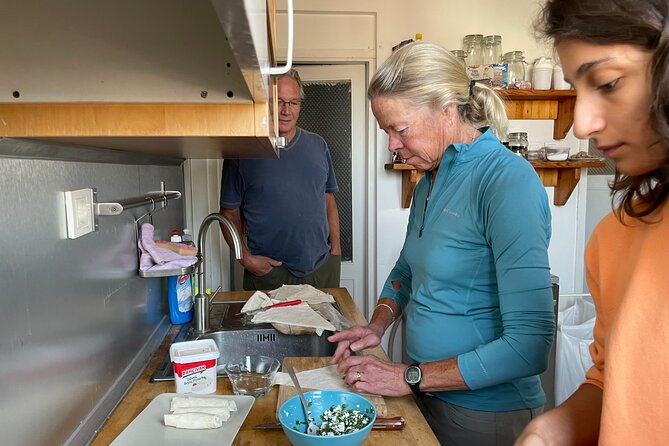
- Hands-on Turkish breakfast cooking in a home setting, not a demo-style class
- Menemen, muhlama (kuymak), and sucuk eggs as the hot, comfort-food core of the meal
- A spread with cheese, kaymak, and honey, so you learn how the sweet-salty balance works
- Starter simit to set the tone with a classic Turkish breakfast bite
- Small group size (up to 6) for more personal attention while you cook
- Conversation that feels real, including a mention of the family cat, Petra
Undecided? These Istanbul tours came up most often in the review pile.
- Istanbul: Bosphorus Dinner Cruise & Show with Private Table★ 4.8 · 44,561 reviews
- Istanbul: Daytime or Sunset Sightseeing Cruise & Audio Guide★ 4.8 · 14,430 reviews
- Istanbul: Bosphorus Dinner Cruise with Turkish Night Show★ 4.8 · 10,127 reviews
- Best of Istanbul 1, 2 or 3-Day Private Guided Istanbul Tour★ 5.0 · 8,922 reviews
Why a Turkish breakfast class feels like an invite, not a tour
Turkish breakfast is not just food. It is a whole morning rhythm: hot, savory dishes plus cold bites, all laid out like you have time to talk. That is why this kind of experience sticks. You do not simply taste, you learn the logic behind the dishes, the order things go in, and how Turkish home cooks think about eggs, cheese, and bread.
What I like most is the intent. The hosts invite you into their home culture and frame the class as friendship. That matters because Turkish breakfast is personal. Menemen is not one rigid recipe, muhlama is not only about ingredients, and cheese plates at home are chosen based on what fits the day. When you cook it with local sisters, you are not memorizing a tourist version. You are learning how people actually put breakfast together.
The other win is the small scale. With a maximum of 6 people, the host can watch what you are doing and correct the little stuff that makes the difference. That also means you can ask questions and actually get answers, not just listen while someone else controls the kitchen.
Your morning plan in Sarıyer: where it starts and what to expect
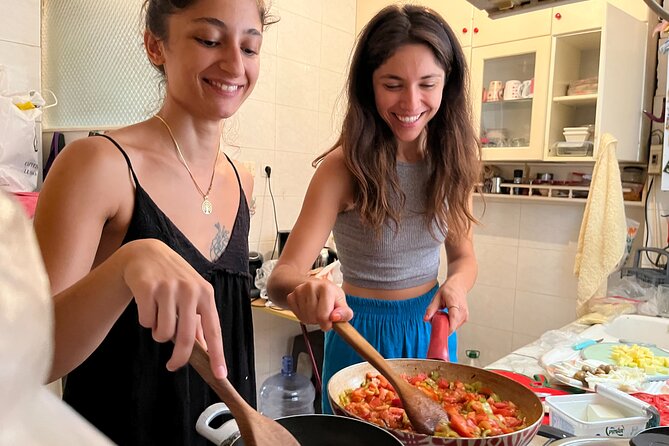
You meet at Huzur, Oyak Sitesi No:21, 34475 Sarıyer, Istanbul. The start time is 10:00 am, and the experience ends back at the meeting point.
Because it is in a neighborhood home, plan for a calm, indoor morning pace. You are not likely to spend the session running around. Instead, you will spend time cooking, tasting, and learning. The host will guide you through the main components, and you should expect plenty of conversation that helps you understand what you are eating.
Practical tips from the structure here:
- Wear shoes you can manage inside a home if needed. No one warned about footwear rules, so just keep it sensible.
- Bring a curious attitude toward eggs, cheese, and breads. The menu is classic and hearty.
- If you use public transportation, you are in luck. The activity is listed as near public transportation, so you can get there without relying only on taxis.
Also, English is the offered language. That is helpful for questions about technique, ingredients, and how to recreate the dishes at home.
From simit to a full Turkish spread
Turkish breakfast usually has a “warm base” plus a “cool complement.” In this class, simit begins the meal. Simit is that ring-shaped sesame bread you see in Turkey, crunchy on the outside with a chewy center. It is a smart starter because it gives you texture and salt right away. It also reminds you that breakfast is not only cooked food. Bread matters.
After simit, the course shifts into the hot, pan-focused dishes. This is where you learn technique, not just taste. Menemen, for example, is about how eggs and vegetables interact. Muhlama, or kuymak, is about cheese melting into cornmeal until it becomes thick and silky. Eggs with sucuk teach you how a spicy, cured sausage changes the flavor of eggs.
The class then rounds out with cold, creamy, and sweet items like varieties of cheese, plus kaymak and honey. That last part is not an afterthought. It is how Turkish breakfast balances richness with a gentle sweetness.
The result is a full spread you can recreate at home. Not in every detail maybe, depending on your local ingredient access, but in spirit: hot and cold, savory and sweet, bread and spoonable comfort.
Menemen: the eggs-and-veg skill you can reuse at home
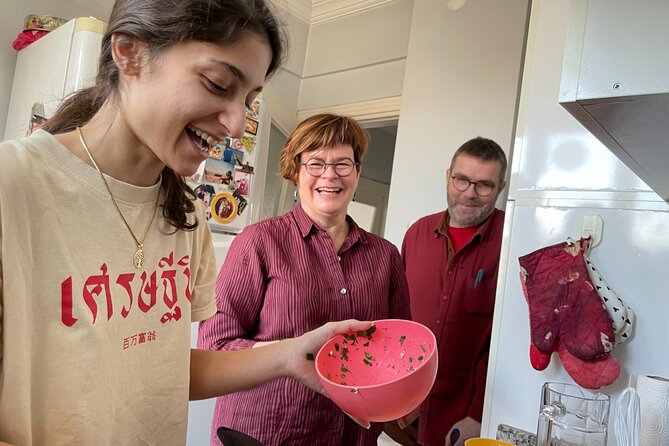
Menemen is the flagship Turkish breakfast dish on this menu. It is eggs cooked with vegetables, typically in a way that stays lively and comforting instead of drying out. The practical value here is simple: once you learn how to manage heat and timing for menemen, you can adapt the idea to other breakfasts.
In a home class format, the host can show you what to watch for:
- when the vegetables look ready for the eggs
- how the eggs should set without getting rubbery
- how you keep the pan lively so you do not lose all the moisture
Even if you have cooked eggs before, menemen has a distinct feel. It is not an omelet. It is more like a savory egg skillet with vegetables, meant to be spooned and shared.
I also think menemen is a gateway dish for people new to Turkish breakfast. It tastes familiar in the egg part, but it teaches you a uniquely Turkish approach through the vegetable mix.
- Istanbul: Bosphorus Dinner Cruise & Show with Private Table
★ 4.8 · 44,561 reviews - Istanbul: Daytime or Sunset Sightseeing Cruise & Audio Guide
★ 4.8 · 14,430 reviews - Istanbul: Bosphorus Dinner Cruise with Turkish Night Show
★ 4.8 · 10,127 reviews - Best of Istanbul 1, 2 or 3-Day Private Guided Istanbul Tour
★ 5.0 · 8,922 reviews - Istanbul: Basilica Cistern Fast-Track Entry and Audio Guide
★ 4.6 · 7,521 reviews
Muhlama (Kuymak): why cornmeal and cheese feel like comfort-food magic
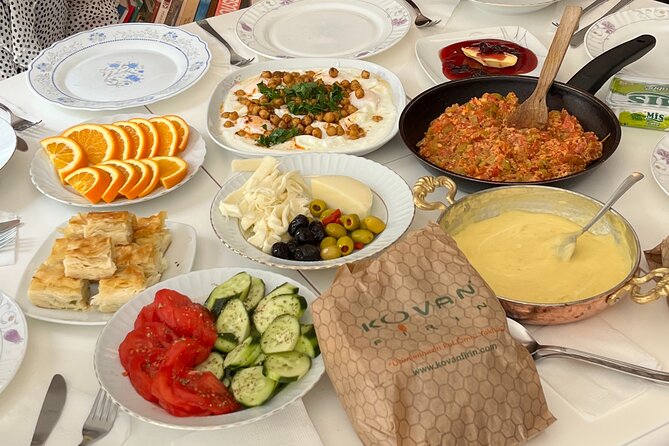
Muhlama, listed here as Muhlama – Kuymak, is cornmeal and cheese cooked together. The name variation matters less than the texture goal: you want a thick, spoonable mix that feels rich and cozy.
This is the dish where technique really matters. Cornmeal can go wrong if the heat is too high or the cooking time is rushed. Cheese can turn oily or separate if you push it. In class, you get guidance for that balance.
What you learn that is worth carrying home:
- how to build the right thickness
- how the cheese integrates into the cornmeal rather than sitting on top
- how to adjust so it stays creamy, not grainy
It is also a great dish for people who love “one-bowl” foods. You can eat it like a warm comfort spoonful, and it pairs well with bread like simit.
Eggs with sucuk: spicy sausage, egg richness, and instant flavor payoff
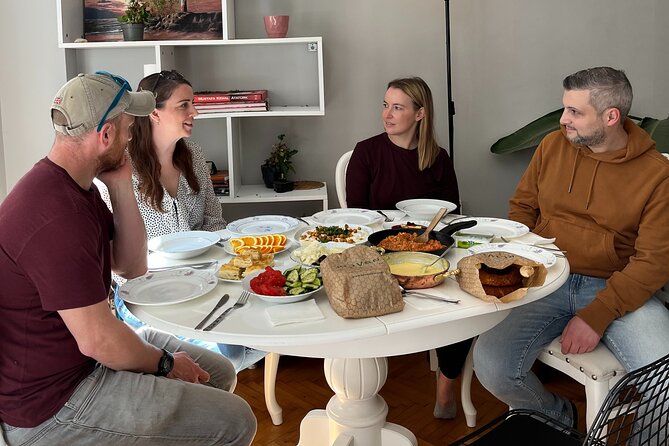
Another main is eggs with sucuk. Sucuk is Turkish sausage, often peppery and garlicky, and it brings a bold punch to breakfast.
This portion teaches you flavor layering. As the sucuk warms, it releases its spice and fat into the eggs. That changes the whole profile compared to plain scrambled eggs. If you have had spicy sausage before, you will recognize the idea, but Turkish breakfast versions have a specific savoriness and a hearty morning vibe.
The practical benefit: once you understand how sucuk behaves in a hot pan, you can use that concept with other breakfast eggs. Not the exact same ingredient mix, but the same payoff, savory and spicy.
If you are sensitive to heat or strong flavors, make a mental note before you book. This class is built around classic Turkish staples, and those are not mild by default.
Cheese, kaymak, and honey: learning the sweet-salty Turkish morning balance
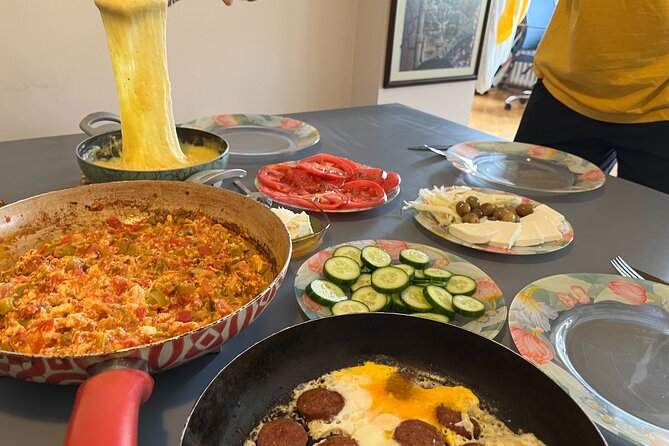
After the hot dishes, the menu shifts into varieties of cheese plus Turkish cream (kaymak) and honey.
This is where Turkish breakfast becomes its own experience. Cheese is not just a side. It is part of the main morning structure. Kaymak, in particular, is a rich cream that pairs naturally with honey.
Why that matters for you as a cook at home: this is a “how to combine” lesson as much as a cooking lesson. You learn that Turkish breakfast is not only about cooking. It is also about assembly and contrast:
- creamy elements like kaymak
- salty or tangy cheese
- the floral or sweet top note from honey
When you taste it together, the flavors make sense immediately. You start understanding how to build a plate so it does not feel monotonous.
Conversation with local sisters, plus a cameo cat named Petra
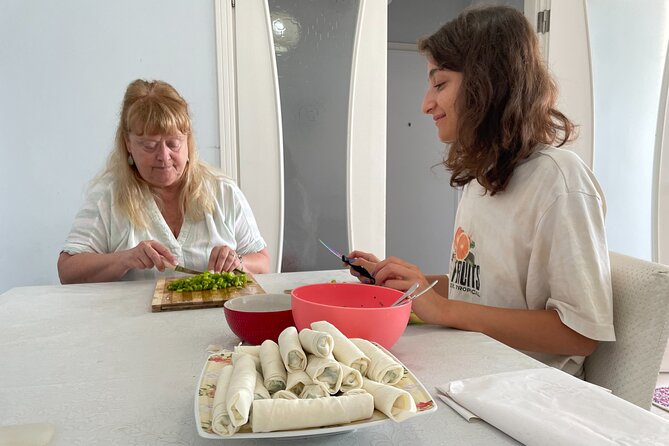
Food classes can be awkward if the talk stays stuck on instructions. Here, the reviews signal that conversation is a real part of the experience. You get time to talk with the hosts, and the atmosphere feels friendly and informative.
One charming detail that shows up in feedback is the family cat, Petra. If Petra is around during your visit, expect a calm cameo and a few laughs from the household rhythm.
I also appreciate the human help element. People describe the hosts as genuinely supportive, including assistance with transportation needs. That kind of practical kindness is more useful than it sounds. Istanbul can be confusing, and knowing your next step matters.
Price and value: what $65 gets you, and what makes it worth it
At $65.00 per person for about 2 hours 30 minutes, this is not a “quick bite” experience. It is a real cooking class plus a full breakfast spread.
Here is the value logic I see:
- You get multiple dishes, not just one small tasting. The menu includes menemen, muhlama (kuymak), eggs with sucuk, cheese, kaymak and honey, plus simit.
- Small group size improves the quality of instruction. With up to 6 people, you are more likely to get hands-on attention.
- You leave with recipes to try at home. That turns the experience into something you can use, not just something you ate once.
Compared to paying for food-only tastings, you are paying for technique, guidance, and meal understanding. If you love cooking and want Turkish breakfast in a way you can repeat, $65 can feel very reasonable.
One note: if you mainly want a sightseeing tour, this may not be your best match. Think of it as culinary culture, anchored in a home.
Who should book this breakfast class, and who might skip it
This is a great fit if you:
- want Turkish breakfast culture, not just restaurant samples
- enjoy hands-on cooking and learning techniques you can use again
- like small-group experiences where you can ask questions
- want a morning plan that ends where it starts
You might skip it if:
- you strongly dislike eggs, cheese, or sausage
- you are looking for big outdoor sights or a walking tour
Also, it is listed as offered in English, and it runs at 10:00 am. If mornings are your worst time, you may prefer an afternoon activity.
Should you book Authentic Turkish Antioch Breakfast with Local Sisters?
If your idea of a great Istanbul morning includes cooking, conversation, and a full spread you can recreate, I think you should book. The strongest reasons are consistent: hands-on instruction, the classic menu anchored in Turkish breakfast staples, and the friendly, local feel that makes the class feel more like an invite than a performance.
My advice for making the most of it: come hungry and ready to learn. Even if you have cooked eggs before, take the time to watch the technique for menemen and the texture goals for muhlama. That is where your at-home success will come from.
If you want to be able to cook Turkish breakfast at home, this class gives you the roadmap. If you only want food with zero cooking involved, you might be happier with a restaurant meal. But if you want both flavor and skill, this is a smart buy.
FAQ
How long is the Turkish breakfast cooking class?
It lasts about 2 hours 30 minutes.
What time does it start, and where does it end?
It starts at 10:00 am and ends back at the meeting point.
What dishes are included in the menu?
The main dishes listed are menemen, muhlama (kuymak), eggs with sucuk, and a variety of cheese, plus Turkish cream (kaymak) and honey. Simit is included as a starter.
Is the class in English?
Yes. The experience is offered in English.
What is the group size limit?
The activity has a maximum of 6 travelers.
What is the cancellation policy?
Free cancellation is available. You can cancel up to 24 hours in advance of the experience for a full refund.