
REVIEW · EPHESUS AND THE HOUSE OF THE VIRGIN MARY
Cappadocia & Ephesus & Pamukkale 4Days 3Nights Tour by Plane
Turkey in four days feels almost unreal. You’ll see three of Turkey’s biggest drawcards, with local guides and skip-the-line entry tickets, while traveling by air instead of spending half your life on buses. It is a fast hit, but the route is designed to keep you moving smart, not randomly.
I especially love how Cappadocia gets treated like more than postcard scenery, with places like the Goreme Open-Air Museum and fairy-chimney valleys tied to real history. I also like the Ephesus day, because the guide-led walk takes you past the main monuments in one flowing downhill route, then adds the Virgin Mary House and Artemis Temple.
The main drawback is pace and early starts. You have pickups around 04:00 in Istanbul, plus the Pamukkale travertines ask you to walk about 0.5 miles without shoes, so plan your comfort first.
In This Review
- Key Things That Make This Tour Worth Your Time
- Price and Logistics: What $1,499 Buys You in Real Life
- Istanbul to Cappadocia: The Day One Magic Trick
- Goreme Open-Air Museum: Where the Rocks Explain the Faith
- Uchisar, Pasabag, and Love Valley: The Fairy Chimney Sweep
- Avanos Pottery Village: Red Clay on the Red River
- Day Two Morning: Optional Hot Air Balloon at Sunrise
- Blue/Green Style Cappadocia Day: Rose Valley and Cavuşin
- Kaymaklı Underground City and Pigeon Valley Views
- Ephesus: A One-Day Ancient City Walk That Actually Makes Sense
- Virgin Mary House and Isa Bey Mosque: Two Spiritual Stops
- Pamukkale Thermal Pools and Hierapolis: The Shoe-Free Reality Check
- Guides and Group Size: Why It Feels Less Like a Whirlwind
- Who This Tour Fits Best, and Who Should Think Twice
- Should You Book This Cappadocia Ephesus Pamukkale Tour?
- FAQ
- What city does this tour start in?
- How early is the pick-up in Istanbul?
- Is this tour a small group?
- Are entrance tickets included?
- Is hotel accommodation included?
- What is the hot air balloon option like?
- How much walking is required at Pamukkale?
- What time does the Pamukkale day end?
- Can I get a full refund if plans change?
Key Things That Make This Tour Worth Your Time
- Small groups (max 15) keep the days from feeling like cattle herding.
- Air travel between regions saves you from long overland transfers.
- Cappadocia tours by theme (Red, Green, and related valleys) help you see different sides of the region.
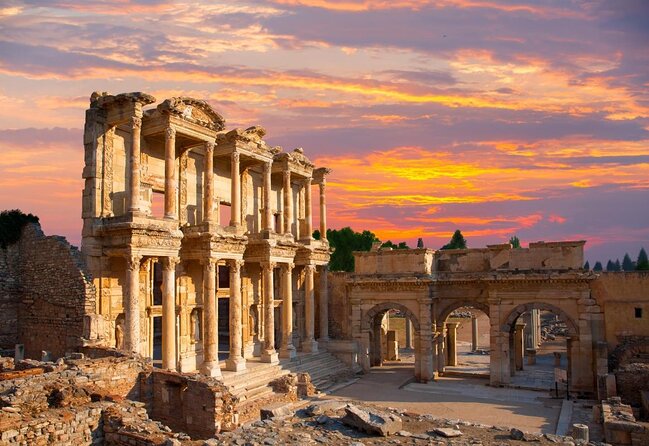
- Ephesus in one guided sweep takes you from Magnesia Gate down through major sights to the Great Theater.
- Pamukkale thermal pools plus Hierapolis give you both the modern spa feel and the Roman city on limestone.
Other Ephesus visits, with and without the House of Mary
- 4 Days Turkey Tour – Cappadocia, Ephesus and Pamukkale Tour★ 5.0 · 138 reviews
- 6 Days Turkey Tour Cappadocia, Pamukkale, Ephesus, Gallipoli Troy★ 5.0 · 109 reviews
- Daily Ephesus & House of Virgin Mary from Istanbul – Small Group★ 4.0 · 95 reviews
- 7 Days Best of Turkey Tour: Istanbul-Cappadocia-Ephesus-Pamukkale★ 5.0 · 91 reviews
Price and Logistics: What $1,499 Buys You in Real Life
This package runs about $1,499 per person for a 4-day, 3-night trip starting in Istanbul. For that money, you are not just buying entry tickets, you are buying time and coordination: airport transfers, domestic taxes, professional guide time, and transportation that lines up with flights.
The big value play here is travel by plane. Instead of chaining 8-hour bus days, you hop between regions and spend your energy on sites. The itinerary also signals it expects early mornings and long days, so if you hate starts before sunrise, this tour will feel like a sprint.
One thing to watch closely: the info says dinner is included, but it also lists dinner under Not Included. That is a mismatch, so I would confirm what meals are actually covered before you pay. It is not a deal-breaker, but it is the kind of detail that can turn into a needless surprise.
Istanbul to Cappadocia: The Day One Magic Trick
Day one starts with a pick-up in Istanbul around 04:00, then a flight at 06:55. You land and transfer to Goreme to meet your local guide, which matters because Cappadocia looks best when you are there early enough to see the valleys with softer light.
Your first guided run is essentially a Red Tour style introduction to the region. You hit Goreme’s rock-cut churches in the open air, then you move through the scenery that people photograph for a reason: Uchisar’s rocky “castle” feel, Pasabag’s famous fairy chimneys, and the weird-and-wonderful shapes of Devrent Valley.
Why this works: it gives you immediate orientation. After you see the rock churches and the chimney valleys back-to-back, the whole geography starts to make sense, and the rest of your trip feels less like checking boxes and more like recognizing the same geology from different angles.
Practical note: the day’s visits include a lot of short stops around villages and viewpoints, which is great for variety. The tradeoff is that you will spend less time hanging out in one place. Bring a good water bottle and keep snacks in your day bag, especially if you skip the longer meal breaks.
Goreme Open-Air Museum: Where the Rocks Explain the Faith
Goreme Open-Air Museum is the kind of site that rewards a guide. You walk through the rock churches and see frescoes painted on stone, tied to the rock-cut life of the region. Even if you do not read every inscription, you will feel the story in the way the churches are carved into the landscape.
This is also where the tour’s “small group” design shows up. With a group size capped at 15, you are not stuck staring at the back of someone’s camera. Your guide can point out what to look for, like the fresco details and how the different churches connect visually.
If you arrive and the site feels overwhelming, ask your guide for the simplest route and stick with it. The museum is spread out and the rock churches can blur together if you wander without a plan.
Uchisar, Pasabag, and Love Valley: The Fairy Chimney Sweep
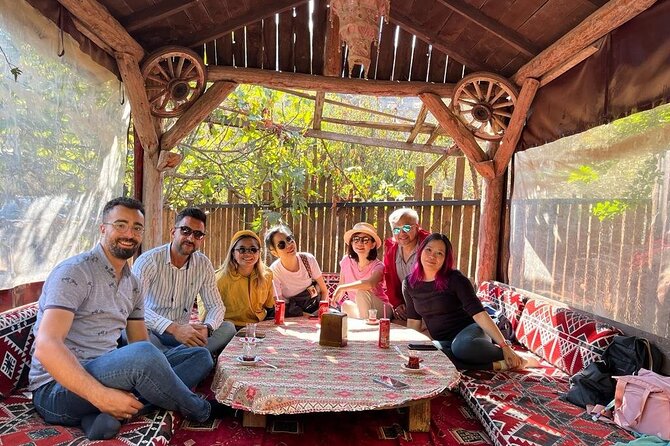
After Goreme, you move into the viewpoints and valleys that make Cappadocia look like a fantasy set. Uchisar village sits high on its own rocky formations, and the “castle” vibe gives you big sweeping views over the valleys below.
Pasabag, the Monk’s Valley, is where the fairy chimneys become the main event. The shapes are dramatic in person, not just in photos, and you get a sense of why UNESCO named this kind of rock formation world-famous. Named for the Christian monks who once hid out in the rocks, it also links the geography back to human use, not only scenery.
Then you go to Love Valley, one of the unique valleys you see among the smaller names on Cappadocia maps. It is not just about the shapes, it is about the way the valley contours guide the eye and change what you think you are seeing as you move.
Pro tip: if you can, pace yourself here. These stops are visually intense. A short pause for photos plus a moment to just look is better than racing to the next viewpoint every two minutes.
More trips out to the white terraces
- 5-Day Aegean Tour – Gallipoli, Troy, Ephesus, Kusadasi, Pamukkale
★ 4.5 · 86 reviews - Istanbul, Ephesus, Pamukkale and Cappadocia 8 Day Package
★ 5.0 · 83 reviews - Private 4 Days Turkey Tour from Istanbul to Cappadocia, Ephesus, Pamukkale
★ 5.0 · 80 reviews - 2 Days Ephesus and Pamukkale Tours from Istanbul
★ 5.0 · 65 reviews - 2 Days Ephesus and Pamukkale from Istanbul
★ 5.0 · 50 reviews
Avanos Pottery Village: Red Clay on the Red River
Avanos is a craft stop, and it is one of the more grounded parts of the day. You learn about pottery that goes back a long time, and you also connect the red clay to the Kızılırmak (Red River).
Even if you do not buy anything, this is a good reset. It gives you a break from “stone monuments everywhere,” and it reminds you that Cappadocia is also living culture, not only ancient rocks and churches. If you like hands-on art, this is one of the stops that feels the most like you interacted with local life.
Day Two Morning: Optional Hot Air Balloon at Sunrise
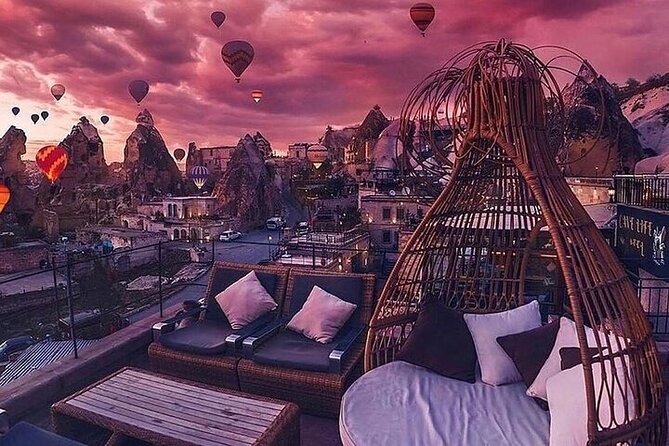
Day two begins around 05:00 for an optional hot air balloon sunrise. The tour includes a champagne toast after landing, which is a classic travel detail, and the balloon itself is the kind of experience people talk about for a reason: the valleys look different from above.
The big caution is weather. The info says the experience requires good weather, so if balloon conditions are not right, plans change. That does not mean the tour is ruined, but it does mean you should keep your expectations flexible for that morning.
If you choose the balloon, treat it like an early appointment with gravity. Wear something comfortable and breathable, and expect that you will be ready for a full day afterward, not a nap.
Blue/Green Style Cappadocia Day: Rose Valley and Cavuşin
After the balloon window, you continue with guided valley walking and viewpoints, with stops that include Rose Valley and Cavuşin. Rose Valley is known for trekking views and rock-cut churches, so it is not only scenery, it is also walking plus history stacked together.
Cavuşin is another village stop with old Greek village characteristics and Christian-era houses and churches. You get a sense of how communities built life into the rock formations and hillside settings, not just inside cities far from these places.
If you want to get real value from these valleys, slow down for the “in-between” moments. The best parts often happen when you are walking between viewpoints, not only at the top of the hill.
Kaymaklı Underground City and Pigeon Valley Views
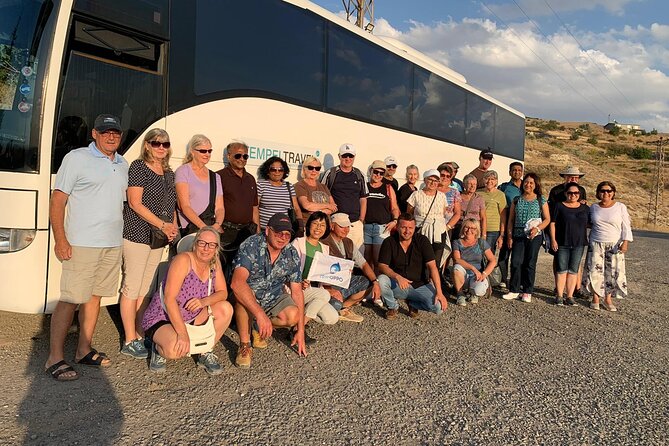
Kaymaklı Underground City is one of the highlights because it gives you a different side of Cappadocia. You go below ground to explore spaces tied to early Christian life, including storage rooms and wineries, and you get a feel for how people could live and hide in a place designed by rock.
This is also where the pace can feel real. Underground cities mean stairs and enclosed spaces, so if you are tight on mobility, tell your guide ahead and ask for the easiest route through the rooms.
Then you finish with Pigeon Valley, which mixes views and the dovecote culture that helped locals through agriculture and fertilizing vineyards. It is scenic, but it also has a “how people lived” angle that makes it more than a photo stop. Some days end with you looking at rocks. This one ends with you understanding why those rocks mattered.
Ephesus: A One-Day Ancient City Walk That Actually Makes Sense
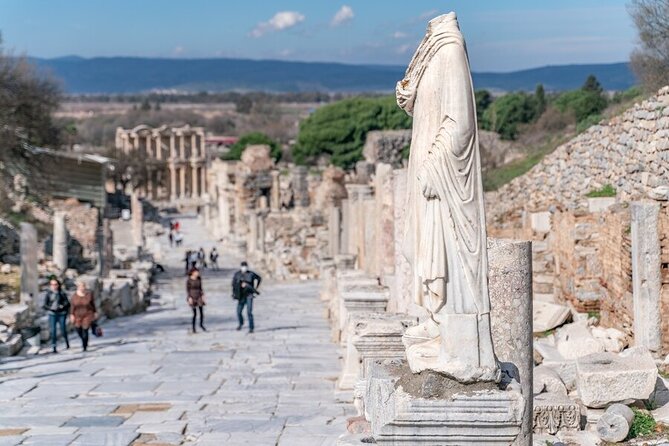
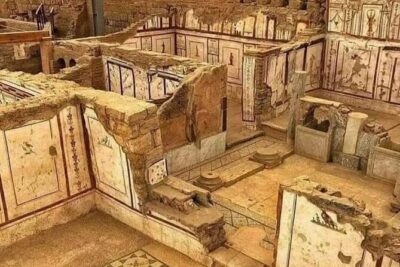
On day three, you explore Ephesus from the Kusadasi area. You start with Magnesia Gate, then you walk downhill through the ruins with your guide. This is one of the best ways to do Ephesus because the route gives you momentum and a clear sightline down the ancient city spine.
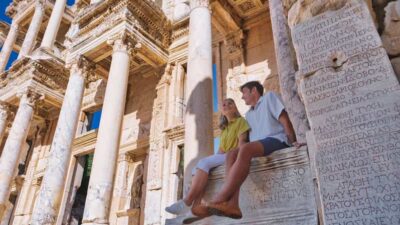
Your guided walk includes major monuments like the Odeon, Celsus Library, Temple of Hadrian, Fountain of Trajan, and the Great Theater. The Great Theater is still used today for a local spring festival, and the scale is wild. It is believed to have held about 24,000 people, which helps you grasp the theater as a political and social stage, not only an old structure.
Also on this Ephesus day: you visit the Temple of Artemis, which dates to around 650 BC. The info highlights that the temple was financed by the wealthy king of Lydia and that the marshy ground selection was part of earthquake precautions. You are looking at the religious and engineering thinking of a whole era, even if the ruins are smaller than the original dream.
Virgin Mary House and Isa Bey Mosque: Two Spiritual Stops
After Ephesus, the tour drives to Meryemana, the Virgin Mary House. It is described as on the slopes of Bülbül Mountain and connected to the tradition that St. John brought the Virgin Mother there after Christ’s death. The belief in how long she lived there is included, and it gives this stop a quieter, contemplative tone after the busy Roman streets.
Then you visit Isa Bey Mosque, identified as an important example from the late 14th century and tied to the end of the Seljuk Empire period. It is a shorter stop, but it is a good reminder that Turkey’s story is not only Roman. You move from classical ruins to a later architectural phase in a single day.
Pamukkale Thermal Pools and Hierapolis: The Shoe-Free Reality Check
Day four is the Pamukkale push. You get picked up early around 07:30, and the drive takes about 3 hours, with a refreshment stop along the way.
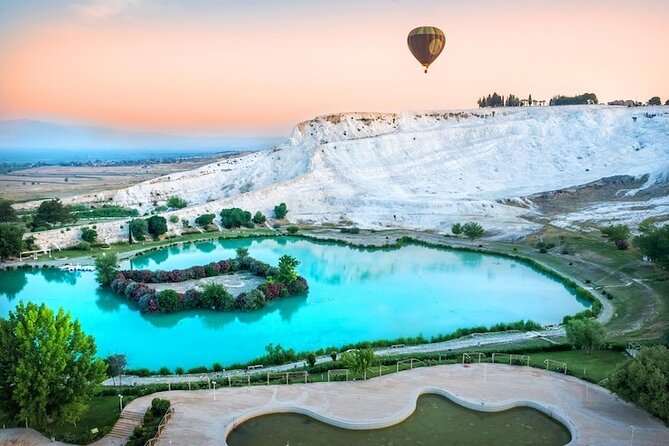
Pamukkale is famous for the white travertine terraces and calcium-rich mineral springs. You visit the thermal pools area, including the Sacred Pool and a nearby teahouse. The practical instruction matters: you must be able to walk about 0.5 miles over the travertines without shoes. Bring sunglasses and sunscreen, and pack a comfortable swimsuit.
This is one of those moments where “skip the line” matters less than “show up prepared.” The scenery is stunning, but your feet are part of the experience. If you are prone to slipping on uneven surfaces or your legs tire easily, you will want to plan how often you stop and how long you stay.
After that you go to Hierapolis, the Roman city built on limestone layers created over centuries by mineral water. The tour notes the meaning of the name “sacred city” and mentions Stephanus of Byzantium’s link to temples. Even if you never become an expert Roman enthusiast, the way the city sits on raised limestone gives you a strong sense of place.
Guides and Group Size: Why It Feels Less Like a Whirlwind
A big reason this tour scores well is the guide factor. In the feedback you can see names like Hazan, Nazli, Seyfullah, Esat, Safak, Duygu, Cemil, and Hasan showing up as tour leaders, often praised for being patient and making the history easy to follow. I cannot guarantee which guide you will get, but I can tell you this type of small-group setup usually means the guide can answer questions without rushing you.
Group size also matters in a practical way. With a maximum of 15, you are less likely to lose the group in a crowded site, and more likely to actually understand what you are looking at instead of only hearing general talk.
Who This Tour Fits Best, and Who Should Think Twice
This is a great fit if you want to see Cappadocia, Ephesus, and Pamukkale in one tight package and you value air travel over long transfers. It is also a good choice if you like guided interpretation, because each region is explained through key stops rather than “free time only.”
It may not suit you if you dislike early starts, because the Istanbul pickup is around 04:00 and the Cappadocia days also run very early. It may also be tough if you hate walking, because Pamukkale includes a shoe-free walk on travertines and Ephesus is a full downhill ruin walk.
If you are traveling as a couple, solo, or a small group who enjoys structured sightseeing, you’ll likely appreciate the flow. If you want lots of unstructured hours in one place to wander on your own, you might find this route too scheduled.
Should You Book This Cappadocia Ephesus Pamukkale Tour?
Book it if your top priority is max value for seeing three icons fast, with small groups, airport transfers, and guided stops that help you understand what you are looking at. The combination of Cappadocia’s valleys and underground city, Ephesus’s monument sweep, and Pamukkale’s thermal terraces is a strong “one trip, three worlds” plan.
Think twice if you are sensitive to early mornings and shoe-free walking. Also double-check the meal details because the info is inconsistent about dinner being included or not.
If you are the kind of traveler who likes a plan but still wants moments to breathe, this tour has the right rhythm. Just pack for comfort, protect your skin in Pamukkale, and keep your balloon expectations tied to weather.
FAQ
What city does this tour start in?
The tour starts in Istanbul, Turkey.
How early is the pick-up in Istanbul?
You are picked up from your Istanbul hotel around 04:00 for the flight at 06:55.
Is this tour a small group?
Yes. The group size is limited to a maximum of 15 people.
Are entrance tickets included?
Entrance tickets for museums are included, and the tour also mentions skip-the-line express entry tickets.
Is hotel accommodation included?
No. Hotel bookings are not included.
What is the hot air balloon option like?
Hot air balloon sunrise is optional, and the tour includes a champagne toast after landing. It is weather dependent.
How much walking is required at Pamukkale?
You must be able to walk about 0.5 miles over the travertines without shoes.
What time does the Pamukkale day end?
The tour finishes about 16:00, then you drive to Denizli airport for a 19:20 flight back to Istanbul.
Can I get a full refund if plans change?
Free cancellation is offered up to 24 hours in advance for a full refund, based on local time.
More Pamukkale and Hierapolis


Ephesus, Other Ways to See It

Recently reviewed in Istanbul


The rest of Ephesus and the House of the Virgin Mary.
 ★ 5.0FOR CRUISERS: Skip The Lines PRIVATE EPHESUS TOUR &On Time ReturnFrom $398,527 reviews
 ★ 5.0PRIVATE NO HIDDEN FEES Ephesus, Mary’s House Guided Tour /GRP OPTFrom $992,455 reviews
 ★ 5.0For Ship Guests:BEST SELLER EPHESUS PRIVATE TOUR & On Time ReturnFrom $392,029 reviews
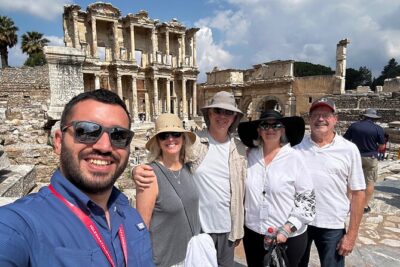 ★ 5.0ALL INCLUDED: Ephesus Ruins, Mary’s House Tour incl ENTRY TICKETSFrom $591,670 reviews
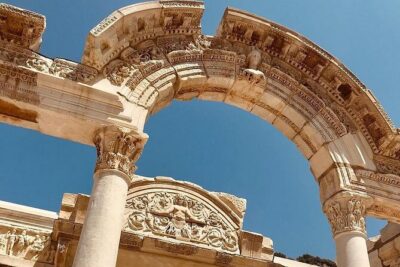 ★ 5.0Ephesus Temple of Artemis and House of Mary Private Half Day TourFrom $151,573 reviews
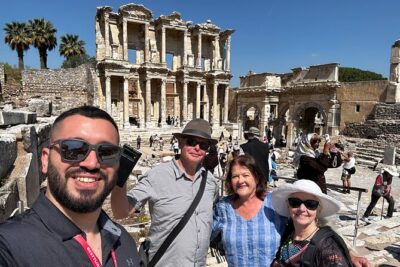 ★ 5.0PRIVATE TOUR FOR CRUISERS: Mary’s House (Meryemana) and EphesusFrom $291,349 reviews
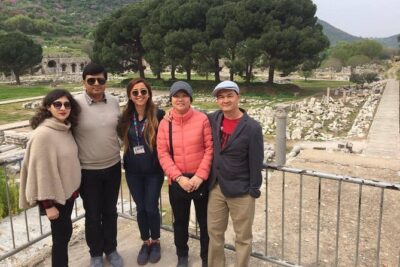 ★ 5.0Top-Rated: Ephesus & Artemis Tour for Cruisers WITH ENTRY TICKETSFrom $201,184 reviews
 ★ 4.8Ephesus: Small Group Tour for Cruise PassengersFrom $291,100 reviews
Also filed under