
REVIEW · GOREME AND THE FAIRY CHIMNEYS
Göreme: The Original Dervish Ritual in Konya or Cappadocia
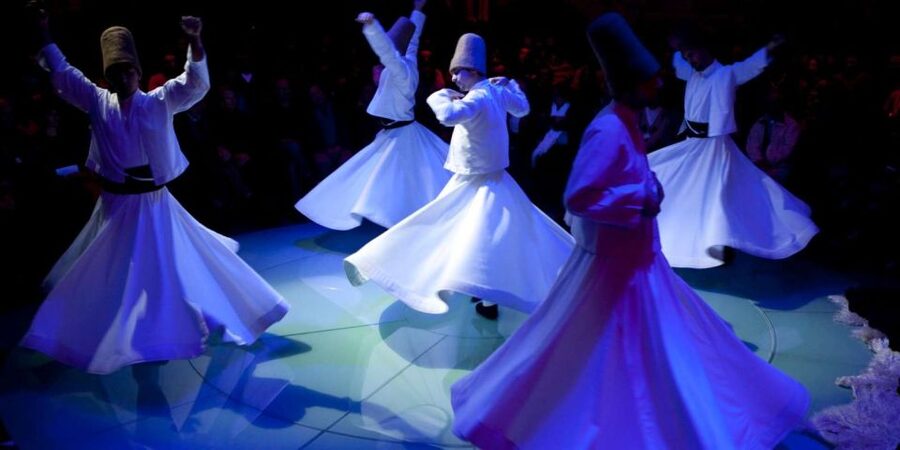
A whirling ritual is closer than you think. This half-day to full-day outing lets you watch dervishes perform their daily ceremony in historic spaces, either at the Mevlana Art Center in Konya or at the 12th-century Saruhan Kervansaray in Cappadocia, with hotel pickup and a guided visit included. I especially like the value of having transport handled, and I like that you’re not just watching a staged show, you’re getting the feel of how the ritual fits into real Sufi practice.
One thing to plan for is the rules inside the ceremony area: no cameras, no video, and no audio recording during the main part, so you’ll need patience if you love capturing every moment.
In This Review
- Key highlights to look for
- Two ceremonies, one spirit: Konya or Saruhan Kervansaray
- Price and value: what you get for around $50
- Getting picked up: timing that changes everything
- Saruhan Kervansaray: the 12th-century prelude you should use
- Inside the Mevlana Art Center: what Şeb-i Arus means in practice
- The ceremony itself: how the flow usually works
- Photo rules and the best timing for your camera
- Getting around language barriers without missing the meaning
- Logistics that keep your day smooth
- Who this suits best, and who should think twice
- What to pack and how to keep your comfort in check
- Should you book this dervish ritual tour?
Key highlights to look for
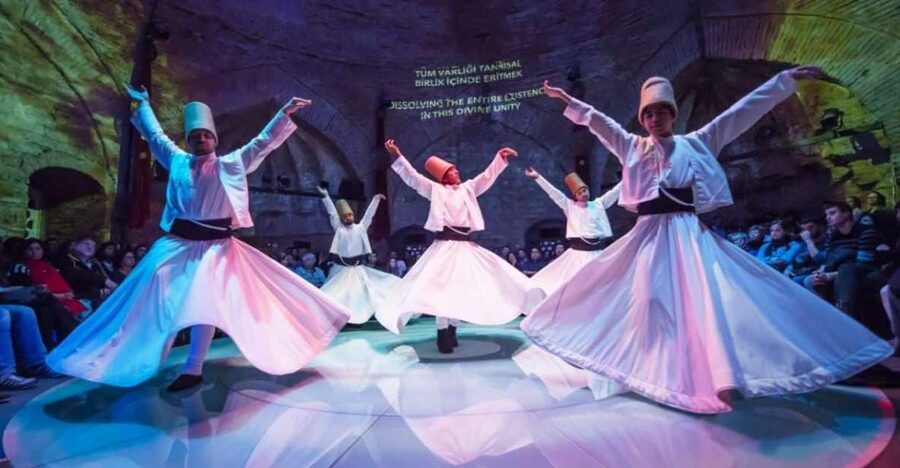
- Konya option for Şeb-i Arus (Şeb-I Arus Konya Vuslat), tied to Mevlana Rumi traditions, running in early mid-December 2024
- Saruhan Kervansaray ceremony setting in Cappadocia, a 12th-century stop with time for photos and a guided tour
- Hotel pickup and drop-off from multiple towns, which saves you a lot of hassle in central Turkey
- A real ceremony flow, often starting with music and prayer before the whirling sequence
- Short photo window at the end (where allowed), plus a chance to get context from a small booklet you may receive
- Clear “how to behave” constraints, which actually make the atmosphere easier to follow
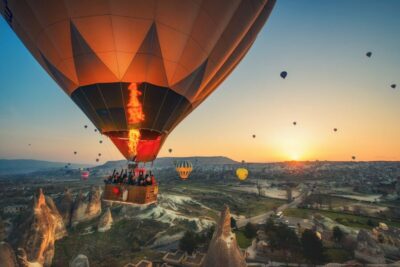
More of the valleys around Goreme
- Cappadocia: Göreme Sunrise Hot Air Balloon Flight★ 4.9 · 1,255 reviews
- Sunrise Hot Air Balloon Flight Over Göreme & Fairy Chimneys★ 5.0 · 1,253 reviews
- Cappadocia Hot Air Balloon Tour Over Fairychimneys★ 4.5 · 1,196 reviews
- Cappadocia: Hot Air Balloon Ride over Goreme/Cappadocia★ 5.0 · 914 reviews
Two ceremonies, one spirit: Konya or Saruhan Kervansaray
This experience comes in two main flavors, and picking the right one matters more than most people expect.
If you want the high-profile Konya program, you’re looking at the Şeb-i Arus ceremonies at the Mevlana Art Center, tied to the annual commemorations for Mevlana Celaleddin Rumi. The schedule given for 2024 places these ceremonies between 07 and 17 December to coincide with his death anniversary, so this is the season when the ritual is presented on a bigger stage.
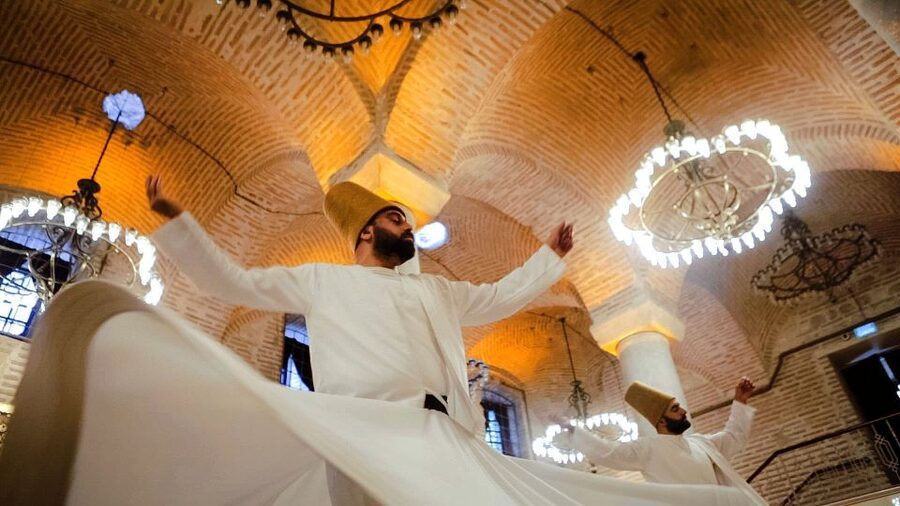
If you’re based around Cappadocia and want a more “local-feeling” setting, choose the Cappadocia ceremony at Saruhan Kervansaray, a 12th-century caravanserai. This is the version that pairs naturally with “old stone, slow time, then whirling,” and it also includes a stop there that gives you time to look around before the main ceremony.
Either way, the core idea is the same: you’re watching real dervishes perform their ritual as part of their daily practice, not a casual themed performance for tourists.
Price and value: what you get for around $50
At about $50 per person, the value is mainly in the logistics, not the ticket alone. What you’re paying for includes hotel pickup and drop-off, plus your dervish ceremony entrance ticket. You also skip the ticket line, which sounds small, but it can save stress during busy ceremony dates.
What’s not included is food and drinks, so plan to either eat before you go or budget time for whatever is available on-site after the ceremony. One practical bonus: transport means you do not have to coordinate buses, taxis, or finding the right entrance when you are tired and the crowd is moving.
Also note the duration range, 2 to 6 hours depending on your pickup and the ceremony option. This makes the tour flexible if your travel day is already packed. It’s short enough for a real morning or afternoon plan, but long enough that you should treat it like an actual activity day, not a quick detour.
Getting picked up: timing that changes everything
Your pickup plan depends on which side of Turkey you start from and which ceremony you choose.
If you start in Cappadocia, the schedule says you’ll be picked up a minimum of 4 hours before the ceremony. If you start in Konya, pickup is about 1.5 hours before. That difference is huge. It basically tells you the Konya option is more about day-long timing and transfer time, while the Cappadocia option is arranged so the ceremony fits a tighter window.
There are also multiple pickup points listed, including Çavuşin, Uçhisar, Göreme, Ortahisar, and in Konya as well. For many people, the best “value move” is choosing the pickup that’s closest to your hotel, because it keeps your day simpler.
Once you’re on the van, you do get accompaniment on the journey. In practice, that matters because ceremony venues can be confusing, and you do not want to arrive late or wander around when the ritual is already starting.
One schedule includes a 20-minute stop labeled Van. Don’t build your day around it, but do bring basic patience, because any intercity day can include quick breaks.
Saruhan Kervansaray: the 12th-century prelude you should use
If your plan includes Saruhan Kervansaray, you get time there before the ceremony, and I think that’s one of the most underrated parts.
The stop includes a photo stop plus a guided visit of about 1.5 hours. That time window is perfect for two things: getting oriented in the historic space, and giving your eyes something to do before you settle into the ceremony itself.
Why is this important? Because once the ritual begins, you’ll understand it better if you’ve already taken in the setting. You’ll also be less anxious about where to stand, when to move, and what to do with your hands. (Yes, that sounds silly, but waiting without a plan is when people start to feel lost.)
You can also expect the ambiance of a caravanserai to change how you perceive the ritual. It feels like you walked into a living building, not a rented theater. One of the best-sounding comments from people who did this described a surreal feeling from watching the ceremony inside the old structure, and the Saruhan stop is your built-in way to get that mood working in your favor.
Other evenings out. The sema is a religious ceremony rather than a floor show, and audiences stay quiet through it
- Turkish Night at Cave Restaurant with Dinner and Unlimited Drinks
★ 5.0 · 1,225 reviews - Göreme: Dinner and Folk Show at a Cave Restaurant
★ 4.4 · 302 reviews - Cappadocia Whirling Dervishes ceremony
★ 5.0 · 276 reviews - Goreme: Whirling Dervishes Show in Historical Cave
★ 4.4 · 169 reviews - Cappadocia Turkish Night With Unlimited Drinks And Dinner
★ 4.5 · 61 reviews
Inside the Mevlana Art Center: what Şeb-i Arus means in practice
When you go with the Konya side, you’re tied to the Şeb-i Arus ceremonies, labeled as Şeb-i Arus Konya Vuslat. In plain terms, this is a major annual commemoration connected to Mevlana Rumi traditions.
The listing information also calls out the 2024 dates for the 751th Reunion Anniversary Commemoration Ceremonies, and invitations to join the program from Cappadocia or Konya during 07 to 17 December. If you are choosing this option, plan your trip around that seasonal timing.
What you’ll experience in the venue is presented as a ceremony prepared by the real dervish community connected with the Mevlana Art Center. That wording matters. It signals the event isn’t being treated as a one-off performance, it is a formal program with real participants.
Also, remember this is a religious and cultural space. Even when the ritual is visually dramatic, the atmosphere is structured, and the staff rules about cameras and recording are there for a reason.
The ceremony itself: how the flow usually works
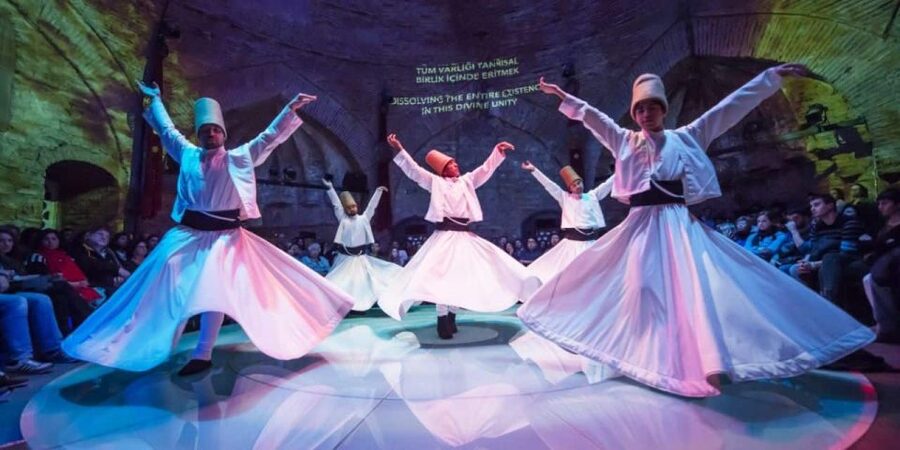
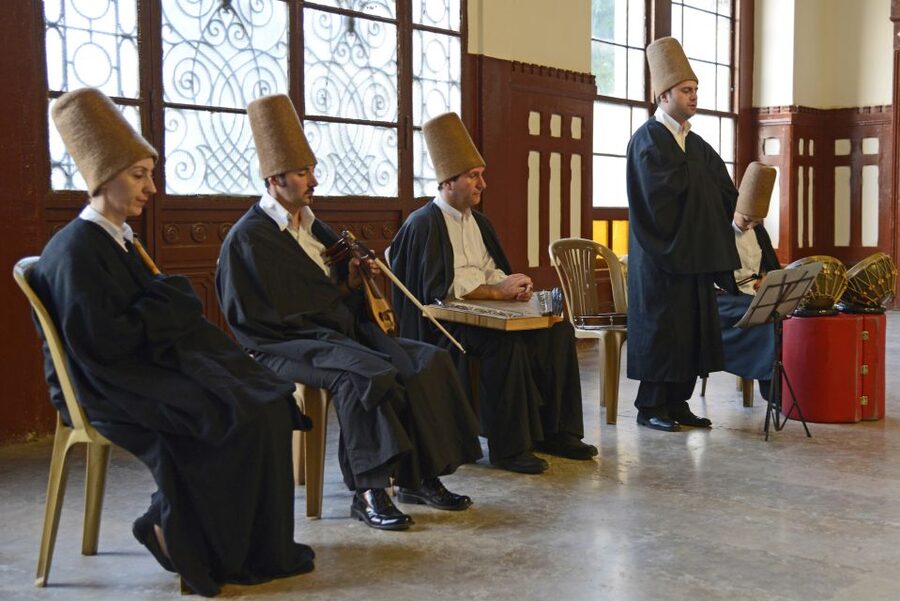
The main draw is the ceremony sequence. Based on what people consistently describe, it often has a pattern: an opening phase with prayer and music, then the whirling portion.
For the Cappadocia option, one of the clear descriptions you’ll hear is that the ceremony can start with reed music and drums, with the dervishes praying before the whirling begins. That progression helps you stop treating it like a random dance and start treating it like a ritual with steps.
For the Konya option, the ceremony is described as a unique and impressive experience prepared by the dervish organization connected with the Mevlana tradition. Expect the structure to feel formal and organized, even if your language skills are limited.
A small detail that makes a big difference: you may receive a short booklet that helps you understand what you’re watching. If you get one, use it. It turns a “cool show” into a “now I get it” moment.
Also, think about your physical comfort. Many people watch seated and still for a while. If you’re sensitive to confinement or long periods in one position, take the suitability notes seriously, especially around claustrophobia and motion sickness.
Photo rules and the best timing for your camera
Here’s the strict part: no cameras, no professional cameras, no video recording, and no photography inside during the ceremony. Audio recording is also not allowed.
So what can you do if you love photos? You can watch first, then follow the end-of-ceremony rules. One of the most helpful pieces of practical advice from the experience is that there is often a brief ending section where photos and video are allowed, sometimes tied to a final dance. That means you should bring your camera, but only plan to use it when you’re clearly allowed to.
The safest approach is simple: keep your device away until you see a cue from staff that the restrictions are lifted. If you try to be clever and sneak shots during the main part, you risk ruining the experience for yourself and for others.
Also, if you get a chance at the end, take it. People describe the photo window as short, and it’s honestly the moment when the whirling vibe can translate best to a still image.
Getting around language barriers without missing the meaning
Your driver and/or guide can be listed with English, Russian, and Turkish options. That’s a good start, but language support can vary by day and by who is assigned.
So, if English is your only language, plan for a ceremony where the deepest explanation might be limited. That’s not a problem if you go in with the right attitude. You can still enjoy the form, the sequence, and the atmosphere, and the booklet (if provided) can help bridge the gap.
My advice: treat the experience like a ritual you are observing, not a lecture. You’re there for the atmosphere and the movement, and the best you can do is pay attention to the ceremony’s steps.
If you really want context, quickly scan the booklet before the ceremony begins and keep your questions to yourself. In a formal religious setting, respect beats interruption every time.
Logistics that keep your day smooth
A few practical points make this tour easier than trying it solo.
First, there’s hotel pickup and drop-off, with multiple pickup options. Second, the tour includes the entrance ticket, so you aren’t figuring out where to buy or how to line up. Third, a driver is included, with English, Russian, and Turkish listed for the driver.
In the real world, you might ride in a small vehicle, not a huge bus. That’s a plus if you prefer quick, direct pickup. It also means you should be ready for the day to feel more intimate, and you’ll want to show up on time at the lobby.
The guidance says to wait in the lobby area 5 minutes earlier than pickup time. Do it. Ceremony days run on timing, and missing the van adds stress you do not need.
Who this suits best, and who should think twice
This is not the right fit for everyone.
It’s listed as not suitable for people with mobility impairments, and it also lists claustrophobia, epilepsy, and motion sickness as disqualifiers. The reason is likely the combination of seating, crowd movement, and the ceremony environment. Take it seriously, not casually.
It also notes babies under 1 year are not suitable.
If you’re traveling with kids or teens, be careful. One account suggested it may not be recommended for younger visitors, mainly because it is a religious ceremony with limited explanation time and a long period of waiting and watching. If you bring young people, go in with the expectation that the experience will be more “observe and respect” than “interactive fun.”
This tour is a great match for you if you want a meaningful cultural experience in a serious setting, and you enjoy watching rituals unfold slowly instead of rushing from one photo spot to another.
What to pack and how to keep your comfort in check
Because the ceremony area has restrictions, pack smart rather than heavy.
Bring a light layer. Even in central Anatolia, indoor spaces and waiting areas can feel cooler during ceremony hours. Wear comfortable shoes. You may be standing and walking between the pickup area, the ceremony venue, and any pre-ceremony viewing areas.
Since cameras are restricted inside, your priority should be comfort and respect, not gadget management. If you are prone to motion sickness, this is a longer transfer day depending on your pickup origin, so bring what helps you normally.
Finally, keep a small amount of patience in your pocket. The schedule can include early pickup, a transfer, and a structured ceremony. The payoff comes from being present, not from rushing to the next thing.
Should you book this dervish ritual tour?
Book it if you want a real, structured look at dervish ritual in Konya or Cappadocia, and you value having hotel pickup plus the ceremony entrance handled. The setting matters, and the fact that the experience is staged in actual historic spaces like Mevlana venues and Saruhan Kervansaray makes it feel grounded.
Skip or reconsider if you are sensitive to crowds, enclosed spaces, or long seated stretches. Also skip if the idea of no cameras during the main ceremony makes you feel trapped, since the rules are firm.
If you can handle the timing, respect the filming restrictions, and arrive ready to observe, this is the kind of cultural experience that sticks with you long after you leave the room.
More Across Central Anatolia
More Evening Performances in Goreme
More Around Goreme and the Valleys




Recently reviewed in Goreme
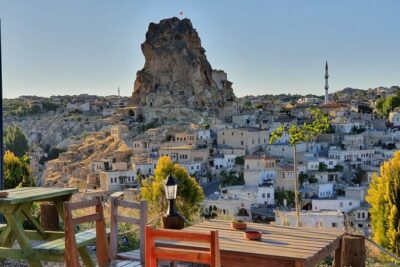
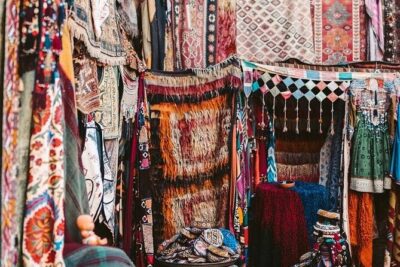
The rest of Goreme and the Fairy Chimneys.
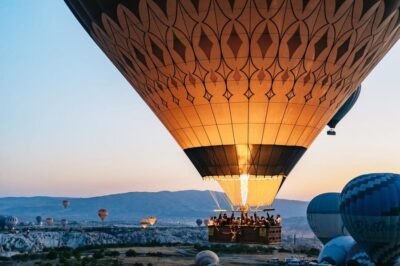 ★ 5.0Cappadocia: Goreme Hot Air Balloon Flight at SunriseFrom $1424,924 reviews
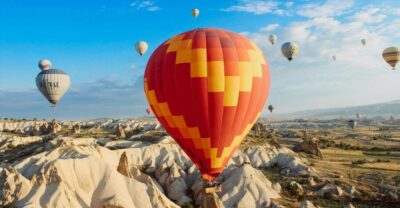 ★ 4.8Cappadocia: Goreme Hot Air Balloon Flight Over FairychimneysFrom $1592,347 reviews
 ★ 4.9Cappadocia: Göreme Sunrise Hot Air Balloon FlightFrom $1831,255 reviews
 ★ 5.0Sunrise Hot Air Balloon Flight Over Göreme & Fairy ChimneysFrom $1141,253 reviews
 ★ 4.5Cappadocia Hot Air Balloon Tour Over FairychimneysFrom $661,196 reviews
 ★ 4.8Cappadocia: Hot Air Balloon Trip in Goreme with BreakfastFrom $2031,037 reviews
 ★ 5.0Cappadocia: Hot Air Balloon Ride over Goreme/CappadociaFrom $152914 reviews
 ★ 4.4Antalya/Kemer: 2-Day Cappadocia, Cave Hotel, & Balloon TourFrom $35732 reviews