REVIEW · TURKEY
Istanbul Unveiled: A Quest for the Unique and Unusual Jewels
Istanbul has a second city underground. This 6 to 7 hour walk connects underground history with rare, permission-based Byzantine sights, and I really like the way it also includes hotel drop-off in central areas. One thing to plan for, though, is the physical side: you should have a strong fitness level for stairs and underground passages.
Serif Yenen Travel & Tourism runs this with a tight, well-managed flow. You get entrance costs, tea, lunch, a map, and the kind of access that usually stays behind closed doors. If you prefer simple, big-sight-only sightseeing, this may feel a bit more active than you expect.
In This Review
- Key Highlights Worth Planning For
- Why This Tour Feels Like Finding Istanbul’s Secret Side
- Serif Yenen and the Access Factor That Changes Everything
- Price and What You Are Actually Paying For (And For What You Are Not)
- Stop 1: Küçük Ayasofya Garden Cafe and Turkish Tea First
- Stop 2: The Private Byzantine Great Palace Ruins Moment
- Stop 3: Nakkas Oriental Rugs and Textiles, Then Underground Cistern Access
- Stop 4: Hippodrome Area, Where Public Life Happened
- Stop 5: Seven Hills Hotel Panoramic Terrace Break
- Stop 6: Binbirdirek Cistern, Also Known as the Cistern of Philoxenos
- Stop 7: Forum of Constantine and the Column of Constantine
- Stop 8: Lunch at a Lokanta, Fast Service and Local Food Rhythm
- Stop 9: Forum of Theodosius and the Column of Theodosius
- Stop 10: Kalenderhane Mosque Exterior Only, Byzantine and Islamic Blending
- Stop 11: Vefa Bozacisi for Boza Tasting
- Stop 12: Şehzade Mehmet Mosque and Mimar Sinan’s Ottoman Mastery
- Stop 13: Valens Aqueduct Finish at the Roman Engineering Endgame
- Getting Your Money’s Worth: Skills This Tour Uses Well
- Who Should Book This, and Who Might Want Something Simpler
- Should You Book Istanbul Unveiled?
- FAQ
- How long is the Istanbul Unveiled tour?
- How much does the tour cost?
- Is the tour offered in English?
- What is included in the price?
- What is not included?
- Is this a private tour?
- What is the minimum age?
- Do I need good physical fitness?
- Where does the tour start and end?
- Is free cancellation available?
Key Highlights Worth Planning For
- Cistern permissions: You visit underground spaces that require special access, not just the most famous ones.
- Serif Yenen connection energy: The tour is designed around getting into places other groups may not reach.
- Tea, boza, and lunch built in: Food stops are not an afterthought, they are part of the route.
- Byzantine to Ottoman route: You see how layers of empire show up in mosques, columns, forums, and Roman infrastructure.
- Scenic finishing touch: Panoramic viewpoints before you end near Valens Aqueduct.
Undecided? These Istanbul tours came up most often in the review pile.
- Istanbul: Bosphorus Dinner Cruise & Show with Private Table★ 4.8 · 44,561 reviews
- Istanbul: Daytime or Sunset Sightseeing Cruise & Audio Guide★ 4.8 · 14,430 reviews
- Istanbul: Bosphorus Dinner Cruise with Turkish Night Show★ 4.8 · 10,127 reviews
- Best of Istanbul 1, 2 or 3-Day Private Guided Istanbul Tour★ 5.0 · 8,922 reviews
Why This Tour Feels Like Finding Istanbul’s Secret Side
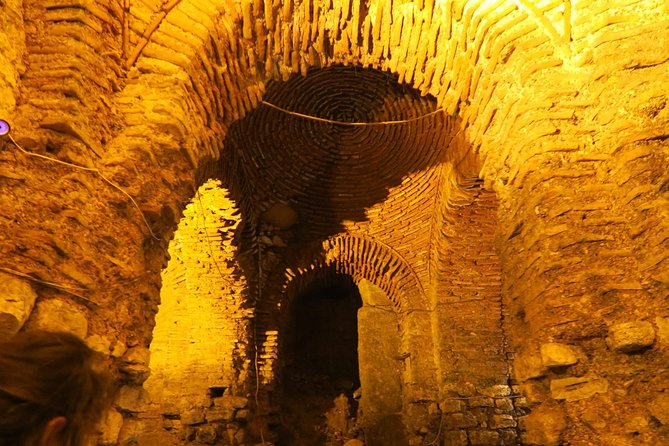
Istanbul is famous for its top sights, but it also has a second life underneath, under streets, under palaces, under cisterns. This tour leans hard into that “other Istanbul,” and it does it in a way that is practical for a half day. You are not just standing around reading plaques. You are moving through spaces that were built for water, power, and public life.
What makes it especially appealing is the blend. Yes, you get major landmarks like the Hippodrome area and the big Roman columns. But the heart of the experience is the less predictable access, including underground cistern visits and a private ruins stop. That means fewer crowds in the places that matter most to this tour’s theme.
There is also a nice balance for your energy level. You start with a calm tea moment at the Little Hagia Sophia Mosque garden cafe, then you shift into more concentrated sightseeing. Along the way you stop for views and then end with a Roman engineering finish at Valens Aqueduct. If you like your history to have a physical setting, you will likely enjoy this approach.
Serif Yenen and the Access Factor That Changes Everything
This is not just a checklist tour. The quality gap in Istanbul tours often comes down to one thing: access. A lot of guided groups can show you what is on the public route. Fewer groups can get you to the places that are usually restricted or require special permission.
In this experience, that access shows up more than once. One stop is a private visit connected with the Byzantine Great Palace ruins. Another is an underground cistern visit tied to a textiles shop stop, with special access permission. These are exactly the kinds of places that take more than a standard ticket to experience well.
The guide, Serif Yenen, is also a big part of why people rate this tour so highly. The recurring themes in the guide feedback are organization, a smooth pace, and flexibility if something unexpected happens. That matters because Istanbul can be chaotic, and a good guide helps you keep your day from turning into a stress sprint.
There is also an attention-to-personal-needs thread in the guide reviews, including care around food choices like vegetarian options. Even if you do not have special dietary needs, that style of care usually shows up as fewer hassles and smarter timing at lunch and snack stops.
Price and What You Are Actually Paying For (And For What You Are Not)
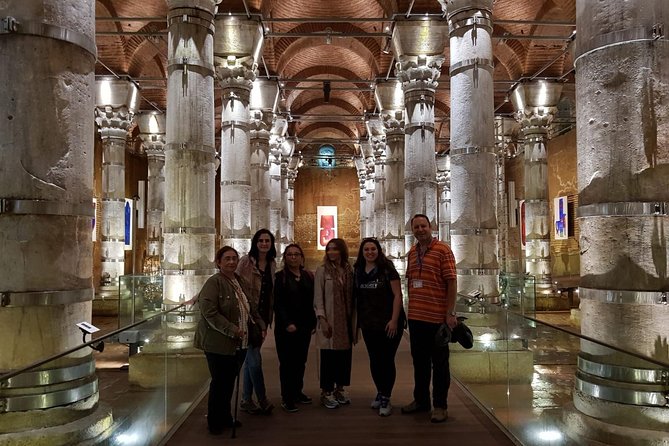
At $490 per person for about 6 to 7 hours, this is a mid-range to premium guided option. The “value” question is not the headline price. It is what is included.
Here is what you get included:
- Entrance costs
- Professional guide
- Coffee and/or tea
- Istanbul map
- Boza tasting
- Lunch
You also get centrally located hotel drop-off, plus a mobile ticket. What is not included is private transportation.
So you are paying for guide time, access, and included meals and admissions. If you tried to piece this together yourself, the hardest parts would be twofold: getting the special-permission underground stops, and arranging an efficient route that also covers lunch and snack tastings without burning time.
One practical note: because private transportation is not included, your day will work best if you are comfortable using nearby public transport and walking between stops. The tour does run on a strong walking schedule, and the tour information calls for a strong physical fitness level.
Stop 1: Küçük Ayasofya Garden Cafe and Turkish Tea First
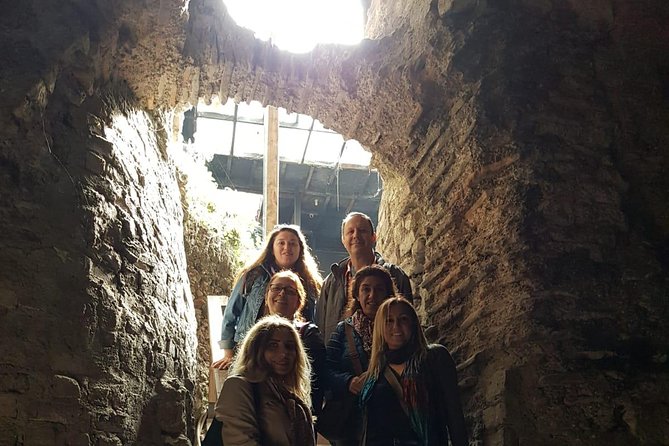
You begin at Little Hagia Sophia Mosque, at the Küçük Ayasofya area. The start is not a rush-in. It is a garden cafe setting where you sip Turkish tea while your guide sets context for where you are and how the layers of Istanbul fit together.
This is a smart opening for a tour theme like underground history. Before you head into cisterns and buried remnants, you get bearings. You also get an easy, low-pressure start that helps you settle into Istanbul’s geography without spending your first hour tired and lost.
The Little Hagia Sophia Mosque area is special because it is linked to the Byzantine period and Emperor Justinian, earlier than the famous Hagia Sophia. You get the idea of how architectural influence evolves in the city, and you do it in a quieter setting compared to the mega-crowds around the big icon.
The only drawback here is timing. The tour starts at a specific meeting point, so it is worth arriving a little early. You do not want to break the flow with a scramble.
- Istanbul: Bosphorus Dinner Cruise & Show with Private Table
★ 4.8 · 44,561 reviews - Istanbul: Daytime or Sunset Sightseeing Cruise & Audio Guide
★ 4.8 · 14,430 reviews - Istanbul: Bosphorus Dinner Cruise with Turkish Night Show
★ 4.8 · 10,127 reviews - Best of Istanbul 1, 2 or 3-Day Private Guided Istanbul Tour
★ 5.0 · 8,922 reviews - Istanbul: Basilica Cistern Fast-Track Entry and Audio Guide
★ 4.6 · 7,521 reviews
Stop 2: The Private Byzantine Great Palace Ruins Moment
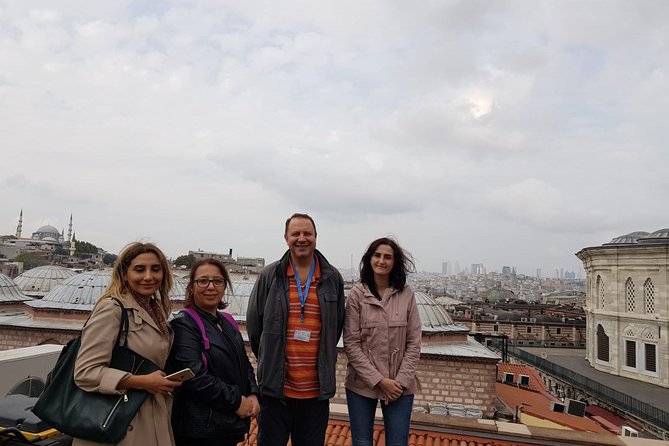
Next comes a shorter stop at Eresin Hotel Sultanahmet, focused on a private visit to the Ruins of the Byzantine Great Palace. The key detail is that this location is accessible only with special permission.
Why does that matter for you? Because it changes the experience from “look from outside” to “you are inside the story.” Palace ruins can be vague if you only see them from street level. A guided, permission-based visit helps connect what you see to the power and daily life behind it.
You should also expect this stop to be tightly timed at about 30 minutes. That is not a long exploration, so come ready to look closely and ask questions. If you like tactile, physical history, you’ll probably find this moment one of the more memorable parts of the day.
Stop 3: Nakkas Oriental Rugs and Textiles, Then Underground Cistern Access
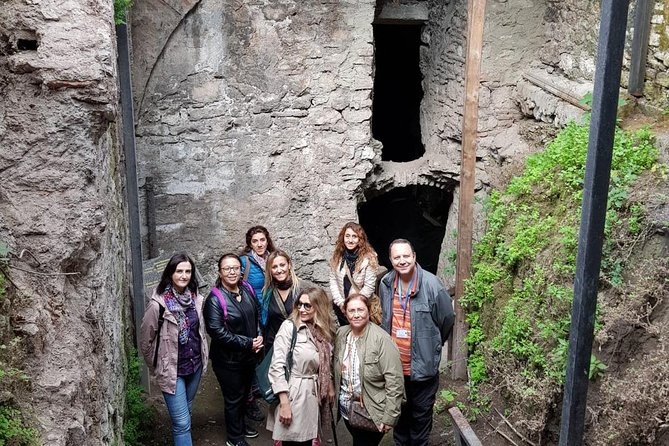
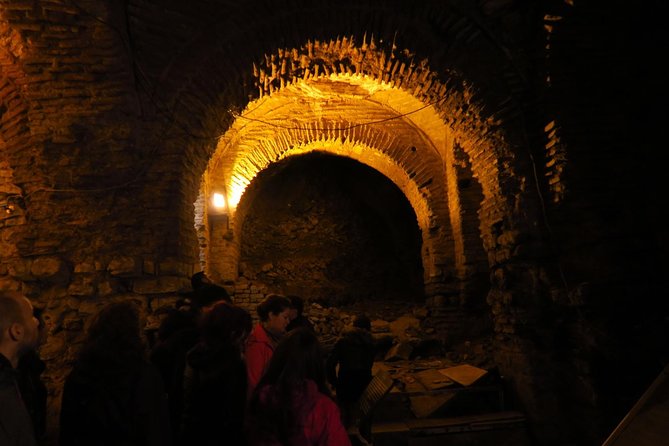
After the palace ruins, you shift to Nakkas Oriental Rugs & Textiles. This is more than a shopping stop on paper. The real point is that it leads into an underground Byzantine cistern visit that also requires special access permission.
This stop is one of the strongest “Istanbul underground” experiences on the route. You do not just see a cistern. You also get an exhibition connection tied to the ancient Hippodrome.
This is a good design for your attention span. Many cistern visits become a single visual moment, water columns and dim lighting, then out. Here, you get context that links the cistern to public life and the wider Constantinople story.
Potential downside: cistern spaces can feel cooler and darker than the street. Even with a guide, you may want to keep your phone settings ready for lower light. Also, underground spaces are not built for long lingering, so you will want to listen and move when the group does.
Stop 4: Hippodrome Area, Where Public Life Happened
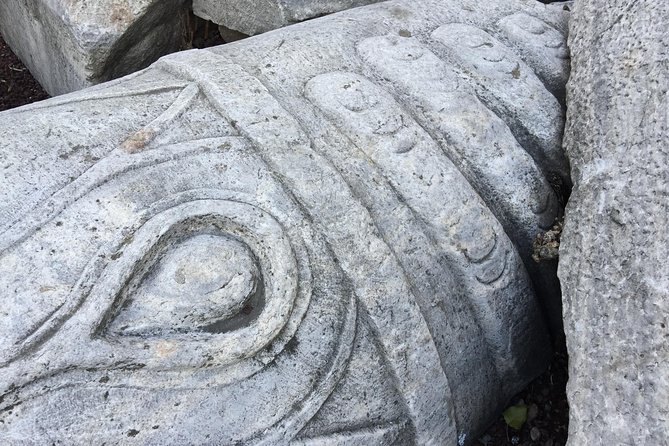
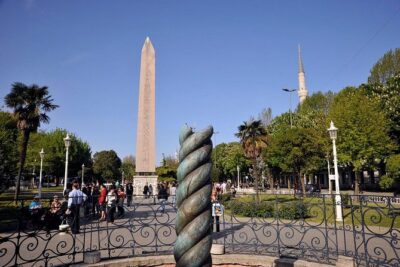
From the underground, you pop back up for the Hippodrome. This was the center for public entertainment and chariot racing in ancient Constantinople. You get a chance to trace how emperors and ordinary spectators experienced public life in the same area.
This stop is about feeling the scale. Even if you cannot recreate the full stadium in your mind, the guide framing helps you understand why this site mattered. It also works as a bridge. Hippodrome culture ties into the cistern exhibition connection you saw earlier.
The stop is shorter, about 20 minutes, so it is best treated as a “key anchor moment.” You will get the main idea, then you move on.
Stop 5: Seven Hills Hotel Panoramic Terrace Break
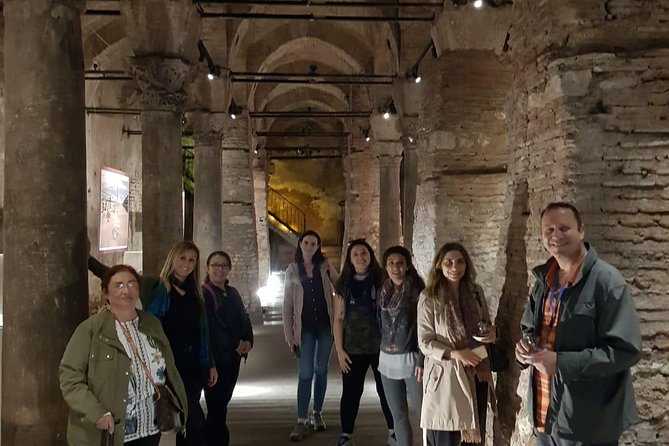
Then you get a short breather and payoff view at the Seven Hills Hotel panoramic terrace. At about 20 minutes, it is a quick reset. But for many people, these view stops become the part you remember most during travel crunch time.
It also helps you place the sites spatially. After time underground, seeing the skyline and hills helps your brain stitch the city into a single map.
The only practical consideration is that terraces can be crowded depending on time. You will still have a guided experience, but do not expect a private, silent viewpoint.
Stop 6: Binbirdirek Cistern, Also Known as the Cistern of Philoxenos
Now you hit a second major cistern, the Binbirdirek Cistern, also called the Cistern of Philoxenos. It is noted as the second largest cistern in Istanbul, and it often gets less attention than the Basilica Cistern.
This is exactly the kind of “unusual jewel” this tour promises. Even in a city full of water features, this cistern tends to be overlooked, which means you are more likely to feel the space without constant interruption.
The Mark Twain connection is a fun detail and worth filing away: he reportedly visited and was captivated enough to write impressions. That kind of outside perspective can help you see why a site stays fascinating to people over centuries.
This stop is about 30 minutes and includes admission. Expect you will get enough time for photos and context, but it will not drag. Bring your curiosity, not your patience for long waits.
Stop 7: Forum of Constantine and the Column of Constantine
The route then brings you to Cemberlitas Sutunu, the Column of Constantine, linked to the Forum of Constantine. The tour frames it around the idea of Istanbul becoming the new capital of the Roman Empire, roughly 1700 years ago.
This is one of those moments where a single tall monument can do a lot of storytelling. You are not just looking at stone. You are looking at political messaging in physical form.
Because the stop is around 20 minutes, it is another anchor point. You will leave with a clearer mental picture of what “Roman capital status” meant in street-level terms.
Stop 8: Lunch at a Lokanta, Fast Service and Local Food Rhythm
Lunch is at a nearby lokanta, a Turkish-style eatery known for fast service and a wide selection of dishes geared toward locals and shopkeepers.
This matters more than it sounds. When food is built for locals, you get a better sense of everyday Istanbul rather than a restaurant made only for tours. You will have about 45 minutes, which is enough time to eat without feeling rushed through your meal.
If you have dietary needs, this is also where your guide’s care style can help you pick smart choices. The tour information includes vegetarian consideration mentioned in guide feedback, so it is a good sign that food stops are handled thoughtfully.
Stop 9: Forum of Theodosius and the Column of Theodosius
After lunch, you head to the Forum of Theodosius. This forum dates to the late 4th century and was once a center of public life with arcades, shops, and markets. At its core stood the Column of Theodosius with reliefs spiraling upward, commemorating military victories.
Today, you will see remnants rather than full arcade structures, but that is not a flaw. In a city like Istanbul, surviving pieces often do the best job of sparking imagination. The tour framing helps you picture processions and debates that would have filled the space.
This stop is short, about 15 minutes, so focus on the monument and the idea of the forum as a “city stage.”
Stop 10: Kalenderhane Mosque Exterior Only, Byzantine and Islamic Blending
Next is Kalenderhane Camii, the Kalenderhane Mosque. The building’s origin is tied to the Theotokos Kyriotissa Church, and the architecture mixes Byzantine and Islamic styles.
Important detail: your visit here is outside only. So treat it like an architecture viewing moment. Look at domes and brickwork patterns, and let your guide connect what you see to the city’s shifting religious and cultural roles over time.
Because it is exterior, you will not spend time inside, which keeps the day flowing and prevents the route from turning into a stop-and-start marathon.
Stop 11: Vefa Bozacisi for Boza Tasting
Then comes a tasting that breaks up the big monuments: boza at Vefa Bozacisi. Boza is a fermented Turkish drink with a sweet, tangy flavor and a distinctive texture.
At about 15 minutes with tasting included, this stop works as a sensory reset. You have spent hours on stone, columns, and underground structures. Boza gives you something you can remember by taste.
If you like food culture moments that do not require a long sit-down meal, this is a great fit. It also keeps the tour from feeling like a museum day with no personality.
Stop 12: Şehzade Mehmet Mosque and Mimar Sinan’s Ottoman Mastery
The tour then visits the Şehzade Mehmet Mosque, a major work by Mimar Sinan. The connection to Sultan Süleyman the Magnificent, built in memory of his son, gives the mosque an emotional historical angle, not just an architectural one.
This stop is about 30 minutes and is described as serene and uplifting, with domes and calligraphy highlighted. You get a chance to slow your pace again after the walking and underground time.
Even if you are not an architecture super-fan, Sinan’s reputation makes this a worthwhile stop. It shows how Istanbul’s “layers” are not only Byzantine and Roman. They also became Ottoman through design and meaning.
Stop 13: Valens Aqueduct Finish at the Roman Engineering Endgame
Finally, you end around the Aqueduct of Valens (Bozdogan Kemeri). This Roman-era aqueduct dates to the 4th century and supplied water to Constantinople, stretching across Istanbul and bridging the valley between hills.
This is a satisfying ending because it links directly back to the tour’s underground theme. You started with the city’s water-related spaces and now you finish with a visible water system built to do the same job above ground.
The tour ends here after about 10 minutes at the site. It is a clean wrap, and it gives you a last big “wow” that still fits the day’s core story.
Getting Your Money’s Worth: Skills This Tour Uses Well
A good tour is not just what you see. It is how your time gets organized.
This one scores well on:
- Included entrances and meals, so you do not constantly pull out your wallet.
- Special access sites, where a guide connection matters more than speed.
- Route variety, balancing underground spaces, major monuments, and food stops.
- Pacing with recovery points, tea at the start, views in the middle, and a slower architectural stop near the end.
One thing to watch is your comfort with walking and stairs. The tour specifically recommends comfortable walking shoes and notes a strong physical fitness level. If you know you tire quickly in hills or inside underground areas, this is the part you should think through before booking.
Who Should Book This, and Who Might Want Something Simpler
This tour is a great fit if you:
- Want Istanbul beyond the postcard list
- Love the underground side of cities, especially water systems
- Like your history explained with a visible, physical setting
- Prefer guided access that gets you into permission-based spaces
- Appreciate food culture stops built into the route, like boza and lunch at a lokanta
It might not be ideal if you:
- Want an easy, mostly seated sightseeing day
- Get stressed by stairs and darker underground interiors
- Prefer a tour that spends much longer time at one single major landmark
Still, if you are the type who likes a day that feels well planned rather than chaotic, this tour’s structure is built to support that.
Should You Book Istanbul Unveiled?
If your ideal Istanbul day mixes major sights with unusual access, I think this is worth serious consideration. The strongest reason to book is simple: the route is built around underground cistern experiences and special-permission visits, and those are hard to reproduce on your own.
Add in included admissions, lunch, tea, boza, and a guide who helps keep the day organized, and the value makes sense for a half-day format. Just be honest with yourself about walking and underground stairs, and you will likely end the day feeling like you saw a side of Istanbul most people miss.
FAQ
How long is the Istanbul Unveiled tour?
It runs about 6 to 7 hours.
How much does the tour cost?
The price is $490.00 per person.
Is the tour offered in English?
Yes, the tour is offered in English.
What is included in the price?
Entrance costs, a professional guide, coffee and/or tea, an Istanbul map, boza tasting, and lunch are included.
What is not included?
Private transportation is not included.
Is this a private tour?
Yes. It is private, and only your group participates. A minimum of 2 people per booking is required.
What is the minimum age?
The minimum age is 8 years old.
Do I need good physical fitness?
Yes. The tour advises travelers should have a strong physical fitness level, and it recommends comfortable walking shoes.
Where does the tour start and end?
It starts at Little Hagia Sophia Mosque (Küçük Ayasofya). It ends around the Aqueduct of Valens (Bozdogan Kemeri).
Is free cancellation available?
Yes, you can cancel for a full refund up to 24 hours in advance of the experience start time.