
REVIEW · EPHESUS AND THE HOUSE OF THE VIRGIN MARY
Private Full Day Ephesus Tour from Bodrum
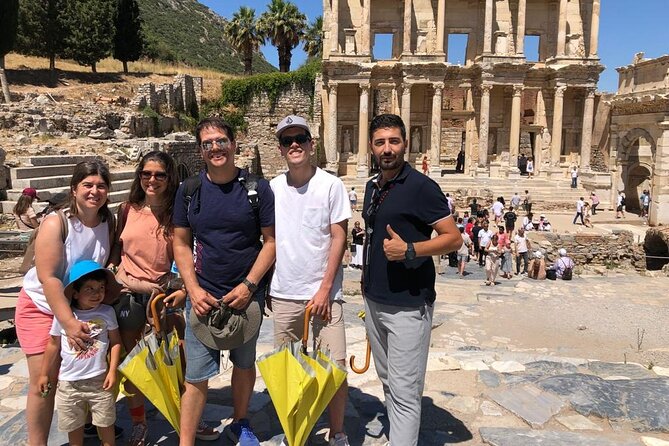
Ephesus hits different when it is private. You get air-conditioned Mercedes Vito comfort plus skip-the-line access, then you mix Roman and Greek ruins with the calmer, faith-filled stop at Meryemana. It is the kind of day where you can actually listen to your guide and not just chase crowds.
Two things I really like: first, the smooth logistics, pickup to drop-off included, so you spend energy on sightseeing, not navigation. Second, the itinerary is built around the big architectural names, then it slows down enough to understand why each building mattered. One drawback to plan for is that big-ticket entries cost extra, especially the Ephesus admission ticket and the Virgin Mary House fee, and the day can feel long if you are strict about skipping the added stops.
In This Review
- Key highlights worth knowing before you go
- Price and value: what you actually pay for a full Ephesus day
- Bodrum to Ephesus timing: the drive you should plan for
- Private comfort in a Mercedes Vito (and why it matters)
- Skip-the-line handling: where it helps most
- Meryemana (Virgin Mary’s House) on Bulbul Mountain
- Ancient Ephesus: building-by-building context that makes it click
- Library of Celsus: the face of Ephesus
- Great Theatre of Ephesus: more than plays
- State Agora: where government talked, not where traders bargained
- Odeion: the small theatre used for councils and concerts
- Emperor temples on Curetes Street: Hadrian and Domitian
- Hercules Gate and street narrowing: how cities controlled access
- Ephesus Terrace Houses: family life under Roman rule
- Basilica of St. John: faith, burial tradition, and Byzantine layers
- Temple of Artemis: what remains, and why it is still famous
- Lunch and the shopping reality: carpets, leather, and your call
- Who should book this private Ephesus day from Bodrum
- Final verdict: should you book this Ephesus tour?
- FAQ
- How long is the Private Full Day Ephesus Tour from Bodrum?
- Where does pickup happen for Bodrum hotels?
- Where do cruise passengers meet for this tour?
- Is the tour private?
- Is the tour in English?
- What is included in the tour price?
- What admissions are not included?
- Is lunch included?
- Is Temple of Artemis free to visit?
- Can I cancel for a full refund?
Key highlights worth knowing before you go
- Private pickup and drop-off from Bodrum hotels or the cruise port, with a dedicated driver
- Skip-the-line handling plus a guide who works in English
- Two-hour drive each way on average, but cruise timing can make that feel tighter
- Meryemana (Virgin Mary’s House) for a quieter, scenic pause above Ephesus
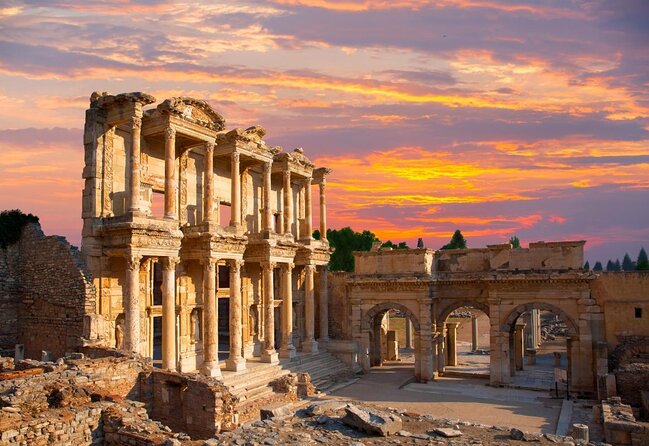
- A full sweep of Ephesus icons, from the Library of Celsus to the Great Theatre
- Extra paid entries for Ephesus and the House of Virgin Mary, with lunch also not included
Other Ephesus visits, with and without the House of Mary
- FOR CRUISERS: Skip The Lines PRIVATE EPHESUS TOUR &On Time Return★ 5.0 · 8,527 reviews
- Top Choice For Cruisers: Ephesus, Mary’s House WITH TICKETS+LUNCH★ 5.0 · 7,233 reviews
- PRIVATE EPHESUS TOUR FOR CRUISERS: On-time Return and Skip-Line★ 5.0 · 5,807 reviews
- PRIVATE NO HIDDEN FEES Ephesus, Mary’s House Guided Tour /GRP OPT★ 5.0 · 2,455 reviews
Price and value: what you actually pay for a full Ephesus day
At $259 per person, this Private Full Day Ephesus Tour from Bodrum is priced for convenience. You are paying for the private transport, hotel or cruise pickup, an English-speaking licensed guide, parking, and taxes. That stuff adds real value once you factor in the drive time and the fact that Ephesus is not a quick in-and-out stop.
But you should also budget for the extras. The tour price does not include the Ephesus Ancient City admission fee (€40 per person) or the Virgin Mary House fee (€18 per person). Lunch is also listed separately at about $15 per person, though the day includes a lunch stop.
Here is the practical way to look at it: if you were going independently, you would still need tickets, transport, and a plan to hit the key sights in the heat. Paying for this tour mainly buys you saved time and lower stress, not magic.
Bodrum to Ephesus timing: the drive you should plan for
The transfer is described as about 2 hours from Bodrum to Ephesus by drive. That is a good baseline, but real-world timing can stretch with traffic and conditions, and cruise days can be extra strict.
This matters because your sightseeing time is only as good as your arrival time. If you are on a cruise, you also have docking, disembarkation, and re-boarding windows that you must provide at booking. My advice is simple: treat the drive as a working minimum, not a promise, and build in patience.
Private comfort in a Mercedes Vito (and why it matters)
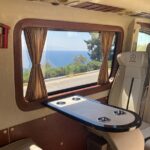
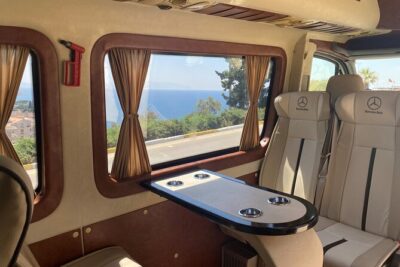
The tour uses a brand new A/C luxury Mercedes Vito with a private driver. When you are doing 6 to 8 hours and most of it is walking on uneven archaeological surfaces, air-conditioning is not a luxury, it is your reset button.
The private van also changes the feel of the day. Instead of regrouping with strangers every time someone needs a bathroom break, your group keeps moving at a pace your guide can manage. One more practical bonus: fewer logistics headaches when you are picked up at a hotel reception or the cruise terminal exit.
Skip-the-line handling: where it helps most
The tour includes guaranteed skip-the-line. On paper, that sounds small. In practice, it helps most when ticket lines and security lines pile up, especially in peak season.
Also, your tour uses mobile tickets. That typically means less scrambling for paper vouchers and fewer last-minute issues. You still pay on-site for the entries listed as not included, but the entry process for the tour itself is smoother when lines are long.
- For Ship Guests:BEST SELLER EPHESUS PRIVATE TOUR & On Time Return
★ 5.0 · 2,029 reviews - ALL INCLUDED: Ephesus Ruins, Mary’s House Tour incl ENTRY TICKETS
★ 5.0 · 1,670 reviews - Ephesus Temple of Artemis and House of Mary Private Half Day Tour
★ 5.0 · 1,573 reviews - PRIVATE TOUR FOR CRUISERS: Mary’s House (Meryemana) and Ephesus
★ 5.0 · 1,349 reviews - Top-Rated: Ephesus & Artemis Tour for Cruisers WITH ENTRY TICKETS
★ 5.0 · 1,184 reviews
Meryemana (Virgin Mary’s House) on Bulbul Mountain
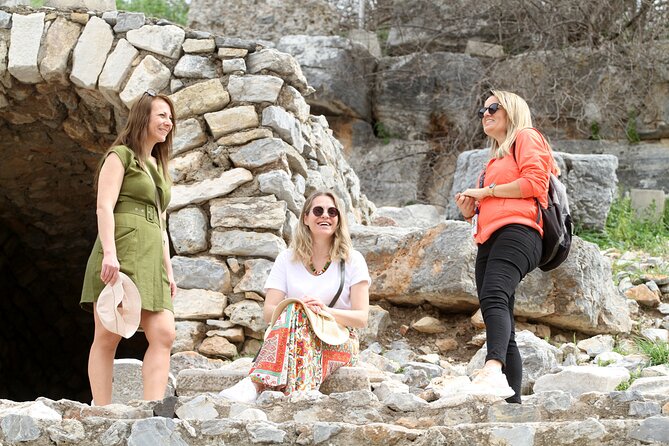
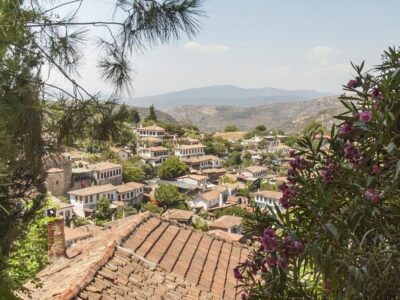
This is one of those stops that can shift your whole day from Roman spectacle to something quieter and more reflective. The House of Virgin Mary sits on the top of Bulbul Mountain, about 9 km ahead of Ephesus, in a green, hidden-feeling area. Even if you are not a religious traveler, the atmosphere is the point.
Expect a typical Roman-stone house layout, with the later layers of Christian devotion. The site combines the belief of where Mary spent her last days with the tradition of Saint John’s years in the region. The 4th-century church construction is part of what makes it historically layered, not just scenic.
What I would do here: slow down. Look for the idea of how the space was used over time, including the different rooms that later became areas of devotion. The itinerary allows about 45 minutes, and that is usually enough if you pace yourself.
Admission at Meryemana is €18 per person, and it is not included in the tour price.
Ancient Ephesus: building-by-building context that makes it click
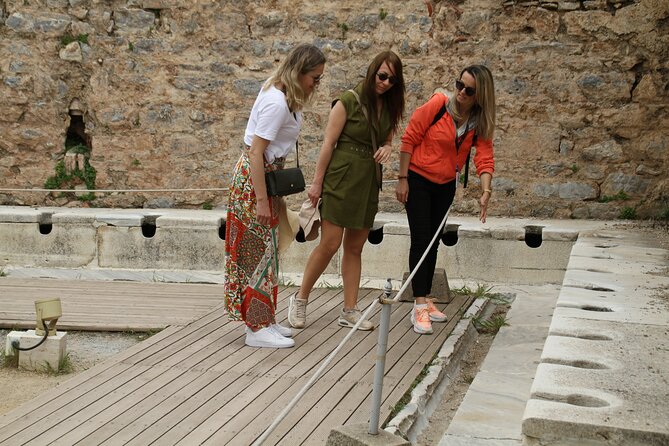
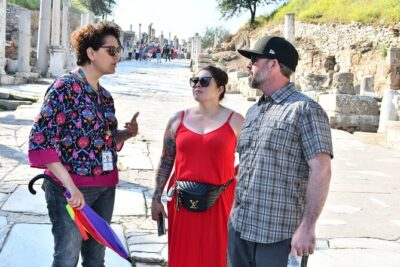
Once you enter Ephesus, the big advantage of a guided private day is context. It is easy to walk through ruins and feel like you are checking boxes. A good guide helps you understand what each area was for, from worship to government.
The tour then strings together key Ephesus structures, usually without rushing you off the ground too fast. You get the famous names, but also some of the supporting cast that gives the city its logic.
If you love architecture, you will probably enjoy the way the itinerary balances grand monuments with the “systems” of the city, like gathering spaces, councils, water, and street life.
Library of Celsus: the face of Ephesus
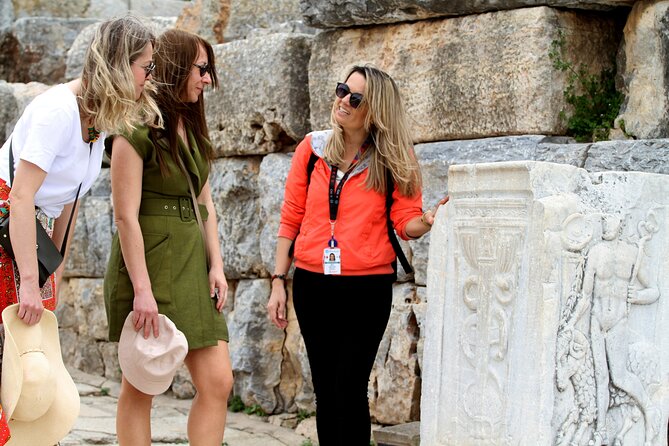
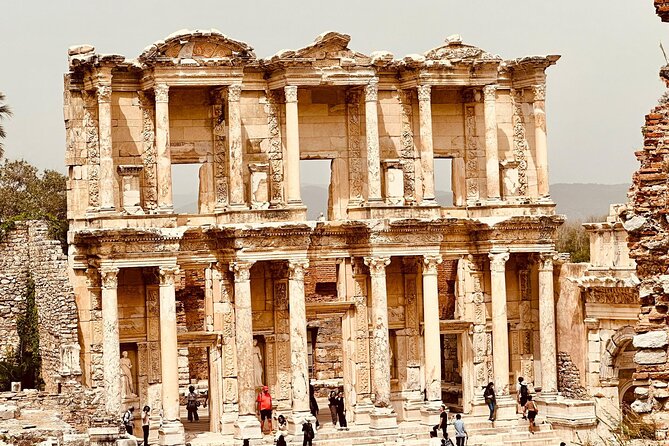
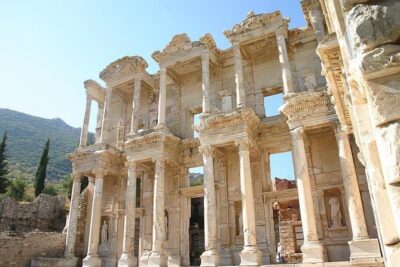
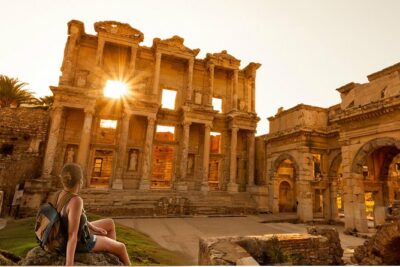
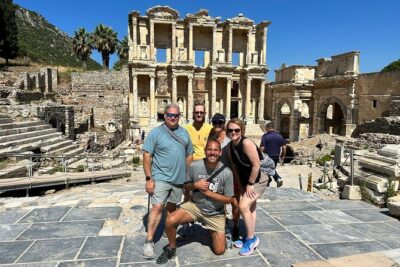
The Library of Celsus is one of those stops that looks better once you understand what it represents. Built in 117 A.D., the library was designed as a monumental tomb for Gaius Julius Celsus Polemaeanus, with his grave beneath the ground floor. His son Galius Julius Aquila commissioned it.
What I find practical to notice is how the design supported storing scrolls. Niches in the walls held scrolls, and double walls behind bookcases helped manage temperature and humidity. It is not just a pretty façade, it was built for books to survive.
You also see the symbolism. The statue of Athena ties to wisdom, which fits the library’s purpose. This is one of the easiest places to feel the scale of Ephesus without needing a historian brain.
In the itinerary, the Library stop is about 15 minutes, and that is usually just enough to get photos and a clear explanation.
Great Theatre of Ephesus: more than plays
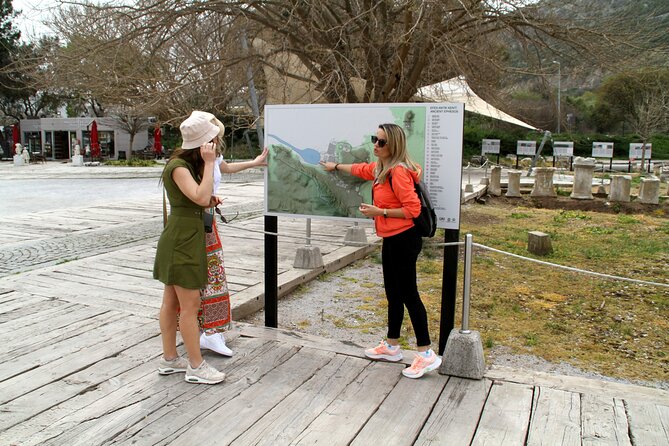
The Great Theatre is the biggest crowd-pleaser in many guide-led Ephesus days, and for good reason. The structure sits on Panayir Hill and was first constructed in the Hellenistic period in the 3rd century BC, then expanded during the Roman period into the style you see today.
You can expect a capacity of about 25,000 seats. The cavea has 66 rows, divided by two diazoma walkways into three sections, so it is not just big, it is engineered.
Here is the useful context: the theatre was not only for concerts and plays. It was used for religious, political, and philosophical discussions, and for gladiator and animal fights. That mix is exactly why Ephesus feels like a real city, not a museum set.
The stop is short on the schedule (about 15 minutes), so arrive ready to look at the seating lines and the shape of the space.
State Agora: where government talked, not where traders bargained
One of the more interesting “less famous” stops is the State Agora. This was built in the Roman period in the first century B.C., and it was not meant for commerce. Instead, it functioned as a business-like meeting space for governmental discussions.
During excavations in the northeast corner, archaeologists found graves from the 7th to 6th centuries B.C. and a stone-paved road, plus an archaic terra cotta sarcophagus. That gives you a reminder that Ephesus layers time on top of itself.
There is also a water reservoir in the corner. Water came through the Pollio Aqueduct, and you can see remains of that aqueduct about 5 km away along the Selçuk-Aydin highway. Even if you do not go to the aqueduct today, the reference helps you understand how a city like this functioned.
Expect around 15 minutes here. Short, but it gives you a mental model for the city.
Odeion: the small theatre used for councils and concerts
The Odeion looks like a small theatre and works like one. It has a stage building, seating, and an orchestra, and it had a double function. It served as a Bouleuterion, used for meetings of the Boules or Senate. It also worked as an Odeum for performances.
The itinerary says it was constructed in the 2nd century A.D by Publius Vedius Antonius and his wife Flavia Paiana, two wealthy citizens of Ephesus. The capacity is about 1,500 spectators, so it is smaller than the Great Theatre, but still important.
The stop is about 15 minutes, but the architecture is easier to connect to politics once you know it was literally where councils gathered.
Emperor temples on Curetes Street: Hadrian and Domitian
Curetes Street feels like a grand spine, and these temple stops help you read it.
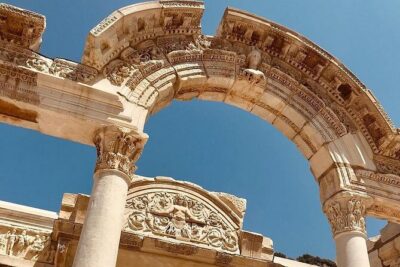
Temple of Hadrian is one of the best-preserved structures on the street. It was built before 138 A.D and dedicated to Emperor Hadrian, who visited from Athens in 128 A.D. The façade uses four Corinthian columns supporting a curved arch, with a relief of Tyche, goddess of victory, in the center.
Side columns are square, and inscriptions on the pedestal connect to emperor statues from 293-305 C.E. The original statues were not found, but the inscriptions tell you who was honored and when.
Temple of Domitian sits at the south end of Domitian Street. It is the first known emperor-dedicated structure in Ephesus. The temple is on a wide terrace, set on vaulted foundations, roughly 50 by 100 meters. The pro-style plan gives it a classic temple front, with columns arranged on both the short and long sides.
One meaningful detail: the city received permission for an emperor temple, the first time it was called neocoros. That was a big civic honor.
The stops for these temples are brief (about 15 minutes each), but they are among the most photogenic sections of the walk.
Hercules Gate and street narrowing: how cities controlled access
Near the end of Curetes Street is Hercules Gate. It is named for a relief of Hercules on it. The itinerary notes the gate was brought from another place in the 4th century A.D to the current location, while the relief itself is dated to the 2nd century A.D.
Only the two sides of the columns remain today, with other parts not found. There is also a connection people make between the Domitian Square relief of flying Nike and the gate, though you might mostly just use it as a lead-in to the gate’s story.
The reason this matters: the gate helped narrow access to the street, preventing vehicle passage. That suggests the street became more pedestrian over time, which helps you imagine daily movement through Ephesus.
Ephesus Terrace Houses: family life under Roman rule
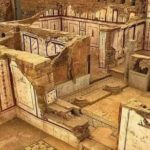
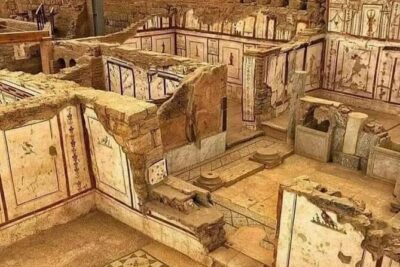
Across from the Hadrian Temple, you will find the Ephesus Terrace Houses, sometimes called the houses of wealthy Romans. These are especially valuable if you want more than monuments and tombs.
The houses sit on the hill opposite the temple and use an urban layout built on the Hippodamian plan, with roads intersecting at right angles. Six residential units spread across three terraces on the slope of Bulbul Mountain. The oldest building dates back to the 1st century B.C., and residences were used until the 7th century A.D.
Mosaics and frescos were consolidated, and the itinerary notes two houses are opened to the public as a museum. Protective roofing covers the spaces so you do not feel like you are looking at a site that is too fragile to touch.
Plan about 30 minutes. This stop is a good “brain reset” after the heavy monument names.
Basilica of St. John: faith, burial tradition, and Byzantine layers
The Basilica of St. John connects Ephesus to early Christian tradition. The belief is that the evangelist St. John spent his last years in the region and was buried on the southern slope of Ayosolug Hill.
The church started as a small chapel over the grave in the 4th century, then later became a basilica during the reign of Emperor Justinian (527 to 565 A.D). The itinerary also mentions the persecution period and connects it to early apostles and Paul, plus the tradition that John wrote the Gospel in Ephesus.
The stop is about 30 minutes. Even if religion is not your main focus, the setting and the layered timeline make it a thoughtful counterbalance to the ancient civic buildings.
Temple of Artemis: what remains, and why it is still famous
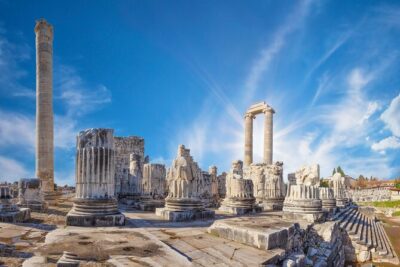
The Temple of Artemis is one of the Seven Wonders of the ancient world. In Ephesus, the site is now largely swamp turned, so what you see today are ruins of foundations rather than the full marble spectacle.
Even so, it matters. The temple was Hellenistic, built with marble, and once had elaborate sculptured columns and capitals. Many of the most beautiful pieces are in the British Museum, so you are seeing only part of the original story here.
The itinerary lists this stop as free for admission. If your priority is spotting what survives, focus on foundations, not fantasies of what once stood in full.
Lunch and the shopping reality: carpets, leather, and your call
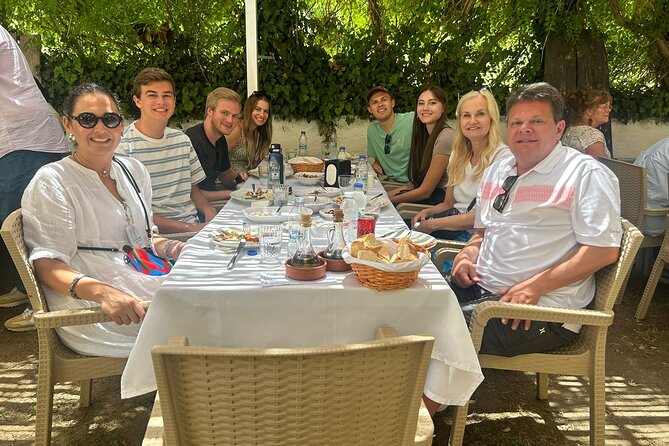
Lunch is listed at about $15 per person. The day typically includes a lunch stop, and people often describe it as filling, with a solid local-food menu.
Then comes the part that can divide opinions: the tour can include stops tied to carpets or rugs and sometimes leather or ceramics. One traveler described being taken to a rug shop and not liking the pressure to buy, and another mentioned a carpet stop where they enjoyed watching how things are made.
My practical advice: decide your rules before you step into the shop. If you are interested in learning, great. If you are not buying, keep things polite, but be clear and firm. You do not want to end up feeling trapped in a sales conversation after a long drive.
Who should book this private Ephesus day from Bodrum
This tour is a great fit if you want a structured day with pickup, an English-speaking licensed guide, and the big Ephesus sights tied together into a coherent story.
It also works well for couples and small groups who like being able to ask questions and move at a pace that does not feel rushed. The stop at Meryemana makes it a nice choice if you want the spiritual layer as part of the Ephesus experience, not as a separate trip.
If you hate shopping pressure, plan to handle that part on your terms. And if your only goal is strict ruins time and you are not interested in the Virgin Mary House stop, you should think carefully because the schedule includes it.
Final verdict: should you book this Ephesus tour?
I think this is a strong choice for most people who want an efficient, private Ephesus day that does not feel like chaos. The combination of private A/C transport, skip-the-line handling, and a full sweep of major monuments makes it good value for time and stress.
Book it if you are happy paying separate admission fees, and you want both ancient civic life and the quieter Meryemana stop. Skip it or rethink if you are very short on time due to cruise constraints, or if you know you will dislike sales-heavy detours.
If you book, do one thing that pays off: go in knowing what is extra (Ephesus and Meryemana admissions, plus lunch), and you will enjoy the day much more.
FAQ
How long is the Private Full Day Ephesus Tour from Bodrum?
The tour runs about 6 to 8 hours.
Where does pickup happen for Bodrum hotels?
Pickup is arranged by meeting you at the hotel reception.
Where do cruise passengers meet for this tour?
Cruise passengers meet at the exit gate of the Immigration Terminal of the Bodrum Cruise Port with a board showing the OTTI Travel sign.
Is the tour private?
Yes, it is a private tour, so only your group participates.
Is the tour in English?
Yes, the tour includes an English speaking professional licensed tour guide.
What is included in the tour price?
Included are pickup and drop-off from hotel and cruise port, private transport in an A/C Mercedes Vito, the licensed English guide, guaranteed skip-the-line, parking fees, and all taxes.
What admissions are not included?
Ephesus Ancient City admission is not included (€40 per person), and the Virgin Mary House admission is not included (€18 per person). The itinerary also notes Temple of Artemis as free.
Is lunch included?
Lunch is not included in the tour price, but there is a local lunch option listed at about $15 per person.
Is Temple of Artemis free to visit?
Yes, Temple of Artemis is listed as free for this tour stop.
Can I cancel for a full refund?
Yes. You can cancel up to 24 hours in advance for a full refund, based on the experience start time local to the tour.
Ephesus, Other Ways to See It

Recently reviewed in Kusadasi
The rest of Ephesus and the House of the Virgin Mary.
 ★ 5.0FOR CRUISERS: Skip The Lines PRIVATE EPHESUS TOUR &On Time ReturnFrom $398,527 reviews
 ★ 5.0PRIVATE NO HIDDEN FEES Ephesus, Mary’s House Guided Tour /GRP OPTFrom $992,455 reviews
 ★ 5.0For Ship Guests:BEST SELLER EPHESUS PRIVATE TOUR & On Time ReturnFrom $392,029 reviews
 ★ 5.0ALL INCLUDED: Ephesus Ruins, Mary’s House Tour incl ENTRY TICKETSFrom $591,670 reviews
 ★ 5.0Ephesus Temple of Artemis and House of Mary Private Half Day TourFrom $151,573 reviews
 ★ 5.0PRIVATE TOUR FOR CRUISERS: Mary’s House (Meryemana) and EphesusFrom $291,349 reviews
 ★ 5.0Top-Rated: Ephesus & Artemis Tour for Cruisers WITH ENTRY TICKETSFrom $201,184 reviews
 ★ 4.8Ephesus: Small Group Tour for Cruise PassengersFrom $291,100 reviews
Also filed under