
REVIEW · ANCIENT CITIES OF THE TURKISH RIVIERA
Ancient Perge, Aspendos Amphitheater and City of Side Tour
Three Roman ruins, one long hot day. This full-day circuit stitches together Perge Ancient City and the Aspendos Amphitheater, then lands you in Side for the Apollo Temple area, with hotel pickup, a guided history talk in English, and time to look around on your own. I especially like that the group stays small (max 15), so the guide can actually explain what you are seeing, and you are not stuck listening while people rush past. The only thing to watch is pacing and comfort, because some parts of the day can feel long in transit, and on hot afternoons the van can be uncomfortably warm.
With a start time of 8:00 am and about 10 hours total, this is a practical way to cover several top sites outside Antalya in one go. The big value is that lunch is included and the pickup and drop-off are handled for hotels in Antalya, Lara, Kundu, Kaleiçi, and Konyaaltı. Just confirm your ticket situation up front, because entrance fees are not listed as included for Perge and Aspendos, while the Apollo Temple stop shows admission as included.
In This Review
- Key highlights worth your attention
- How this 10-hour Antalya route actually plays out
- Perge Ancient City: a Roman city you can still read
- Aspendos Amphitheater: the one that makes the day feel worth it
- Shopping at ARGENTUM: souvenirs without wasting the whole day
- Side and the Apollo Temple ruins: iconic columns by the water
- Lunch, heat, and comfort details that matter
- Is the waterfall worth it, and why opinions differ?
- Price and value: what you are really paying for
- Who should book this tour, and who should skip it
- Should you book this Ancient Perge, Aspendos Amphitheater and Side tour?
- FAQ
- What time does the tour start?
- How long is the tour?
- How many people are in the group?
- Is hotel pickup included, and where does it run?
- Is the tour guide provided in English?
- Is lunch included?
- Are entrance fees included?
- Will I get a mobile ticket?
- Does the tour require a certain fitness level?
- What happens if the weather is poor?
- What is the cancellation window?
Key highlights worth your attention
- Perge’s theater and Roman street plan, including the preserved 15,000-seat scale
- Aspendos Amphitheater as the main showpiece, with a full 2-hour stop
- Small-group format (max 15) with guided commentary plus time to explore on your own
- Apollo Temple ruins in Side, paired with waterfront atmosphere and iconic columns
- Included lunch, plus a chance to browse souvenirs at the ARGENTUM shop
- A longer day outside Antalya, meaning you should plan for heat and sitting time
Other ruins strung along this coast
- Antalya/Kemer: City Tour w/Olympos Cable Car, Boat & Lunch★ 4.7 · 1,116 reviews
- Antalya: Perge, Aspendos, City of Side, and Waterfalls Tour★ 4.8 · 691 reviews
- Ancient Perge, Aspendos Amphitheater and City of Side Tour★ 5.0 · 644 reviews
- Perge Aspendos Side and Manavgat Waterfall Tour★ 5.0 · 470 reviews
How this 10-hour Antalya route actually plays out
This is a classic “cover a lot, but stay guided” day trip. You are picked up from selected Antalya hotels, the tour starts at 8:00 am, and the vehicle brings you between sites with built-in breaks for photos, walking, and listening time.
The itinerary is designed so the history feels connected rather than random. Perge gives you a look at an organized Roman city layout and major public architecture. Aspendos shifts you into a spectacle setting, where the amphitheater is the star. Then you move into Side for the Apollo Temple ruins and (depending on the flow that day) some time to wander the town area at a relaxed pace.
The small-group size is a real advantage here. When a van is capped at 15 people, questions are easier, and your guide can pace the explanations to the group, not the loudest person in the back row. Guides named in the reviews include Ozzy, Oğuzhan, Ibrahim, Recep, and Ms. Gamze, and the common thread is that they try to give context, not just point at stones.
Practical note: you should be ready for moderate walking on uneven ancient ground and stairs in and around the ruins. Bring comfortable shoes and something for sun protection, because even if the sites are fascinating, the weather can still call the shots.
Perge Ancient City: a Roman city you can still read
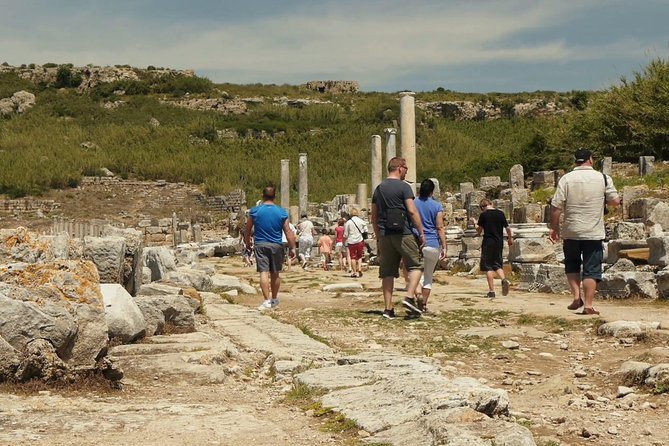
Perge (in the Aksu district, about 17 km from Antalya) is one of those places where the layout helps you understand the story. The city is tied to an older era too, with references to being known as Parha and linked to survival during the Hittite period. In the Roman period, it became one of Anatolia’s more well-organized cities, and you feel that organization while you walk.
Here is what makes the stop special:
Perge’s street plan makes sense. The city plan is based on two main streets running east to west, plus additional roads that follow a north-south grid. That means you are not just wandering ruins randomly. With your guide’s commentary, you can start to see how public life likely moved through the town.
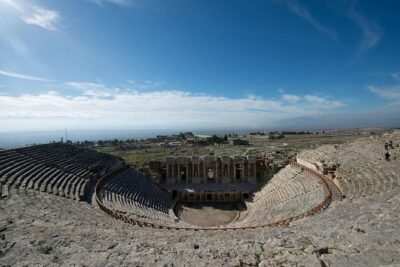
The theater scale is serious. The preserved theater is described as having a capacity of about 15,000 people, which is a lot when you are standing in it. If you pay attention to how the seating rises and how the building is constructed, you get why Roman entertainment spaces mattered.
The sculptures connect to today’s museum world. Perge is also famous for architecture and marble sculpture. The sculptures unearthed in excavations helped make the Antalya Museum a key sculpture museum, and artifacts tied to the theater can be found today in the Perge Theater Hall. Even without stepping into the museum, that link gives the ruins more weight.
You get to see another major structure too. Besides the theater, the stadium is noted as one of Turkey’s best-preserved, so Perge is not only about one landmark. It is a whole “city of stone” stop.
One drawback to expect: Perge is big. In a full-day schedule, you might not see every corner. Still, the guide-led framing makes the time feel more purposeful, and you should take advantage of the built-in self-explore time so you can slow down for photos and details.
Aspendos Amphitheater: the one that makes the day feel worth it
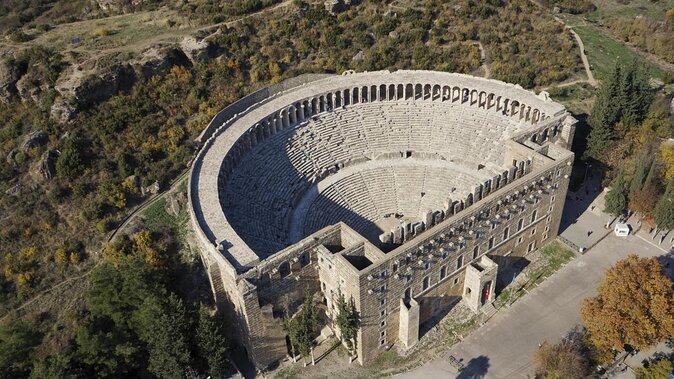
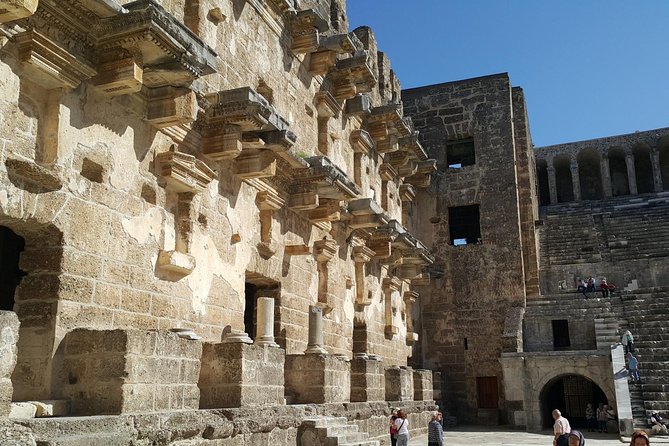
Aspendos is where the tour tends to hit its peak. The amphitheater stop runs about 2 hours, which is enough time to walk around, get good views from different angles, and take in the structure without feeling like you are being herded.
Why it’s a favorite: the amphitheater is described as well preserved, and that preservation makes the place feel immediate. When stone seating is still standing in a clear form, your brain stops thinking in textbook terms and starts imagining an actual crowd.
This stop also works well in a guided group. Your guide can point out how the amphitheater fits into the Roman public world. Even if you know little history going in, you are likely to leave with a stronger sense of what public entertainment meant in the region.
Common consideration: Aspendos is an “in-and-around the structure” experience. If you are hoping for long wandering time across a huge area, you might feel the pressure of the schedule. The trade-off is that you get a top-tier site, and it is a highlight for a reason.
Shopping at ARGENTUM: souvenirs without wasting the whole day
Between the big ruins, you get a shop stop called ARGENTUM. It lasts about 1 hour and is geared toward browsing local souvenirs.
This is the kind of stop that can go two ways. If you like small, locally made gifts, it can be a practical break from heat and walking. If you prefer to keep your time strictly on sights, it might feel like padding. Either way, it is at least positioned as a pause rather than a random detour.
If you are shopping, my advice is simple: set a quick budget before you enter. With a tight itinerary, you do not want to burn half your free time comparing tiny items, then realize you are rushing at the next site.
More from Side and the Manavgat river
- Antalya: Perge, Aspendos, City of Side, and Waterfalls Tour
★ 4.8 · 691 reviews - Ancient Perge, Aspendos Amphitheater and City of Side Tour
★ 5.0 · 644 reviews - Perge Aspendos Side and Manavgat Waterfall Tour
★ 5.0 · 470 reviews - Antalya Excursion to Perge, Aspendos, side, Manavgat waterfall
★ 5.0 · 291 reviews - Antalya: Quad-Bike Excursion in Side Forest & Hotel Pick-Up
★ 4.0 · 269 reviews
Side and the Apollo Temple ruins: iconic columns by the water
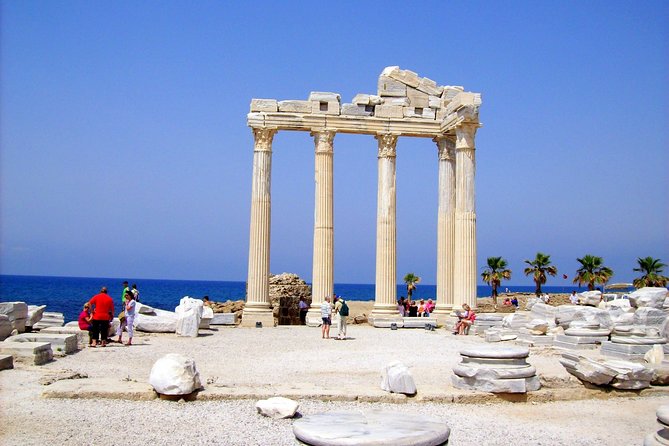
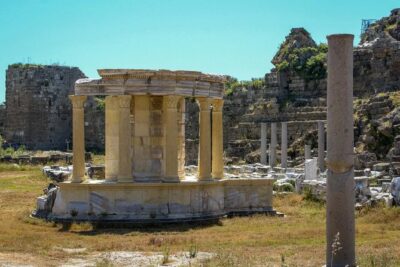
The Apollo Temple stop is about 2 hours, and admission is listed as included. This is one of the most scenic parts of the day, because Side’s ruins sit alongside a waterfront vibe, with the famous columns and stone structures giving you classic “ancient Greece meets Roman tourism” photo angles.
What you should focus on here:
- The columns and spacing: even if only portions remain, you can still see the architectural rhythm.
- The setting: you get that side-by-side feeling of ruins and modern seaside life, which helps the ruins feel less isolated.
- Time to wander: some guides build in space for you to stroll and browse on your own, and people often appreciate getting a little breathing room in Side.
One reality check: Side can feel busy, especially in peak season. If you dislike crowds, aim to spend your best energy on the Apollo Temple area itself, then do any casual wandering in shorter bursts.
If you crave maximum historical density, you may wish you had more time in Side. The good news is that this stop is still structured, so you are not just dropped in town and told to figure it out.
Lunch, heat, and comfort details that matter
Lunch is included, and it is not just a checkbox. The lunch experience is often described as a buffet in a pleasant setting, sometimes overlooking a river, with standout items like homemade yogurt in some meal spots. Drinks are not included, so plan to hydrate during the day rather than expecting everything to be covered.
Now for the real-world comfort issue. Multiple comments point to the same challenge: it can be very hot, and the vehicle air conditioning may not feel strong enough for everyone. If you are the type who gets cranky when you are hot in a car, bring a light layer, use sunscreen early, and keep water handy if it’s allowed from your packing habits.
Also pay attention to the flow of stops. Some people felt there was too much time spent driving, while others loved the balance. In a full-day route, you are always trading something. Your best move is to set expectations: this is designed for “see several top sites,” not “linger for hours at one place.”
Finally, note the guide delivery. One recurring theme is that guides can be passionate and full of context, but sometimes voices or volume can be harder to catch, especially in a moving vehicle. If you know you struggle hearing in groups, a small pair of earbuds can help you follow the guide when sound is messy.
Is the waterfall worth it, and why opinions differ?
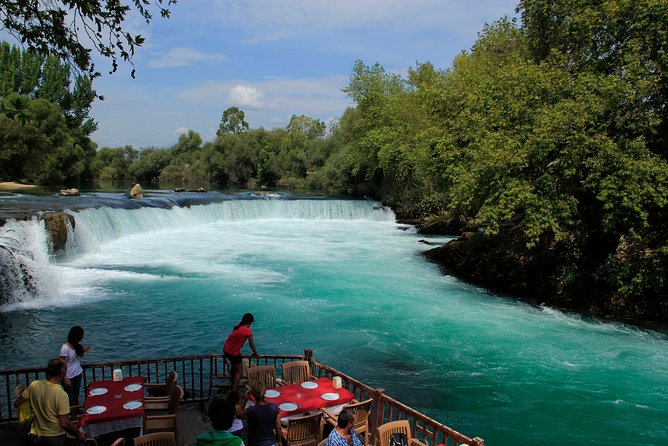
Your tour style is a mix of natural and historical stops, and in some versions of this day the itinerary includes Manavgat waterfall as a later highlight. The reactions are mixed.
Here is the best way to think about it:
- If you want a calm reset between ruins, it can feel peaceful at the end of the day.
- If you dislike crowds or you get annoyed when a stop feels rushed, the waterfall may not deliver the payoff you expected.
Heat plays a huge role. When it is hot, even a scenic spot can feel like “stand, look, photos, go.” If you choose to book anyway, treat the waterfall as an optional bonus rather than the main event.
Price and value: what you are really paying for
At $42.33 per person for a full-day tour, the value comes from several practical pieces:
- Hotel pickup and drop-off from multiple Antalya areas
- A professional guide providing commentary in English
- Lunch included
- A small group cap of 15 people
- Visits to major sites around Antalya
The main cost variable is entrance fees. The Perge and Aspendos stops list admission as not included in the basic flow shown, while the Apollo Temple stop shows admission included. The extra amount shown for entrance fees is 30€, which suggests you should budget for tickets unless your option includes them.
My advice: when you book, confirm whether you are paying entrance fees in advance or on the day. Then you can decide based on how you like to travel. If you hate handling cash at sites, pick the option that includes entrance fees. If you do not mind, the base price is still a fair deal for the guided, pickup-based structure.
Who should book this tour, and who should skip it
This tour is a strong fit for you if:
- You want a one-day plan to cover Perge, Aspendos, and Side without renting a car
- You like history explained in context, not just “look at the ruins”
- You appreciate a small-group pace with time to explore on your own
- You want lunch and transfers included for an easy day
You might want to skip or choose a different format if:
- You strongly prefer slower travel and long hours at one site
- You are very sensitive to heat and cramped vehicle time
- You are hoping for a highly detailed, museum-like experience in every stop (some sites can feel partially covered in a 10-hour day)
Should you book this Ancient Perge, Aspendos Amphitheater and Side tour?
If you want a practical Antalya day that hits multiple “must see” ruins, I would book it. The standout reasons are the big-ticket sights: Aspendos Amphitheater and Perge’s preserved theater scale. Add Apollo Temple in Side, plus a real lunch and hotel pickup, and you have a solid value formula.
Just go in with the right mindset. This is a full-day itinerary with transit time. If you accept that and plan for heat and crowds at more public spots, you are very likely to enjoy how the day connects Roman city life and entertainment spaces.
FAQ
What time does the tour start?
The tour starts at 8:00 am.
How long is the tour?
The duration is about 10 hours.
How many people are in the group?
The tour has a maximum of 15 travelers.
Is hotel pickup included, and where does it run?
Yes, pickup and drop-off are included. Pickup is offered from hotels in Antalya, Lara, Kundu, Kaleiçi, and Konyaaltı.
Is the tour guide provided in English?
Yes, the tour is offered in English.
Is lunch included?
Yes, lunch is included.
Are entrance fees included?
Entrance fees are included only if the option is selected. The stops for Perge and Aspendos list admission as not included, while the Apollo Temple stop lists admission as included.
Will I get a mobile ticket?
Yes, a mobile ticket is provided.
Does the tour require a certain fitness level?
You should have a moderate physical fitness level due to walking at the sites.
What happens if the weather is poor?
This experience requires good weather. If it is canceled due to poor weather, you will be offered a different date or a full refund.
What is the cancellation window?
Free cancellation is available up to 24 hours in advance for a full refund. If you cancel less than 24 hours before the start time, the amount paid is not refunded.
More Around Side and Manavgat



More Ancient Sites on the Coast
Recently reviewed in Antalya



The rest of Ancient Cities of the Turkish Riviera.
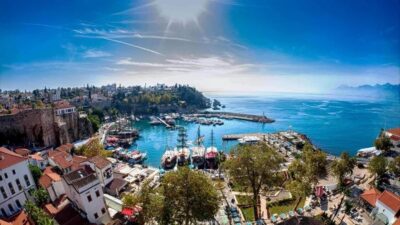 ★ 4.5Antalya/Kemer: Old City, Waterfalls, Olympos Cable Car, BoatFrom $292,896 reviews
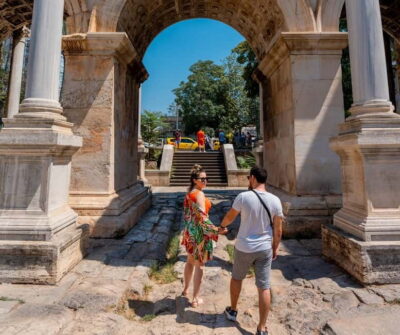 ★ 4.7Antalya/Kemer: City Tour w/Olympos Cable Car, Boat & LunchFrom $251,116 reviews
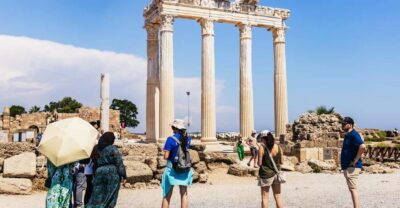 ★ 4.8Antalya: Perge, Aspendos, City of Side, and Waterfalls TourFrom $37691 reviews
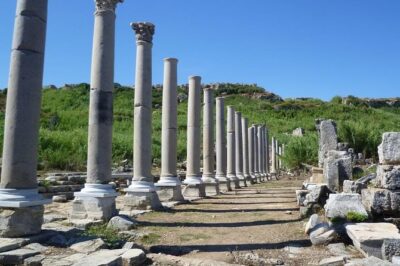 ★ 5.0Perge Aspendos Side and Manavgat Waterfall TourFrom $72470 reviews
 ★ 5.0Antalya Excursion to Perge, Aspendos, side, Manavgat waterfallFrom $90291 reviews
 ★ 4.6From Antalya or Kemer: Olympos Cable Car TicketFrom $34285 reviews
 ★ 4.8From City of Side: Perge, Aspendos & Kurşunlu Waterfall TripFrom $55157 reviews
 ★ 5.0Antalya: Hiking in Termessos Ancient CityFrom $62152 reviews