
REVIEW · BOSPHORUS CRUISES
Bosphorus Daytime or Sunset Sightseeing Cruise & Audio Guide
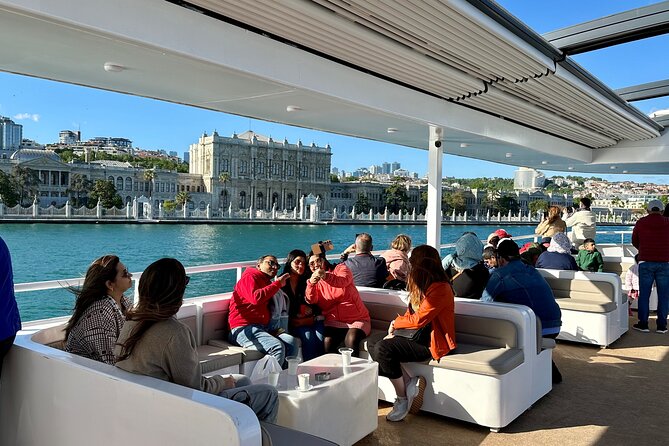
The Bosphorus is best seen by boat. This 2-hour cruise mixes big Istanbul landmarks with an onboard audio guide so you’re not just staring at the water. I love how easy it feels for a tight schedule, and I love that you get a running commentary as you pass Dolmabahçe, Çırağan, Ortaköy, and the bridges. One drawback to plan around, it can get crowded on popular sunset departures, and audio can be harder to follow if you’re in the wrong spot.
For the price point, this is serious value. You get tea/coffee, bottled water, soda, and WiFi, plus a mobile audio guide app in 9 languages and a live guide in English. Just note the boat is capped at about 150 people, so pick your seat thoughtfully and dress for the wind, especially later in the day.
In This Review
- Key things I’d watch for on this Bosphorus cruise
- A Bosphorus cruise that actually fits a busy day
- Where the boat takes you, Dolmabahçe to Maiden’s Tower
- Dolmabahçe Mosque: the Ottoman waterfront opener
- Dolmabahçe Palace: European style meets Ottoman scale
- Çırağan Palace: a glamorous pause on the European shoreline
- Ortaköy Mosque (Büyük Mecidiye Camii): a skyline landmark in the middle of daily life
- The Bosphorus Bridge: modern engineering meets ancient water routes
- Throat of the Bosphorus: where the route tightens
- Galatasaray Island (Kuruçeşme): a small island with club-level status
- Fortresses and bridges, Rumeli to the Second Bosphorus Bridge
- Rumeli Fortress: Ottoman military architecture from the water
- Fatih Sultan Mehmet Bridge: the second major crossing
- Anadolu Hisarı: the Asian-side fortress with older roots
- Asian shore palaces: Küçüksu Pavilion and Beylerbeyi
- Küçüksu Pavilion: Ottoman summer-palace vibes
- Beylerbeyi Palace: Ottoman summer residence for dignitaries
- Maiden’s Tower: the iconic final photo moment
- Onboard setup, audio guide, and what comes with the ticket
- Included comforts that matter on a 2-hour boat ride
- Alcohol policy: only for adults 21+
- Price and value: how $9 turns into a smart afternoon
- Best time to go: daytime for clarity, sunset for crowds
- Seating and sound tips that can make or break the experience
- Who this Bosphorus cruise is best for
- Should you book this Bosphorus Daytime or Sunset Cruise?
- FAQ
- How long is the Bosphorus sightseeing cruise?
- What does the $9 price include?
- Is the tour offered in English?
- Do I need a printed ticket?
- Does the tour include alcohol?
- Where is the meeting point?
- How many people are on the boat?
- Is tipping included?
- What is the cancellation window for a full refund?
- When should I book?
Key things I’d watch for on this Bosphorus cruise
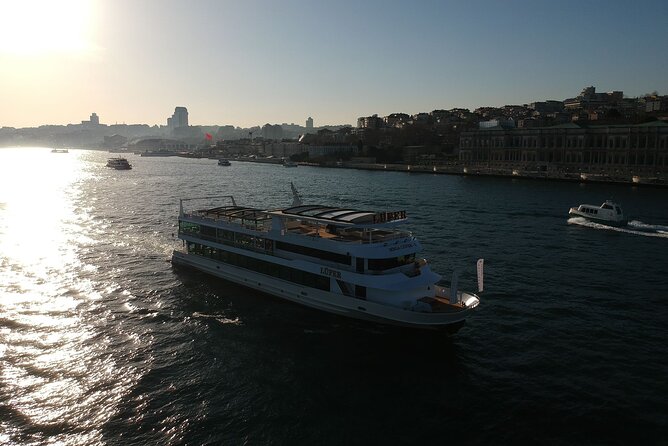
- Ottoman sights in sequence, from Dolmabahçe through Çırağan, Ortaköy, and the forts
- On-the-water audio support, delivered by both a live English guide and a phone app
- Included drinks and WiFi, so you’re not stuck paying for basics mid-cruise
- Crowd-and-sound reality, especially at sunset, which affects how clearly you hear the guide
- Photography windows depend on seating, so where you sit matters more than you think
Other ways to ride the Bosphorus, compared
- Istanbul: Bosphorus Dinner Cruise & Show with Private Table★ 4.8 · 44,561 reviews
- Istanbul: Bosphorus Dinner Cruise with Turkish Night Show★ 4.8 · 10,127 reviews
- Istanbul: Perfume Making Workshop with Bosphorus View★ 5.0 · 2,985 reviews
- Istanbul: Bosphorus Sunset Cruise on Yacht with Live Guide★ 4.9 · 2,845 reviews
A Bosphorus cruise that actually fits a busy day
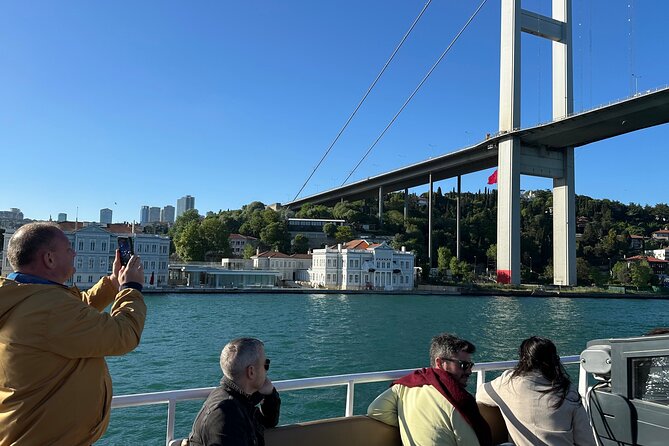
If your Istanbul plan is a mile long and your energy is not, this kind of cruise earns its keep. In about two hours, you glide along one of the world’s most photo-friendly waterways and tick off landmarks that would take forever to link together on foot or by transit.
The practical win is the flow. You’re not constantly checking buses, crossing busy streets, or guessing where to stand for a good angle. You’re already moving. That turns the Bosphorus into a moving viewpoint, with the skyline and shoreline homes rolling past in a steady rhythm.
The other win is context. The audio guide is built for you to keep learning as you go, not just at one stop. You’ll get names, dates, and what to look for on each building, which helps you turn a scenic ride into a smart tour without feeling like a school lecture.
Where the boat takes you, Dolmabahçe to Maiden’s Tower
This cruise is a point-to-point loop that returns to the meeting area, and the highlights are set up in a logical order along the strait. You’ll pass major Ottoman landmarks on the European side first, then keep heading toward the Asian side forts and palaces, and you’ll end with Istanbul’s most recognizable “postcard” silhouette.
Here’s what that looks like in real viewing terms.
Dolmabahçe Mosque: the Ottoman waterfront opener
Right at the start, the boat passes Dolmabahçe Mosque, positioned right beside the historic Dolmabahçe Palace along the Bosphorus. It was commissioned by Sultan Abdülmecid in 1855, and the architecture is known for elegant minarets and a grand dome.
What I like about this stop from a passenger perspective is that you get to see the mosque in its real setting, not isolated behind fences. You’re watching it from the water while the palace grounds sit nearby, so your brain can connect the “religion” and “power center” pairing that Ottoman rulers liked to project.
Tip for photos: aim for a clear line before the boat turns its angle. On a moving boat, the best shots often happen during brief straight segments.
Dolmabahçe Palace: European style meets Ottoman scale
Next comes the Dolmabahçe Palace, the late Ottoman Empire’s administrative center in the mid-19th century. From the water, you’ll notice the palace’s blend of European-influenced architecture and the sheer visual weight of the complex.
The palace is also famous for its interior details, including the world’s largest Bohemian crystal chandelier. You won’t be walking inside on this cruise, but the exterior view still helps you appreciate why people call it grand. From the Bosphorus side, the scale reads immediately.
Photo drawback to keep in mind: sunlight and wind matter. If the day is bright and you’re on the side with glare, your photos may look washed out even if the buildings are gorgeous.
- Istanbul: Daytime or Sunset Sightseeing Cruise & Audio Guide
★ 4.8 · 14,430 reviews - Best of Istanbul 1, 2 or 3-Day Private Guided Istanbul Tour
★ 5.0 · 8,922 reviews - Istanbul: Basilica Cistern Fast-Track Entry and Audio Guide
★ 4.6 · 7,521 reviews - Istanbul: Hagia Sophia Skip-the-Line Ticket & Museum Option
★ 3.7 · 4,958 reviews - Istanbul: Hodjapasha Whirling Dervishes Show & Exhibition
★ 4.4 · 4,790 reviews
Çırağan Palace: a glamorous pause on the European shoreline
As you glide toward Çırağan Palace, the experience shifts slightly from “formal palace power” to “glamour and spectacle.” Çırağan was a royal residence and now functions as a luxury hotel.
What you’re getting here is a change in atmosphere. Ottoman architecture with ornate marble and dramatic terraces looks especially good when framed by the waterline. The audio guide helps you connect the dots, including how it changed from palace to hotel, which makes the view feel more meaningful.
If you like photography, this is a good moment to take multiple shots at different heights. A lower angle often catches the water texture; a higher angle catches the façade details.
Ortaköy Mosque (Büyük Mecidiye Camii): a skyline landmark in the middle of daily life
Then the cruise reaches Ortaköy Mosque, officially named Büyük Mecidiye Camii. It’s known for its Neo-Baroque style, and it sits right on the waterfront in a lively district.
This one is all about contrast. You’re seeing an iconic landmark, but the surroundings feel like a neighborhood, not a museum zone. The audio commentary guides you to specific architectural features and shares the stories tied to the mosque’s place in the city.
Practical note: because the mosque is near an active area, you may notice more boat traffic and busier visual clutter around it, compared with the larger palace fronts.
The Bosphorus Bridge: modern engineering meets ancient water routes
As the boat approaches the Bosphorus Bridge, you’ll get a wide “Istanbul skyline” view. This is a good stretch for photos, especially if you want your cruise pictures to include a clear modern reference point.
The audio guide explains what the bridge represents in connecting Europe and Asia, and you can literally see the city’s two identities playing out on either side of the strait.
If you’re the kind of traveler who likes landmarks with a storyline, this is where the cruise starts to feel like more than a slideshow.
Throat of the Bosphorus: where the route tightens
The route also includes sailing through the throat of the Bosphorus. Even without a stop where you get off the boat, this segment is useful because it changes the way the shoreline looks as the channel narrows and the buildings feel closer.
This is a “look for the change” moment. The waterway shape affects your perception of distance, and it can make the skyline feel more dramatic than it did earlier.
Galatasaray Island (Kuruçeşme): a small island with club-level status
Next up, the boat passes Galatasaray Island, also called Kuruçeşme Island. This is a small artificial island known for an exclusive club and a historical connection to the Galatasaray Sports Club.
From the boat, you’ll get a glimpse of a controlled, gated feel compared with the open public shoreline. The audio guide adds the human side of the story, not just architecture, so the view becomes about lifestyle and social history too.
If you’re hoping for big “tourist landmark” energy here, manage expectations. Think of it more like an interesting stop for a quick set of photos and a short history lesson.
Fortresses and bridges, Rumeli to the Second Bosphorus Bridge
The middle part of the cruise leans into defense and navigation history. That shift is great because it keeps the viewing from becoming repetitive. Palaces and mosques are one kind of beauty. Fortresses and bridges are another kind of impressive.
Rumeli Fortress: Ottoman military architecture from the water
As you pass Rumeli Fortress, you’ll see formidable walls and towers. This Ottoman-era structure dates back to the 15th century and was built by Ottoman Sultan Mehmed the Conqueror.
One reason this section lands well on a short cruise is that you can grasp strategy quickly. You’re watching the fortress as the boat travels the waters it was meant to control. The audio guide connects it to the conquest of Constantinople, which makes the location feel less random.
Photography note: fortress photography benefits from sharp lighting. If the day is overcast, try to sit where your camera can stabilize, because you may get more motion blur.
Fatih Sultan Mehmet Bridge: the second major crossing
Under the Fatih Sultan Mehmet Bridge, often called the Second Bosphorus Bridge, you’ll get another “modern Istanbul” photo moment. It’s a suspension bridge named for the Ottoman Sultan who conquered Constantinople.
This bridge is useful because it frames the entire strait visually. Even if you know Istanbul’s history already, seeing bridges like this from the water helps you understand how the city functions today, not just how it looked centuries ago.
Anadolu Hisarı: the Asian-side fortress with older roots
On the Asian shore, the boat brings you Anadolu Hisarı, a medieval fortress built by Ottomans in the 14th century. The rugged walls and watchtowers against greenery make it one of the more dramatic visuals of the whole trip.
The audio guide ties the fortress to Ottoman expansion and architectural features, and that turns the view into a lesson about why Istanbul became so strategically important.
What I’d tell you to watch for here: the wall texture. Fortresses can look similar from far away, but up close, stone patterns and tower shapes help you tell them apart.
Asian shore palaces: Küçüksu Pavilion and Beylerbeyi
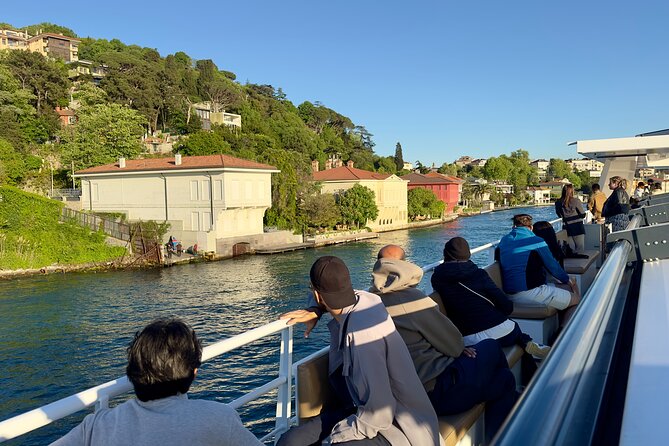
After forts and bridges, the cruise shifts into “royal residence” mode again. The Bosphorus did not just hold defenses, it also held leisure and ceremony.
Küçüksu Pavilion: Ottoman summer-palace vibes
As the boat nears Küçüksu Pavilion along the Asian shores, you’ll spot Ottoman architecture meant for summer comfort and status. It was built in the 19th century and is set against gardens and the water.
The audio guide adds how it served as a royal retreat, and it’s also referenced through historical films. That last piece helps if you already recognize the pavilion as a visual motif from pop culture and older movies.
Dress note: this part of the cruise can feel cooler as wind moves across the water. Bring a layer even if the day starts warm.
Beylerbeyi Palace: Ottoman summer residence for dignitaries
Then you pass Beylerbeyi Palace, another 19th-century stop on the Asian side. It served as a summer residence for Ottoman sultans and as a guest house for visiting dignitaries.
From the water, you’ll see elaborate stone carvings and impressive gardens. The audio guide helps you connect the palace to notable figures who stayed there, so it feels less like a random façade.
This is also a nice stretch for photos where you want something more “architectural and elegant” rather than “big and defensive.”
Maiden’s Tower: the iconic final photo moment
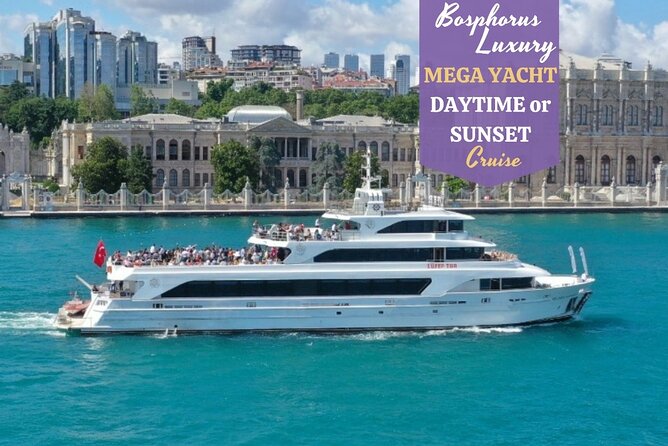
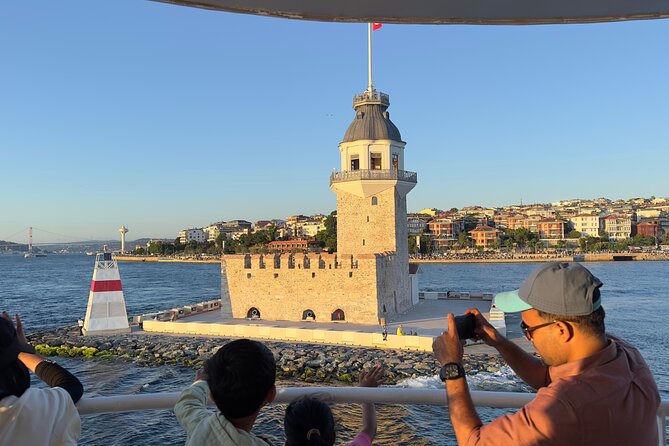
Finally, the boat passes Maiden’s Tower, located on a small islet at the southern entrance of the Bosphorus. It’s one of Istanbul’s most photographed landmarks, known for myths of princesses and tragic loves.
The audio guide covers those legends and also explains the tower’s uses through different centuries, and that it’s now a popular café and restaurant.
If you’re traveling with someone who loves photos, this stop usually delivers. Even people who don’t care about history tend to recognize the silhouette immediately.
Pro photography tip: if you want your Maiden’s Tower shots to look clean, take them early. Once the crowd at deck level gets busy for sunset pictures, movement increases and timing gets harder.
Onboard setup, audio guide, and what comes with the ticket
This is an easy cruise to take without complicated planning because the included stuff covers the basics.
Included comforts that matter on a 2-hour boat ride
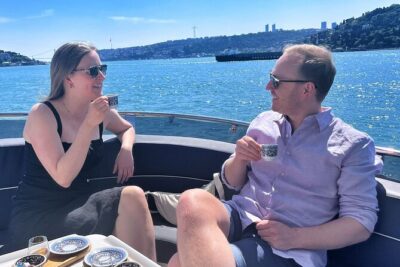
Your ticket includes soda/pop, bottled water, coffee and/or tea, plus WiFi. You also get a mobile audio guide app available in 9 languages, and a live guide in English.
That combination is smart. When one system is hard to hear, the other can still help. In the real world, boats are loud places. Wind plus crowds can make audio tricky. Having both a live guide and an app gives you a backup.
Alcohol policy: only for adults 21+
For anything alcoholic, the rules are straightforward. Alcoholic drinks are served only for travelers 21 years old and above. Minors under 21 are served non-alcoholic drinks.
So if your group includes teens or you want to stay fully non-alcohol, you won’t be singled out or left out of the drink routine.
Price and value: how $9 turns into a smart afternoon
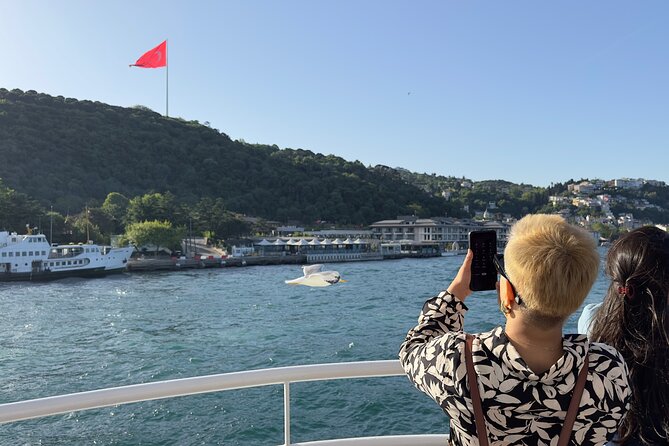
At about $9 per person for an around 2-hour cruise, this sits in the “best deal on the water” category for Istanbul. The reason is not just the ticket price. It’s the fact that you’re getting a bundle: drinks, water, coffee or tea, WiFi, and guided audio on a route packed with named landmarks.
You’re also not paying extra per stop. You stay on the boat and the commentary keeps rolling as scenery changes from palace fronts to fort walls to bridges.
Where you might feel the low cost is on presentation style. Expect a practical setup rather than a quiet, premium experience. You’re on a boat with up to 150 travelers, and that affects how relaxed it feels.
Best time to go: daytime for clarity, sunset for crowds
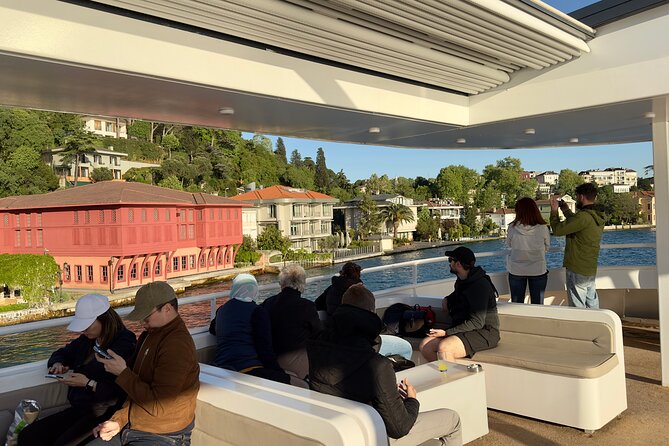
Daytime tends to be easier for sightlines and sound clarity. Sunset is where the colors can look magical, but you trade that for a higher chance of crowding on deck for photos.
If you go at sunset, I’d plan to get comfortable with the idea that everyone wants the same angle. That means more bodies near railings, more movement, and more competition for the “best” viewing spots.
Still, sunset is absolutely worth considering if you care about mood and skyline glow, not just facts.
Seating and sound tips that can make or break the experience
On a cruise like this, your seat is not a minor detail. It changes what you can hear and how much you can see.
Here’s what I’d do to give yourself the best odds:
- Pick a spot around the middle of the seating area rather than far forward or far back. If you’re too far back, it can be harder to follow the guide.
- If there are multiple decks or levels and one feels colder, dress accordingly. Wind off the water can sneak up on you.
- If the crowd is heavy, focus on steady viewing instead of constantly moving for perfect angles. You’ll get more good photos by staying put than by chasing each new photo moment.
Also, audio delays can happen on moving boats. If you notice the guide talking slightly after you pass something, keep an eye on the visuals and let the app catch up.
Who this Bosphorus cruise is best for
This is a great match if:
- You want maximum landmarks in minimal time
- You like structured sight-seeing but don’t want to hop around town
- You’re budget-minded and still want included drinks and an actual guide
It may be less ideal if:
- You need a quiet, uncrowded deck experience
- You’re very sensitive to cold wind on boats
- You rely on perfect audio clarity and cannot use a phone app as backup
The upside is that, for most people, the combination of low cost and high landmark density feels like a win, especially on a first Istanbul visit.
Should you book this Bosphorus Daytime or Sunset Cruise?
Yes, I think you should book it if you want an affordable, guided Bosphorus ride that packs in iconic views like Dolmabahçe, Çırağan, Ortaköy, Rumeli Fortress, Anadolu Hisarı, Beylerbeyi, and Maiden’s Tower in one smooth route.
Book with a couple of smart expectations. The boat can get crowded at sunset. Audio quality depends on where you sit. And you’ll get the best results by dressing for wind and choosing your spot early.
If that fits your style, this is one of the simplest ways to understand why Istanbul’s shoreline has always mattered, from Ottoman power to today’s daily city life.
FAQ
How long is the Bosphorus sightseeing cruise?
The cruise lasts about 2 hours.
What does the $9 price include?
Your ticket includes soda/pop, bottled water, coffee and/or tea, WiFi, a mobile audio guide app (9 languages), and a live guide in English.
Is the tour offered in English?
Yes, the experience is offered in English.
Do I need a printed ticket?
No. You’ll use a mobile ticket.
Does the tour include alcohol?
Alcoholic drinks are served only to travelers aged 21 and above. Minors under 21 are served non-alcoholic drinks.
Where is the meeting point?
The start is Mega Lüfer Yachts at Ömer Avni, Meclis-i Mebusan Cd. No:34, 34427 Beyoğlu/İstanbul, Türkiye. The tour ends back at the meeting point.
How many people are on the boat?
The tour has a maximum of 150 travelers.
Is tipping included?
No, tips are not included.
What is the cancellation window for a full refund?
You can cancel up to 24 hours in advance for a full refund.
When should I book?
On average, this cruise is booked about 11 days in advance.
More Boats on the Bosphorus


Recently reviewed in Istanbul


The rest of Bosphorus Cruises.
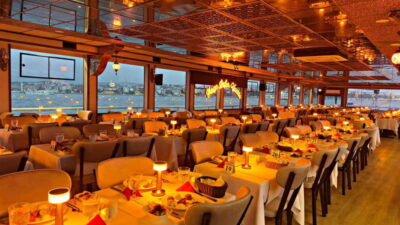 ★ 4.8Istanbul: Bosphorus Dinner Cruise & Show with Private TableFrom $3444,561 reviews
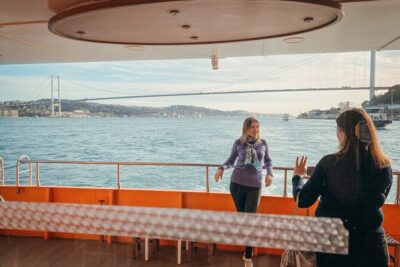 ★ 4.8Istanbul: Bosphorus Dinner Cruise with Turkish Night ShowFrom $3410,127 reviews
 ★ 5.0Istanbul: Perfume Making Workshop with Bosphorus ViewFrom $282,985 reviews
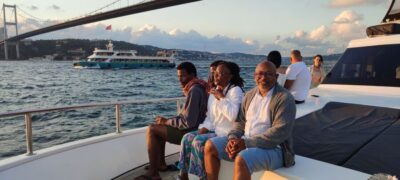 ★ 4.9Istanbul: Bosphorus Sunset Cruise on Yacht with Live GuideFrom $192,845 reviews
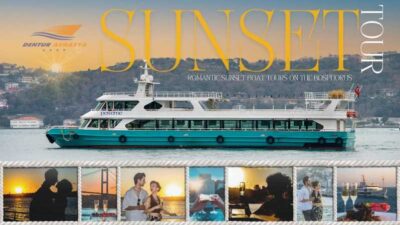 ★ 4.8Istanbul: Bosphorus Sunset Cruise with Drinks & SnackFrom $82,716 reviews
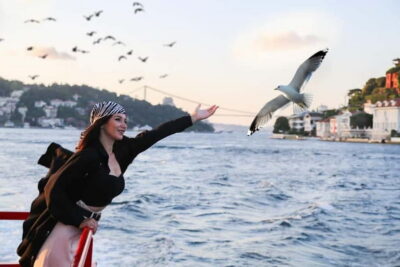 ★ 4.6Istanbul: Bosphorus Sightseeing Cruise Tour with Audio GuideFrom $82,694 reviews
 ★ 5.0Bosphorus Yacht Cruise Experience: Visit the Asian SideFrom $602,251 reviews
 ★ 4.4Istanbul: Bosphorus Cruise with Dinner ShowFrom $412,181 reviews