
REVIEW · WHIRLING DERVISHES AND TURKISH NIGHTS
Istanbul: Hodjapasha Whirling Dervishes Show & Exhibition
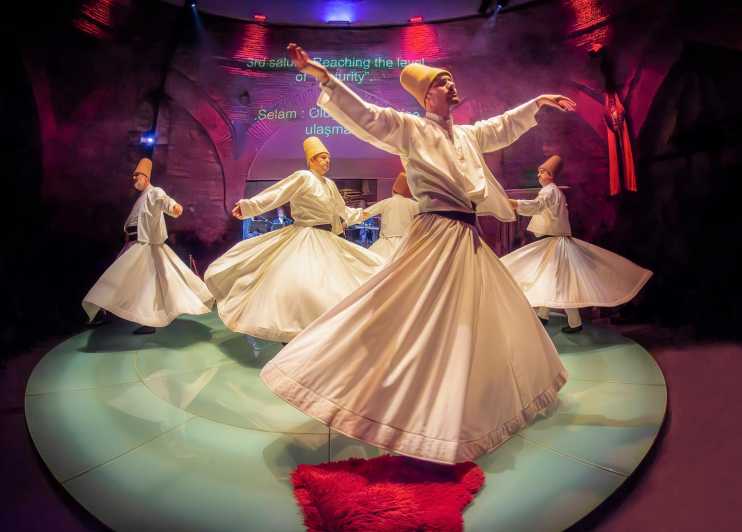
The whirling has a rhythm you feel. At the HodjaPasha Culture Center, you step into a restored Ottoman bath and watch the Mevlevi Sema unfold with live, careful music and a spiritual storyline. I love that this is staged as a real ceremony with clear meaning, not a loud tourist act. I also like the setting, the HodjaPasha Culture Center exhibition and its calm, focused ambiance. The one thing to keep in mind is that this is a ritual with strict rules, so if you want a casual, chatty show, you may find the silence tough.
Expect an elegant hour where the ceremony runs in sections, including praise, chant, and the seven-part Sema journey. You’ll also get a simple warm-up through the foyer material, plus complimentary drinks during the show and a program booklet to follow along. For some people, the experience can feel long on a tight seat, and a few visitors note the chairs are not super comfy and seating can feel close.
In This Review
- Key Things I’d Bank On Here
- HodjaPasha Culture Center: a restored hamam that sets the tone
- Before the whirling: how the ceremony begins and what you’ll see
- The seven-part Sema journey: the story inside the spinning
- The live music: instruments, acoustics, and why the sound matters
- The “rules of respect”: no photos, no talking, no applause
- What “complimentary drinks” feels like during the hour
- Logistics that really affect your night: timing, meeting point, and seats
- Is it a show, or a ceremony? How to set expectations
- Price and value: is $32 worth it for an hour?
- Who should book this and who should skip it
- Should you book the HodjaPasha Whirling Dervishes ceremony?
- FAQ
- What is the duration of the HodjaPasha Whirling Dervishes ceremony?
- Where is the meeting point for the experience?
- How much does it cost?
- Is photography allowed inside?
- Are children allowed?
- Is this experience suitable for wheelchair users?
- Are seats first come, first served?
- What is included in the ticket?
- Does the show include drinks?
- What language support is offered?
Key Things I’d Bank On Here
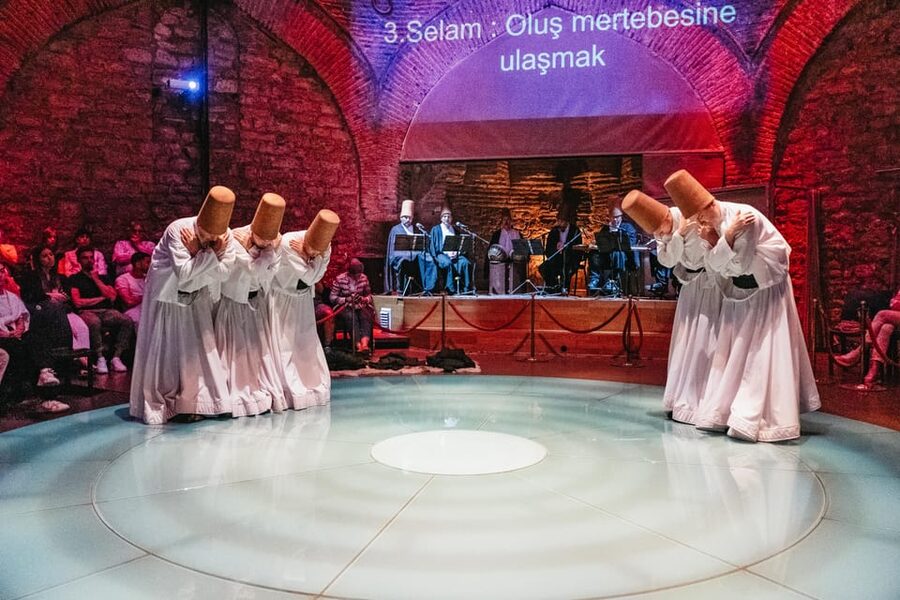
- A 550-year-old Ottoman Turkish bath setting: a domed, stone interior that makes the music feel physical.
- The ceremony format is the point: praise, chant, then the seven-part Sema journey with a spiritual arc.
- Live music you can actually hear: vocals plus traditional instruments often including ney and kanun.
- No photos inside: the rule keeps the focus where it belongs, on the ritual and sound.
- Arrive early for the exhibition: the foyer information helps you understand what you’re seeing.
- A strict etiquette vibe: talking and applause are not allowed, and phone use should be minimal.
Other evenings out. The sema is a religious ceremony rather than a floor show, and audiences stay quiet through it
- Istanbul: Bosphorus Dinner Cruise with Turkish Night Show★ 4.8 · 10,127 reviews
- Istanbul: Whirling Dervishes Ceremony and Mevlevi Sema★ 4.3 · 1,694 reviews
- Istanbul: Hodjapasha Rhythm of The Dance Show★ 4.7 · 1,451 reviews
- Istanbul Bosphorus Dinner Cruise: Live Folk Dance & DJ Experience★ 4.5 · 1,437 reviews
HodjaPasha Culture Center: a restored hamam that sets the tone
This isn’t a generic theater. The HodjaPasha Culture Center is housed in a restored Ottoman Turkish bath, and that matters. Turkish bath architecture is all about domes, echo, and stone surfaces, which means the live music doesn’t just play in the background. It fills the room, and the sound settles into you.
You’ll also find an exhibition component inside the center. Think of it as a guided pre-show education area, with explanations that help the ceremony make sense. Some visitors say it was informative enough to answer their main questions, which is exactly what I’d hope for: context without turning the night into a lecture.
Practical note: the venue is in central Istanbul near Sirkeci Tram Stop, and you should expect stairs. A few people specifically warn about steps to reach the upper performance level, so build in time to arrive before the ceremony starts.
What you’ll like most: the building makes the experience feel more grounded and less like a staged performance. If you’re the type who enjoys good acoustics and historic rooms, you’ll feel at home quickly.
Potential drawback: if you’re sensitive to tight seating or long standing time before you’re seated, plan your pacing carefully.
Before the whirling: how the ceremony begins and what you’ll see
The hour follows the Mevlevi Sema ceremony structure. Your ticket is for the ceremony itself, and the flow is designed so you can track it with the included booklet.
You start by taking your seat at HodjaPasha Culture Center, and the program begins with classical Turkish music. That first section is important. It’s not just entertainment to warm up the room. It helps set the mood so the later chanting, drum signals, and spinning feel like one continuous spiritual progression.
Next, you’ll see the dervishes and the sheikh take their places. The ceremony includes praise connected to the Prophet Mohammed, followed by chant. Then comes the drum, described as a voice-like cue, as the performance moves into the Sema.
If you’re expecting a carnival-style spectacle, pause. The emotion here is more reverent than flashy. Several visitors call it solemn and moving, and they highlight that the whirling comes across as disciplined devotion rather than a performance for applause.
What you’ll likely notice: the performers stop cleanly between sections. That “start-stop” control is part of the impact. You may see sustained spinning for a long stretch, and the spinning itself is organized, not random.
The seven-part Sema journey: the story inside the spinning
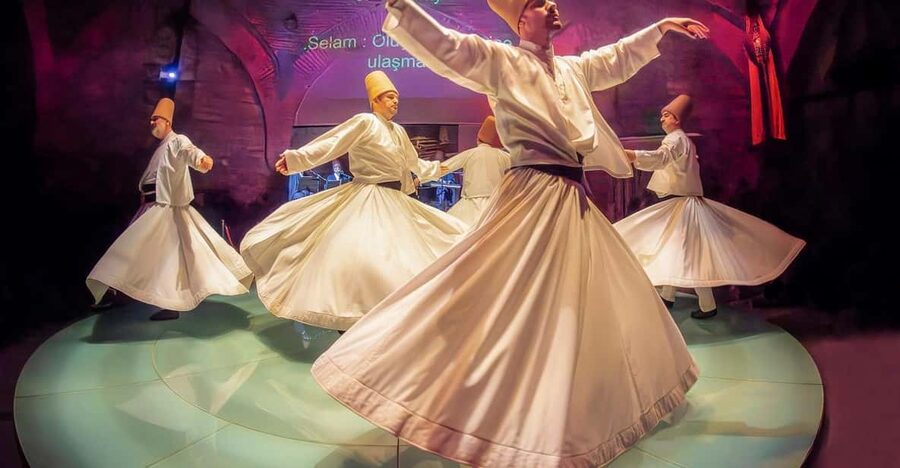
Here’s where the ceremony earns its reputation. The Sema is described as a seven-part spiritual journey that represents the birth of humanity. You’re watching movement, but you’re also watching a sequence meant to symbolize stages of understanding and spiritual ascent.
In the middle of this, you’ll hear the ritual chant and the drum’s pacing. Then the Sema ends with a Fâtiha for the souls of prophets, martyrs, and believers, followed by a prayer for the salvation of the country.
If you want the experience to land, do two small things:
- Follow the booklet, even if you skim it.
- Use the music as your guide, not your phone.
Some visitors specifically say it feels like a moving spiritual experience, and that silence helps the ceremony work. If you can keep your mind on the sequence, the hour often feels complete even if it’s shorter than you thought.
Why this matters for you: in Istanbul, you’ll see plenty of shows and performances. This one has a built-in meaning structure. That turns it from a quick photo opportunity into something you can actually process as you watch.
The live music: instruments, acoustics, and why the sound matters
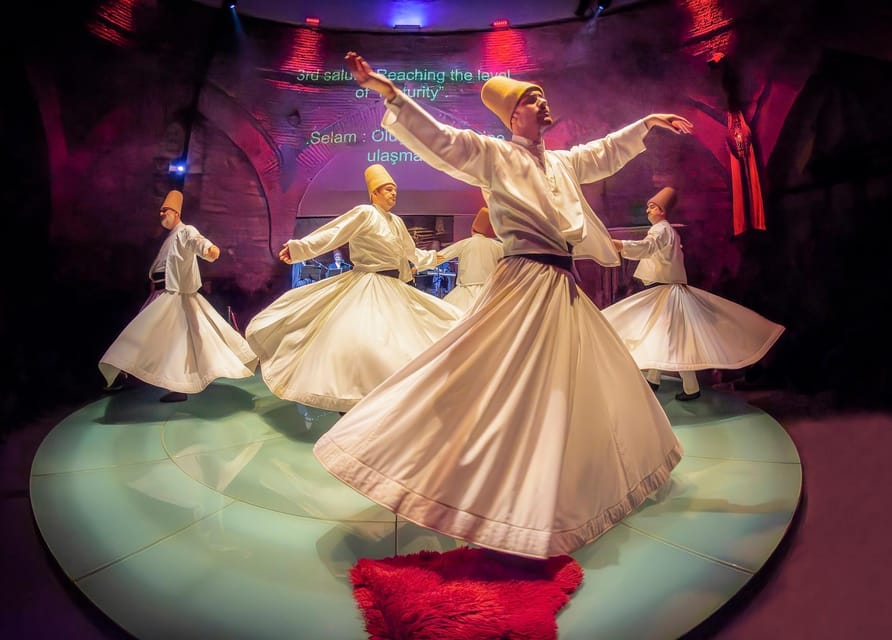
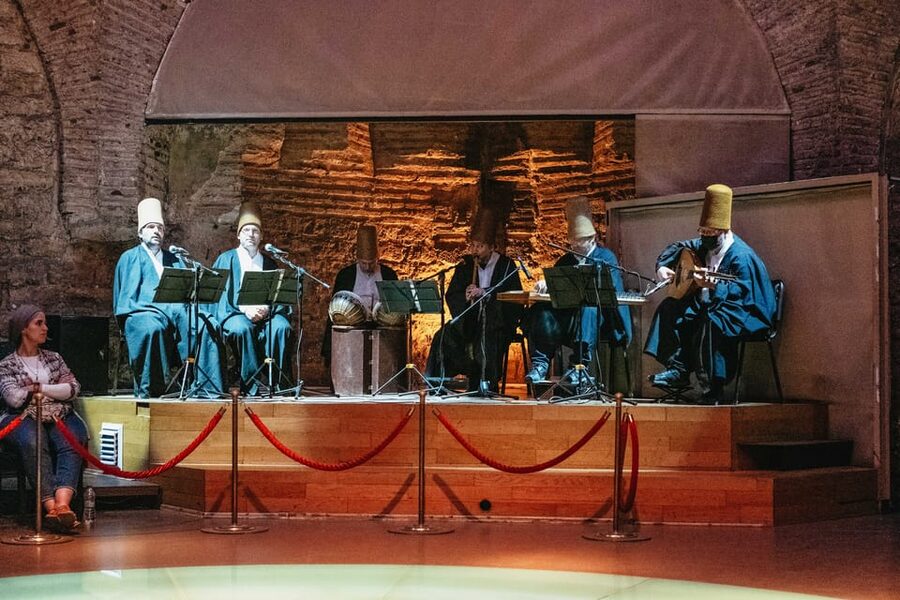
One of the strongest repeated praises here is the music. People talk about the live music being authentic and well performed, and they mention a strong mix of vocals plus traditional instruments such as ney and kanun, with Ottoman-era percussion in the soundscape.
The center’s stone interior helps a lot. In a domed historic room, music doesn’t just travel, it resonates. That means you can hear details, and it also means you might feel the ceremony’s cadence more than you expect.
A few visitors mention they were impressed by the quality and craft of the musicians, noting that the hour feels like a compact, complete set rather than a stretched timeline. You should go in ready to listen. Even if you don’t know the terms, you’ll still catch the structure by listening for changes in tempo, voice, and rhythmic patterns.
What you’ll like: the show isn’t only about visuals. It’s about sound working with motion in a set form.
What to prepare for: because it’s a ritual, coughing or phone noise can be more noticeable. If you’re prone to throat irritation, consider bringing something simple like water. A bottled water is included, and bottled water plus complimentary drinks may be available during the show.
- Istanbul: Bosphorus Dinner Cruise & Show with Private Table
★ 4.8 · 44,561 reviews - Istanbul: Daytime or Sunset Sightseeing Cruise & Audio Guide
★ 4.8 · 14,430 reviews - Istanbul: Bosphorus Dinner Cruise with Turkish Night Show
★ 4.8 · 10,127 reviews - Best of Istanbul 1, 2 or 3-Day Private Guided Istanbul Tour
★ 5.0 · 8,922 reviews - Istanbul: Basilica Cistern Fast-Track Entry and Audio Guide
★ 4.6 · 7,521 reviews
The “rules of respect”: no photos, no talking, no applause
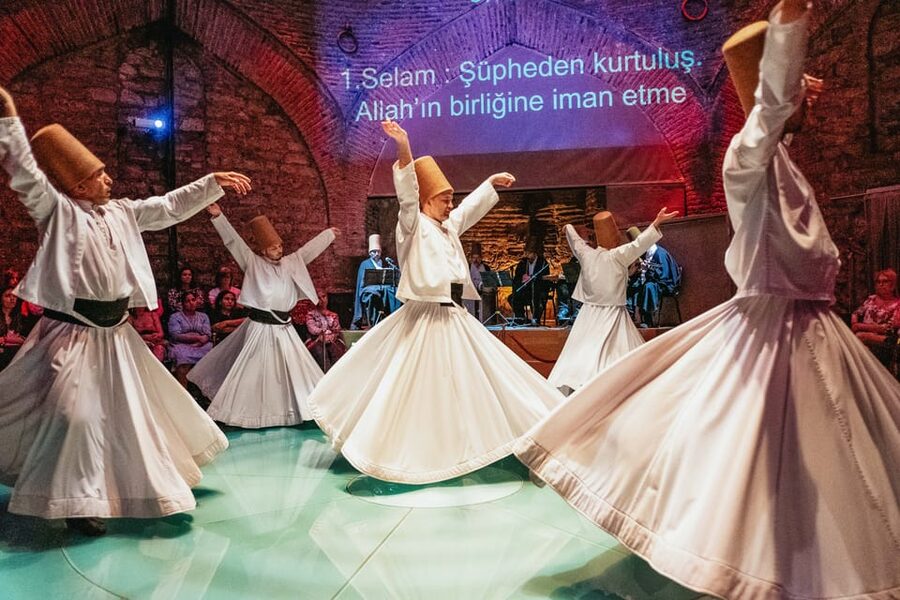
This is not an experience where you can treat it like a regular tourist stop. Photography inside is not allowed. Applause is prohibited. Talking during the ceremony is also prohibited.
That etiquette isn’t there to spoil your fun. It’s there so the ritual stays intact. Several visitors point out that this feels like a real prayer, not a staged show for entertainment.
Plan your behavior before you arrive. If you’re traveling with someone who wants to narrate every moment, agree in advance that you’ll keep quiet during the ceremony.
Also note seating is allocated on a first booked first served basis. That can affect your comfort and viewing angle. If you care about having a good seat, don’t wait too long to reserve.
Small reality check: a few visitors mention the chairs are uncomfortable and placed close together. So even though the ceremony is the main event, your physical comfort can color the experience. Choose what matters most to you: the ceremony focus, or comfort first.
What “complimentary drinks” feels like during the hour
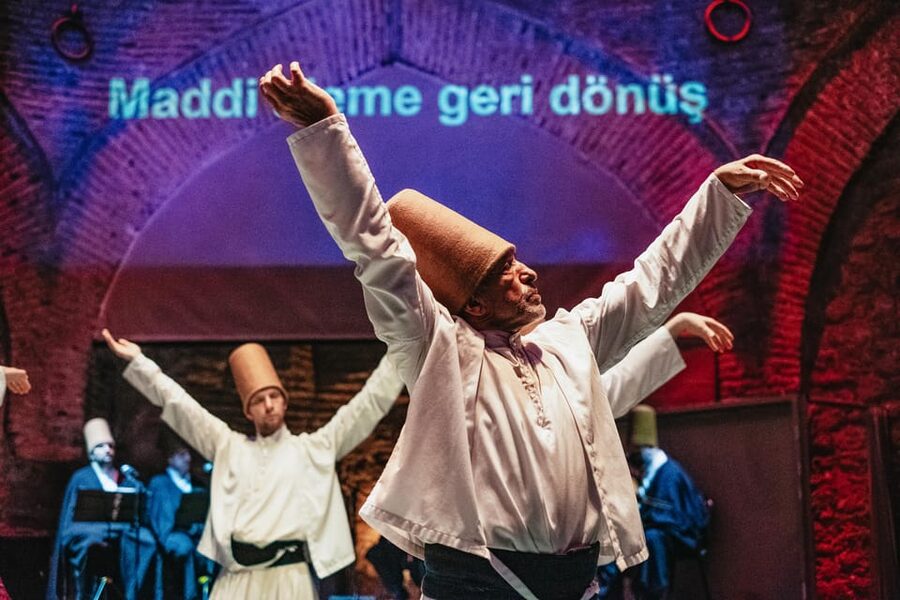
Yes, there are complimentary drinks during the show. That sounds like a small detail, but it changes how the hour feels. It gives you a simple comfort buffer in a quiet room, where you want to stay still and attentive.
You’ll also receive bottled drinking water as part of the included items. So you’re not going in dry, and you can focus on the sounds and the sequence without worrying about basic needs.
Best use: sip if you need it, then put it away. The ceremony calls for calm, so treat refreshments as a support, not a distraction.
Logistics that really affect your night: timing, meeting point, and seats
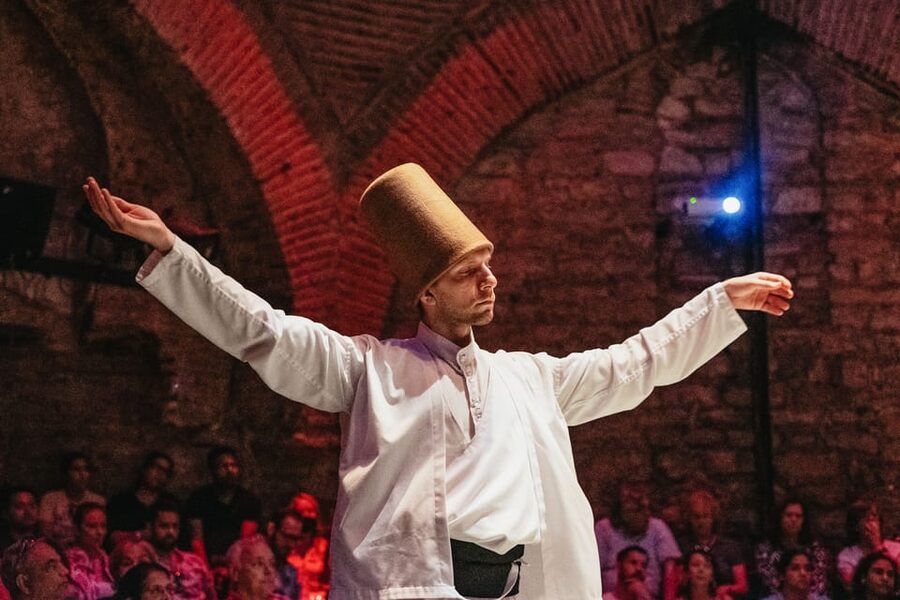
You’ll start at the Hocapaşa Culture Center, about 100 meters from Sirkeci Tram Stop. That’s close enough that you can walk, but not so close that you can stroll lazily without thinking about stairs and arrival timing.
The show duration is listed as 1 hour, but the total time you’re on site can be longer if you include the exhibition walk-through and getting seated comfortably. A solid strategy is to arrive early so you have time to read the foyer info at a slower pace.
Seating is assigned based on first booked first served, so the earlier you book, the better your chances at the seat you want. Some visitors say they secured excellent seats by booking early, while others mention getting a less ideal seat.
Who should care most: if you’re hard of hearing, very short, or you want a clear line of sight, prioritize earlier booking.
Is it a show, or a ceremony? How to set expectations
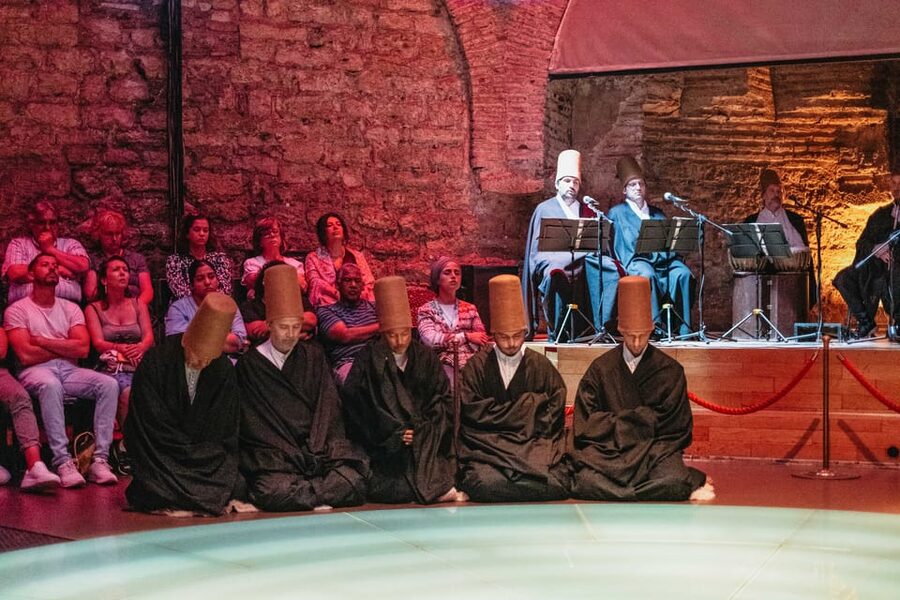
A recurring theme in the strongest feedback is that the experience is not meant to be loud or playful. Many people explicitly describe it as a solemn religious ceremony and something unusual and special.
So here’s how I’d frame it for your expectations:
- If you want a respectful, focused cultural moment with music and meaning, you’ll probably love it.
- If you want crowd energy, big spectacle, and photo opportunities, you might leave thinking it was too quiet or too strict.
The whirling itself is striking. But the deeper impact comes from the combination of music, silence, and ritual structure.
One helpful mindset shift: treat it like listening to an extended piece of live sacred music, with visuals that carry symbolism. If you do that, the hour tends to feel complete, not unfinished.
Price and value: is $32 worth it for an hour?
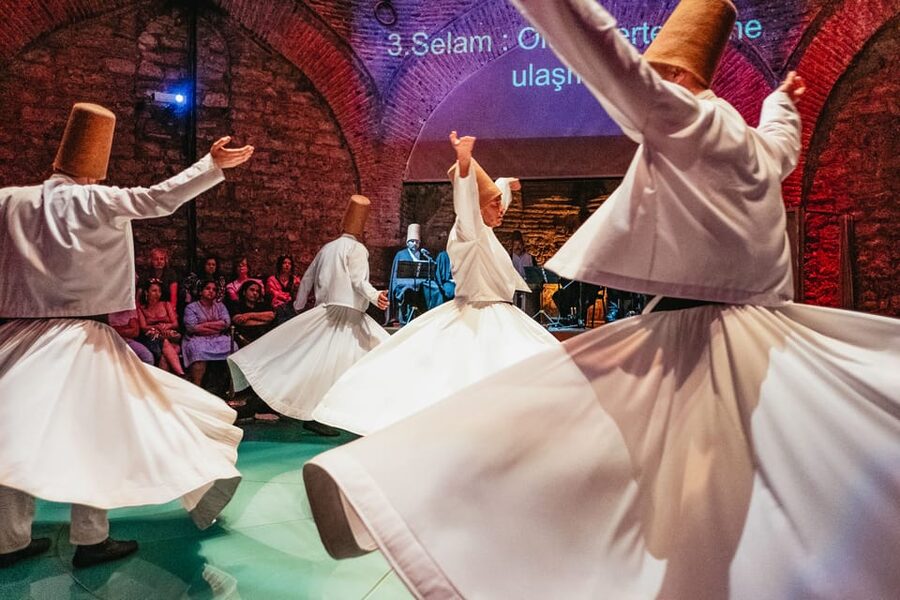
At $32 per person for a 1-hour ceremony, you’re paying for a few things at once:
- Access to the HodjaPasha Culture Center ceremony space
- The included program booklet
- Bottled water
- A live music and whirling dervish performance in a restored Ottoman bath
- The chance to follow a structured spiritual journey, not just watch isolated moments
Some visitors do call the ticket expensive for a 1-hour experience. That’s a fair reaction if you’re measuring value only by time.
But in practice, you’re not just buying minutes. You’re buying the room, the musicians, the ceremony structure, and the educational context in the foyer. For many people, that makes the cost feel reasonable, especially because the ritual is presented as a serious experience with strict etiquette, which usually means fewer distractions and more focus.
My take for your decision: if Istanbul budget means you have to choose between multiple “attractions,” this is the type that can feel like a highlight because it’s distinct. If you’re on the fence, decide based on your tolerance for rules and your interest in Sufi spirituality and live traditional music.
Who should book this and who should skip it
This works best if you:
- Enjoy live traditional music and want to hear instruments like ney and kanun in a real acoustic space
- Want cultural and spiritual context, not just a quick visual stop
- Can respect a silent, prayer-focused setting
- Are comfortable with stairs and seated stillness
You may want to skip or choose another option if:
- You need wheelchair access. This experience is listed as not suitable for wheelchair users.
- You’re traveling with children under 7. The minimum age is 7.
- You dislike rules that limit talking, applause, and photography.
For couples, solo travelers, and anyone who likes thoughtful experiences more than “go go go” attractions, this often lands well.
Should you book the HodjaPasha Whirling Dervishes ceremony?
I think you should book it if you want an hour in a historic Istanbul bath that turns into a focused ceremony, with live music and real meaning. The combination of the restored hamam setting, the seven-part Sema journey, and the strict respect for silence gives this event a different feel than the usual show circuit.
Hold off if you’re looking for casual fun, lots of crowd interaction, or you strongly prefer photo-friendly attractions. Here, the rules keep it serious, and that’s the whole point.
If you do book, show up early, bring a quiet mindset, and let the music lead you through the sequence. You’ll get a better experience with less effort, and the hour will feel like it belongs in Istanbul.
FAQ
What is the duration of the HodjaPasha Whirling Dervishes ceremony?
The ceremony lasts 1 hour.
Where is the meeting point for the experience?
You start at HodjaPasha Culture Center, located about 100 meters from Sirkeci Tram Stop.
How much does it cost?
The price is listed as $32 per person.
Is photography allowed inside?
No. Photography inside is not allowed.
Are children allowed?
Children under the age of 7 are not permitted.
Is this experience suitable for wheelchair users?
No. It is listed as not suitable for wheelchair users.
Are seats first come, first served?
Seats are allocated on a first booked first served basis.
What is included in the ticket?
Included items are the Mevlevi Sema ceremony ticket, a program booklet, and bottled drinking water.
Does the show include drinks?
Yes. Complimentary drinks are available during the show.
What language support is offered?
The information provided lists languages generally as part of the booking details, but specific languages are not listed in the data you gave.
More Evening Performances in Istanbul

Recently reviewed in Istanbul


The rest of Whirling Dervishes and Turkish Nights.
 ★ 4.8Istanbul: Bosphorus Dinner Cruise with Turkish Night ShowFrom $3410,127 reviews
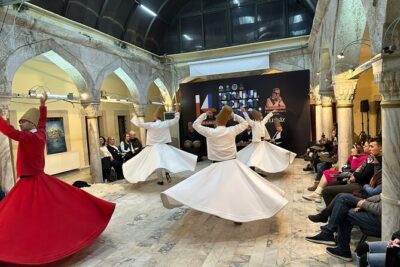 ★ 4.3Istanbul: Whirling Dervishes Ceremony and Mevlevi SemaFrom $231,694 reviews
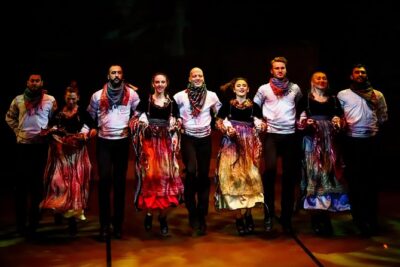 ★ 4.7Istanbul: Hodjapasha Rhythm of The Dance ShowFrom $321,451 reviews
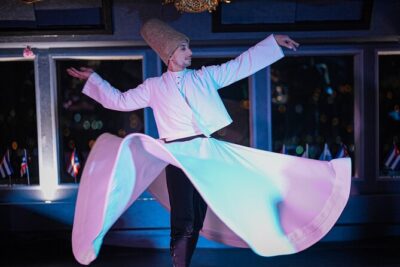 ★ 4.5Istanbul Bosphorus Dinner Cruise: Live Folk Dance & DJ ExperienceFrom $361,437 reviews
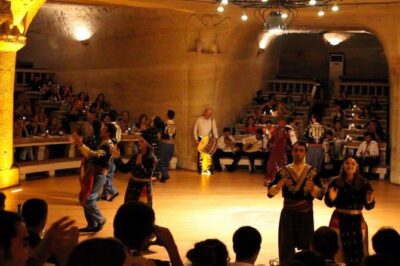 ★ 5.0Turkish Night at Cave Restaurant with Dinner and Unlimited DrinksFrom $661,225 reviews
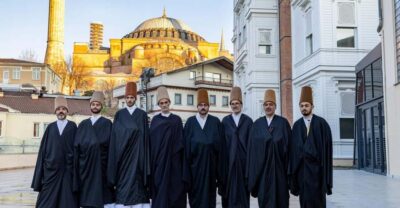 ★ 4.5Istanbul: Whirling Dervish Ceremony next to Hagia SophiaFrom $17906 reviews
★ 4.6Istanbul: Bosphorus Dinner Cruise with Turkish Night ShowFrom $34781 reviews
★ 4.5Istanbul: Whirling Dervish Ceremony next to Hagia SophiaFrom $17906 reviews
★ 4.6Istanbul: Bosphorus Dinner Cruise with Turkish Night ShowFrom $34781 reviews
 ★ 4.5ISTANBUL: Dinner Cruise On The Bosphorus with Turkish night showFrom $33772 reviews
Also filed under