
REVIEW · TRABZON AND THE BLACK SEA
Eastern Turkey 12-Day Sightseeing Tour from Trabzon
Eastern Turkey rewards the prepared traveler, not the lucky one.
What I like most is how this tour removes the stress of logistics with two domestic flights, airport pickup, hotels, and meals handled end to end. I also love that a private guide gives you the why behind the wow, from Byzantine frescoes to Urartian fortresses. One thing to consider is the pace: you are covering huge distances, so pack for stamina and expect a lot of motion.
This trip is designed for small groups, with a maximum of 8 people, and it runs in English. You get the structure of included breakfasts, dinners, lunch, and museum admissions, plus an air-conditioned vehicle for the long drives. The payoff is that you’ll see an unusually connected route of Eastern Anatolia, the Black Sea coast, Mesopotamian towns, and the archaeology that changed how the world thinks about early life.
In This Review
- Key Points to Know Before You Go
- Eastern Turkey From Trabzon to Gaziantep, Without the Headache
- Price and Logistics: What You’re Really Paying For
- The Route Makes Sense: A Single Story With Many Eras
- Day 1: Trabzon’s Byzantine Start, Then Sumela and the Black Sea Valleys
- Day 2: Churches in the Mountains, Tortum Waterfall, and Erzurum’s Madrasa Life
- Day 3: Erzurum City Centers and the Scale of Ani
- Day 4: Ararat Views, Ishak Pasha Palace, and a Waterfall Pause
- Day 5: Akdamar Island Church, Silk Road Forts, and Fortress Van
- Day 6: Nemrut Gölü Crater Lakes and Ahlat’s Tombstones
- Day 7: Hasankeyf Caves, Mardin Stonework, and Deyrulzafaran Monastery
- Day 8: Diyarbakır Walls, the Great Mosque, Bridges, and an Ottoman Han
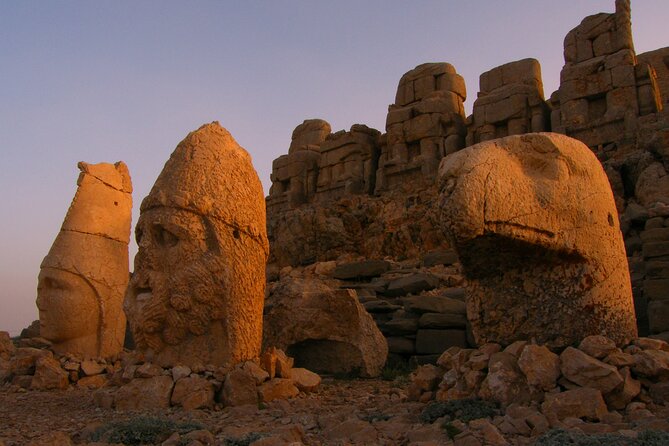
- Day 9: Mount Nemrut Sunset, Colossal Statues, and the Tumulus Climb
- Day 10: Göbekli Tepe Before the World Had Writing
- Day 11: Zeugma Mosaics and Gaziantep’s Food Culture
- Day 12: Airport Transfer From Gaziantep
- Guides, Drivers, and the Small-Group Advantage
- Comfort, Packing, and Pace Tips That Make a Difference
- Who Should Book This Tour, and Who Should Skip It
- Should You Book This Tour?
- FAQ
- Where does the tour pick me up?
- What languages is the tour offered in?
- How many people are in the group?
- What is included in the price?
- What kind of fitness level do I need?
- What if the tour is canceled or I need to cancel my booking?
Key Points to Know Before You Go
- You’re moving along a single corridor, starting in Trabzon and ending at Gaziantep, with two domestic flights to reduce backtracking.
- Museum entries are included on many stops, so you won’t be scrambling for tickets at each site.
- The highlights are big and varied, from Sumela and Ani to Akdamar, Nemrut, and Göbekli Tepe.
- Small group energy with a max of 8 travelers, plus hotel pickup from Trabzon Airport.
- The tour runs on a rhythm of scenery plus monuments, with plenty of stops that include short walks or viewpoints.
- A guide is part of the value, and some departures have featured guides like Ahmet Gülmez, Sabahattin, and Ören.
More of the Black Sea coast and its valleys
- Trabzon: Sümela Monastery, Cave, and Hamsiköy Daily Tour★ 4.6 · 87 reviews
- Sumela Monastery, Zigana and Hamsiköy Village Tour★ 5.0 · 73 reviews
- Trabzon: Uzungöl Group Tour, Explore The Nature & Taste Tea★ 4.6 · 51 reviews
- Uzungol Tour: Full-Day Nature Adventure with Tea Factory Visit★ 5.0 · 36 reviews
Eastern Turkey From Trabzon to Gaziantep, Without the Headache
Eastern Turkey can feel intimidating on paper. Roads are long, distances are real, and sites are spread out across regions that do not behave like a tidy European circuit. This kind of guided package is what makes the journey practical. You fly between key legs, then use an air-conditioned vehicle for the rest, with breakfasts and dinners included so you don’t constantly hunt for food after long drives.
I also like the balance of the “why am I here?” moments and the “wow, look at that” moments. You get religious sites with serious art history, medieval ruins that make time feel tangible, and modern bazaars where life is still happening. Even the natural stops are used as context, like crater lakes and a waterfall where you can actually pause.
The tradeoff is energy. You’ll be up early, driving often, and spending more time “in transit between chapters” than you might on a slower vacation. If you like variety and can handle a full day schedule, this works extremely well.
Price and Logistics: What You’re Really Paying For
At $3,850 per person for about 12 days, this is not a cheap sampler. You’re paying for the heavy parts that travelers usually end up doing themselves: transport across long distances, included meals, and entrance fees across multiple countries of culture.
The included services matter:
- Two domestic flights are part of the plan, so you’re not spending most of your trip trapped on the road.
- Hotel pickup is included from Trabzon Airport, which is a big deal when you’re landing and want the day to start clean.
- All state and local taxes, museum site entries, breakfasts, dinners, and lunch are included.
- An air-conditioned vehicle covers the ground where trains or domestic shuttles just don’t fit this route.
Compared to piecing this together yourself, the value is in saved time and fewer decisions. Instead of building a patchwork of bookings, you get a working schedule and a guide who can connect the dots between Byzantine, Armenian, Ottoman, Syriac Christian, Seljuk, and Urartian eras.
One practical note: vehicles and room for bags can vary by departure. A past group described that the vehicle felt a bit tight for the number of passengers and luggage. If you travel with large suitcases, plan to pack compactly, and be ready to use overhead space and keep bags organized in the cabin.
The Route Makes Sense: A Single Story With Many Eras
This tour is built as a long arc. It begins on the Black Sea side in Trabzon, climbs through the mountains to Erzurum and Ani (with that otherworldly scale you only get in Eastern Anatolia), then heads toward Mount Ararat and the region around Van. After that, you move south and southeast through sites tied to Mesopotamia, Syriac Christian history, and the cities that shaped trade and faith for centuries, ending in Gaziantep, a major food city.
What makes the routing feel smart is that each day’s places are tied together by geography. The scenery changes often, but the drive pattern stays logical: coastal and cliff monasteries up north, then high plains and big ruins in the middle, then gorge and ancient city walls down south.
If you like your travel with a “through-line,” this delivers. You are not just checking boxes. You are watching cultures overlap along the same long corridor of routes that traders, armies, and pilgrims used for millennia.
Day 1: Trabzon’s Byzantine Start, Then Sumela and the Black Sea Valleys
Your first day anchors everything in a place that looks outward to the sea: Trabzon Hagia Sophia Museum. This is a 14th-century Byzantine church overlooking the Black Sea. It’s the kind of stop that sets expectations for the rest of the trip, because the art and setting tell you immediately this region is all layers.
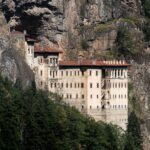
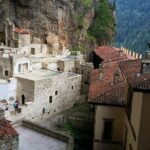
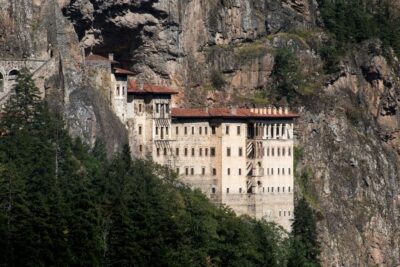
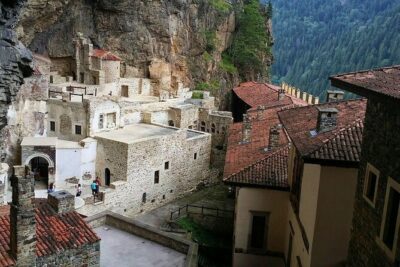
Then comes the day’s main “how is that even possible?” moment, Sumela Monastery. It clings high on a cliff in Altindere National Park, above a steep river valley. The monastery has been a monastic site since the 4th century, and the dramatic setting is part of the story, because ascetic life here was shaped by the landscape.
You finish with Altindere Vadisi National Park, a city tour plus time to absorb the greenery and valleys near Trabzon. This is a good way to transition from big architecture to the scenery that Eastern Turkey does so well.
Practical tip: bring a light layer even in warmer months. Cliff sites and shaded church interiors can feel cool.
- Full Day Tour In Uzungol Lake with Turkish Tea Tasting
★ 4.0 · 21 reviews - Full-Day Private Tour to Uzungöl from Trabzon
★ 5.0 · 21 reviews - Rize: Ayder Tour & Kaçkar Mountaıns & Fırtına Valley
★ 3.9 · 19 reviews - Private Trabzon Full Day Tour With A Licensed Guide
★ 5.0 · 16 reviews - 5 Day Enjoy Black Sea Tour
★ 5.0 · 15 reviews
Day 2: Churches in the Mountains, Tortum Waterfall, and Erzurum’s Madrasa Life
Day 2 moves inland through wild scenery toward Ishan Church in a mountain village area. The route passes stops like Bocka Dam, then follows the Coruh Valley with river views and historic Georgian valleys. Ishan itself is known for the ruins of an 8th to 9th century cathedral and a church dedicated to the Virgin Mary from 1006. Even if you are not a specialist, you’ll feel how the site shows shifting Christian traditions.
Next up is Tortum Waterfall, with a stop at Tortum Lake. This is the tallest waterfall in Turkey, and the plan includes a walk down to the bottom so you experience it close up, not from behind a barrier.
In the evening, you reach Erzurum and visit Yakutiye Medresesi, a 14th-century madrasa now used as a museum. It’s in the city center, which makes the day feel more lived-in rather than only moving from site to site.
If you enjoy architecture but also like context, Yakutiye gives you both.
Day 3: Erzurum City Centers and the Scale of Ani
Start with Erzurum, exploring major central sites including the Great Mosque, the area around the Double Minaret, medreses, bazaars, and key mosques such as Ulu cami. This is not a museum day only. You are meant to walk through the historical center and see daily life around it.
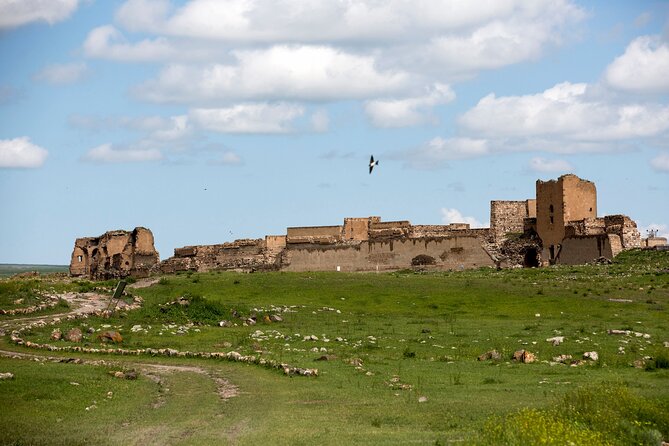
Then you hit Ani Ruins and Ani Cathedral. Ani was the former capital of a medieval Armenian kingdom. The remains include multiple churches, the citadel, walls, and a partial shell of the cathedral. It’s one of the rare places where ruins feel massive, and where you can still imagine the city’s power even after centuries of weathering.
Ani Cathedral gets the focus of deeper detail, including the timeline tied to King Smbat II and completion orders connected to Queen Katranideh. In other words, it’s not just rubble and photos. It’s a lesson in how large projects and dynasties built monuments.
This is a strong day for photography, but also a day for comfort. Wear shoes that handle uneven stone and gravel.
Day 4: Ararat Views, Ishak Pasha Palace, and a Waterfall Pause
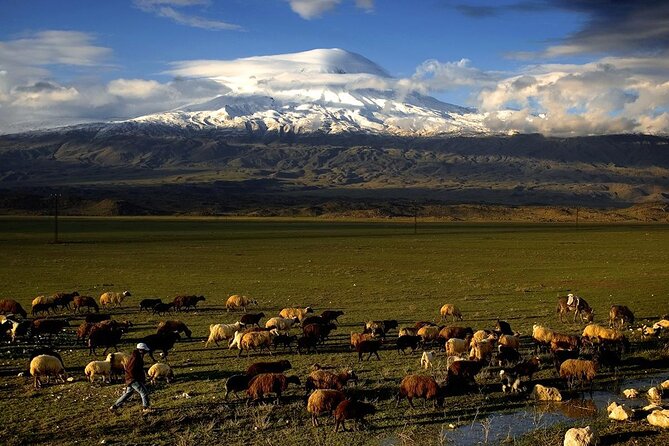
Day 4 keeps the mountains in play, starting with Mount Ararat views as you skirt the western edge. Ararat is 5,137 meters, and even if you only see it from the edge of the road, it changes the tone of the trip. You start to understand why this part of the world has so many stories tied to faith and empire.
Then you visit Ishak Pasha Palace in Doğubayazıt, famous for a fusion of styles: Seljuk, Ottoman, Georgian, and Armenian/Persian influences. Even in ruins, it reads as ambition. It was built as a provincial seat far from Istanbul, and the result is a place that feels grand for its setting.
You finish with Muradiye Selalesi, a waterfall stop for refreshments. This is a smart pacing tool. After heavy monument days, you get a softer moment where water and air reset your energy.
Day 5: Akdamar Island Church, Silk Road Forts, and Fortress Van
This day is about Armenian architecture and then the strong defensive logic of the region.
First is Akdamar Island and the restored 10th-century Armenian Church of the Holy Cross (Sourp Khach). What makes it special is the exterior reliefs and decorative features that are often described as unique in scale and detail. It also has later additions, which helps you read the church like a living structure that changed over time.
Then you head to Hosap Castle (Hosap Kalesi). Built straddling the Silk Road, it protected travelers and also served as a toll point. The structure most associated with what you see today dates mainly to the 17th century, but it sits on a site with earlier layers, including Urartu-era activity.
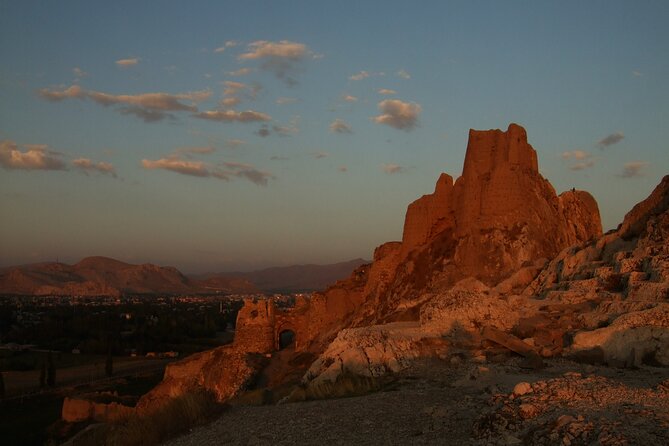
After that comes Fortress of Van (Van Kalesi), a massive Urartian fortification from the 9th to 7th centuries BC. It overlooks the ruins of Tushpa, the ancient capital. This is the kind of place where walls make sense instantly, because the geography is steep and strategic.
You close with Cavustepe (Sardurihinilli), an Urartian royal palace and fortress.
This is a day for history lovers, but it also works if you just enjoy dramatic settings. Fortresses in this region are built to look impressive, because they were built to control movement.
Day 6: Nemrut Gölü Crater Lakes and Ahlat’s Tombstones
You leave Van and drive along the southern shore of Lake Van toward Tatvan, then up to Mount Nemrut crater for a picnic lunch by the crater lakes.
Nemrut Gölü has five lakes within the crater, and the highest peak rises to about 3,050 meters. You’ll visit two lakes with very different behavior: the Cold Lake and the Hot Lake, which shows steam from thermal springs. The science is interesting, but the bigger value is how the site turns a mountain into a natural laboratory you can actually stand beside.
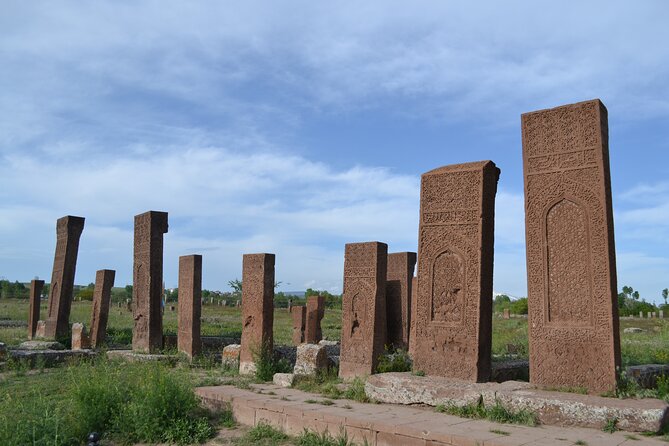
After that, you visit Ahlat, famous for a large number of historic tombstones left by the Ahlatshah dynasty. This stop slows you down. It’s not just about big monument architecture. It’s about how people marked identity, power, and memory.
Day 7: Hasankeyf Caves, Mardin Stonework, and Deyrulzafaran Monastery
Day 7 begins in Hasankeyf via Bitlis and down through the Bitlis Gorge area, continuing to the town on the Tigris for lunch. Hasankeyf includes caves and ruins of a medieval Byzantine city, which helps you visualize how settlement followed water, not just fertile ground.
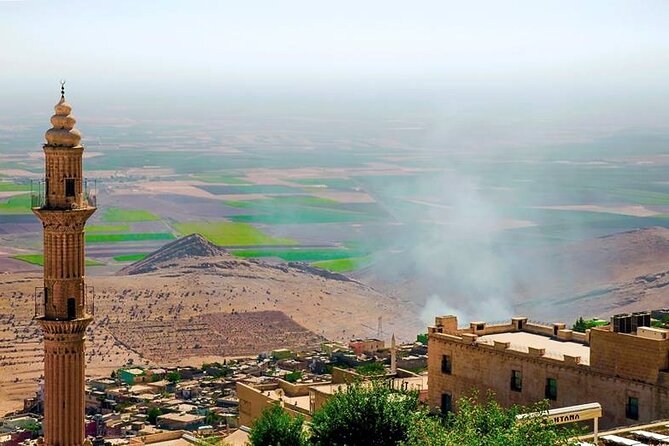
Then you move to Mardin Province, often described as an open-air museum because of the beige limestone architecture. You’ll also visit Deyrulzafaran Monastery, known as the Saffron Monastery. This has served as an important center of the Syriac Christian patriarchate.
A key detail here is that the monastery buildings sit over an ancient temple dedicated to sun worship, with foundations that remain part of the structure. That mix of eras is exactly why this region matters.
If you like religious architecture, this day gives you variety: caves, city stones, and a monastery with ancient foundations.
Day 8: Diyarbakır Walls, the Great Mosque, Bridges, and an Ottoman Han
Day 8 goes straight to strength and survival: Diyarbakır City Walls (Sur). These defensive walls come from the old Roman city of Amida and were constructed in their present form in the mid-4th century AD by Emperor Constantius II. They are described as the widest and longest complete defensive walls in the world after the Great Wall of China. Even if you don’t chase superlatives, you will feel how built this was for defense.
Next is the Grand Mosque of Diyarbakır, originally shaped by Seljuk influence over an older mosque, and inspired by the Great Mosque of Damascus. The plan includes time to see the space and understand its place within Islamic traditions.
Then you continue with a Diyarbakır city tour: Meryem Ana Church, the 10 Arches Bridge over the Tigris, and the Hasan Pasha Han from the 16th century.
This day is about “infrastructure as heritage.” Walls, bridges, and caravanserais tell you how people moved and traded.
Day 9: Mount Nemrut Sunset, Colossal Statues, and the Tumulus Climb
Mount Nemrut is the kind of stop you build a trip around.
You travel to the Nemrut National Park area using a ferry crossing over the Euphrates, then reach Narlice Village and drive to the top area. The highlight is climbing to the summit of Mount Nemrut to see the tombs of the Commagene Kingdom and the colossal statues of gods.
You’ll also climb up to the tumulus of Antiochos, then watch the sun set from the summit. The monument was lost for nearly 2,000 years and rediscovered in the early 1880s by an Ottoman government worker. The site sits at about 2,150 meters, and under the tumulus there are beliefs tied to Antiochus Epiphanes.
Practical note: the day involves longer time at elevation. Even though the tour is framed for moderate physical fitness, take your pace seriously on the climb and bring a layer.
Day 10: Göbekli Tepe Before the World Had Writing
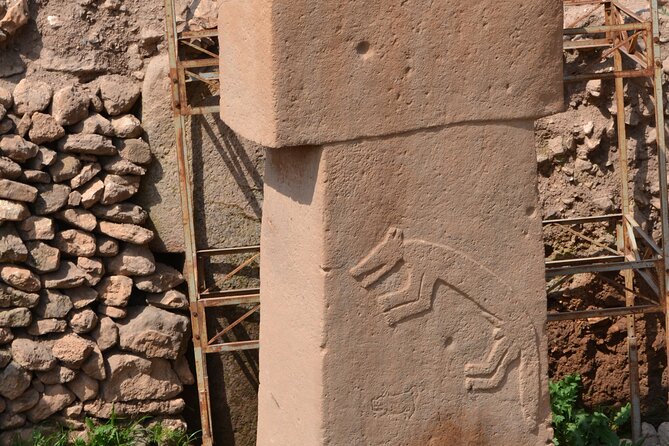
Day 10 is one of the most mind-bending stops on the whole route: Göbekli Tepe. It’s an ongoing archaeological dig, and you visit the site where some of the earliest religious structures built by humans have been found. The age range given is about 11,000 to 13,000 years old, and it predates pottery, writing, Stonehenge, and the pyramids.
That comparison is meant to help you place it. It’s not just ancient. It’s early enough that it challenges old assumptions about how and why people organized life and belief.
Then you head to Şanlıurfa, visiting the Holy Pools of Abraham and a cave where tradition says Abraham was born. You also visit the bazaar and Gumruk Han.
You end with the Şanlıurfa Archaeology and Mosaic Museum, where findings related to the region are exhibited, including from Göbekli Tepe and Harran, plus artifacts connected with the Southeastern Anatolia Project.
This day mixes spiritual tradition with archaeological method, which can feel like two different worlds in one schedule, in a good way.
Day 11: Zeugma Mosaics and Gaziantep’s Food Culture
You start with Zeugma Mosaic Museum in Gaziantep. The mosaics here come from the ancient city of Zeugma, now submerged under waters associated with the Atatürk Dam. The museum is known for showcasing the skill of ancient craftsmen and the wealth behind those civic commissions.
Then you get time to explore Gaziantep’s citadel district and the old town area for sights and smells. This is where the trip shifts from monument-heavy to daily-city immersion.
Gaziantep is also a food destination. The emphasis here is on spicy, local cuisine influenced by Oguz Turks and Aleppo. You’ll see and hear about rice meals, soups, kebabs, meatballs, and different versions of kebab like kiyma, kusbasi, simit, patlican (aubergine), and others. Lahmacun is highlighted, and there’s mention of dishes involving vegetables and yogurt.
If you love eating like a local, this is your payoff day.
Day 12: Airport Transfer From Gaziantep
Day 12 is straightforward: after breakfast, you transfer to Gaziantep Airport. The drive is described as about 30 minutes, so you’re not ending with a last-minute scramble across traffic.
This is the gentle closer to a trip that has been anything but gentle on your calendar.
Guides, Drivers, and the Small-Group Advantage
The real difference on a trip like this is whether someone can translate big monuments into understandable human stories. This is where the private guide format becomes valuable. On some departures, guides like Ahmet Gülmez, Sabahattin, Ören, Adem Kocaman, and Hasan are associated with strong enthusiasm and teaching. The through-line in those examples is that you’re not just reading plaques. You’re learning how communities changed, how faith traditions layered, and why certain structures were built where they were.
Driving also matters. Long days need a driver who handles mountain roads calmly and keeps the schedule moving without making you feel rushed. Names like Serhat, Orhan, and Ermehr appear in examples of professional, cheerful driving. That kind of steadiness makes the route feel manageable, not exhausting chaos.
Comfort, Packing, and Pace Tips That Make a Difference
This tour calls for moderate physical fitness level, which matches the reality of uneven ground, steps, and longer site visits. To make it easier on yourself:
- Bring shoes that handle stone and gravel without slipping.
- Pack layers for mountain air and indoor church coolness.
- Keep a small day bag ready, because you’ll want quick access for cameras, water, and sun protection.
Also, because you move hotel to hotel frequently during the journey, plan to keep your packing organized. If you need easy access to essentials, pack them in the same place each day.
If you’re tall, consider how you will handle small vehicle spaces. One past group noted that getting in and out could be tricky in a smaller Mercedes when there were more passengers and luggage. Compact packing and flexible posture help.
Who Should Book This Tour, and Who Should Skip It
This tour is a great fit if you:
- Want an Eastern Turkey route that connects major sites without you building a complex plan.
- Like history that shows up in many forms, ruins, churches, mosques, forts, monasteries, and archaeological sites.
- Enjoy scenery but are happy to balance views with concrete stops and explanations.
- Can handle a full schedule and frequent changes of location.
You might rethink it if you:
- Prefer a slow pace and minimal daily driving.
- Want long stretches of downtime with no planned stops.
The tour’s small group size and private guiding style help, but the trip still moves at an efficient pace.
Should You Book This Tour?
If your dream list includes Sumela Monastery, Ani, Akdamar Island, Mount Nemrut, and Göbekli Tepe, I’d say yes. The big reason is coverage without complexity. You get flights, transport, meals, and museum admissions handled, plus a guide who can make the stories click.
Just be honest about energy. This is not a couch-to-castles vacation. It’s a “see a lot, learn a lot” trip across demanding distances. If that sounds like your kind of travel, this route through Eastern Turkey is a memorable way to do it.
FAQ
Where does the tour pick me up?
The pickup is from Trabzon Airport. The guide is described as meeting the group at the airport to collect everyone at the start.
What languages is the tour offered in?
The tour is offered in English.
How many people are in the group?
This tour has a maximum group size of 8 travelers.
What is included in the price?
The price includes two domestic flights, breakfasts and dinners (breakfast 11 times, dinner 8 times), lunch, all museum site entries, all fees and taxes, and an air-conditioned vehicle. Alcoholic beverages are not included.
What kind of fitness level do I need?
You should have a moderate physical fitness level. That fits the reality of site walking and time spent at major attractions.
What if the tour is canceled or I need to cancel my booking?
You can cancel for a full refund up to 24 hours in advance of the experience start time. The experience also requires a minimum number of travelers, and if it is canceled for that reason, you’ll be offered a different date or a full refund.
More Along the Black Sea
Recently reviewed in Trabzon
The rest of Trabzon and the Black Sea.
 ★ 5.0Bosphorus Luxury Lunch Cruise & Black Sea Swimming ExperienceFrom $181447 reviews
 ★ 4.5Guided Bosphorus & Black Sea Cruise – 4 Stops from IstanbulFrom $168309 reviews
 ★ 4.0Half-Day Bosphorus Cruise to Black Sea from Istanbul with LunchFrom $120187 reviews
 ★ 4.6Istanbul: Bosphorus and Black Sea Cruise with LunchFrom $177153 reviews
 ★ 4.6Trabzon: Sümela Monastery, Cave, and Hamsiköy Daily TourFrom $5687 reviews
 ★ 5.0Sumela Monastery, Zigana and Hamsiköy Village TourFrom $5973 reviews
 ★ 4.5Istanbul Lunch Cruise – Extended Bosphorus Cruise up to the Black SeaFrom $18159 reviews
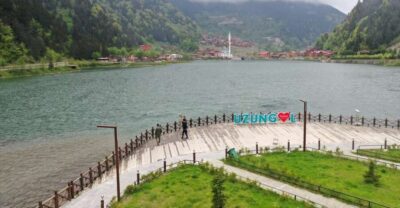 ★ 4.6Trabzon: Uzungöl Group Tour, Explore The Nature & Taste TeaFrom $4751 reviews
Also filed under