
REVIEW · PRIVATE ISTANBUL TOURS WITH A GUIDE
Ghost City istanbul Walking Tour
Underground Istanbul tells a spooky story. I love how the guide, Rose, links symbols and stories to the actual stones you see, starting at the Serpent Column and then slipping into the quiet of the Theodosius Cistern. I also like the mix of aboveground landmarks and belowground water spaces, so you get a clear, walkable timeline of Istanbul’s Byzantine era without feeling like you’re checking boxes.
One consideration: two major stops require separate paid admissions, so you will want to budget for entry tickets beyond the tour price.
In This Review
- Key highlights worth planning for
- Ghost City Istanbul, in plain terms, what you are really doing
- Where you meet and end near central Istanbul landmarks
- Serpent Column at the Hippodrome: a bronze symbol with multiple lives
- Çemberlitaş Column: Constantine’s message in stone
- Theodosius Cistern: the quieter cistern you’ll be glad you planned for
- Basilica Cistern near Hagia Sophia: the big underground room with serious atmosphere
- Gülhane Park Sarnıcı: where cisterns meet a public park
- Price and value: what $64.46 covers, and what you still need to pay
- How to make the most of a cistern-focused walk
- Who this tour fits best
- Should you book the Ghost City Istanbul Walking Tour?
- FAQ
- How long is the Ghost City Istanbul Walking Tour?
- What is included in the tour price?
- Are entry tickets included for all stops?
- What are the start and end locations?
- Is the tour offered in English?
- Can I cancel and get a full refund?
Key highlights worth planning for
- Rose’s myth-to-landmark storytelling keeps the walk lively and makes symbols easier to remember
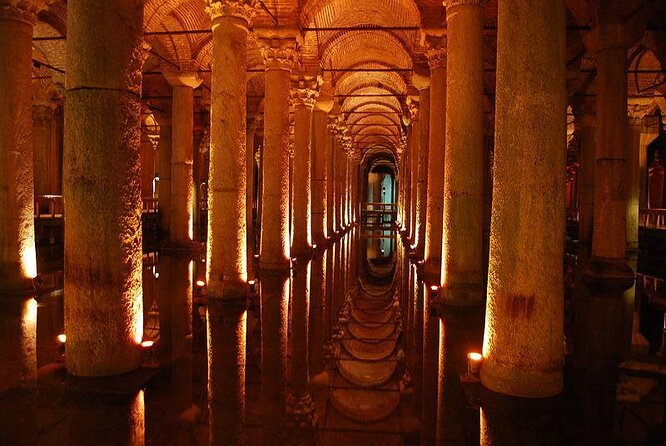
- Two underground cisterns give you a real feel for Byzantine engineering, with different vibes at each site
- Small group size (max 15) helps you ask questions and keeps the pace comfortable
- A smart route strings together the Hippodrome area, Constantine’s column, and the Hagia Sophia neighborhood
- A free-start feel at the Serpent Column and an easy end stop at Gülhane Park Sarnıcı, so you’re not paying for every photo pause
More private guides, different pacing and pickup
- Best of Istanbul 1, 2 or 3-Day Private Guided Istanbul Tour★ 5.0 · 8,922 reviews
- Sunset or Daytime Istanbul Guided Luxury Yacht Cruise with Snacks★ 5.0 · 1,977 reviews
- Istanbul E-pass: Top Istanbul Attractions with Skip The Ticket Line★ 5.0 · 1,379 reviews
- Istanbul Private Transfer – IST Airport, Cruise Ports and Hotels★ 5.0 · 943 reviews
Ghost City Istanbul, in plain terms, what you are really doing
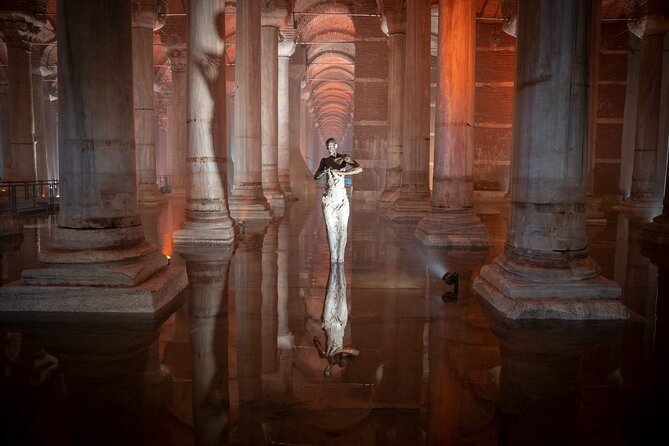
This is a focused walking tour built around Istanbul’s oldest “backstage” spaces. The name Ghost City fits because cisterns are dim, echo a little, and feel removed from the street life above. But this is not a jump-scare type of thing. It is more like a guided walk through how the city worked, what it valued, and why certain places kept getting reused and reinterpreted over centuries.
You’ll spend about 2 to 3 hours moving between landmarks and then slowing down inside the big underground reservoirs. The group is capped at 15, which matters in Istanbul, where crowds can turn even a great site into a slow squeeze. Here, you get time to look, listen, and then look again.
The tour is English-language, and it runs on a mobile ticket. That is handy if you prefer having everything on your phone instead of hunting for paper.
Where you meet and end near central Istanbul landmarks
You start at the German Fountain on At Meydanı Cd, Binbirdirek (Fatih). You finish at the Basilica Cistern on Alemdar, Yerebatan Cd. 1/3 (Fatih).
Why this matters: the route stays in the same central historical zone. That means less time traveling across town and more time actually seeing the cistern spaces you came for.
Also, the tour is described as being near public transportation, so you can usually plan your arrival without a big detour.
Serpent Column at the Hippodrome: a bronze symbol with multiple lives
Your first stop is the Serpent Column, also known from a few names, including the Three-headed Serpent and references like the Plataean Tripod and Delphi Tripod. Even if you only know Istanbul as a city of domes and mosques, this is a different kind of landmark. It sits in the long shadow of the Hippodrome of Constantinople, where spectacle and politics blended.
What I like about starting here is that it gives you an anchor point aboveground before you go underground. You get to see a piece of ancient bronze culture tied to mythology and public display. Then, when you head into cisterns, the symbolism still makes sense because your guide can keep connecting themes rather than starting from scratch at each location.
Time-wise, this is a quick about 10 minutes. That is good for this area. You can take in the main details, then move on while the walk still feels efficient.
Çemberlitaş Column: Constantine’s message in stone
Next comes Çemberlitaş Column, also called the Burnt Column or Column of Constantine. It dates to 330, built to honor Emperor Constantine I.
This stop is less about a long stay and more about context. Seeing it between cistern stops helps you connect the dots between imperial power and everyday infrastructure. It is a reminder that what looks like a standalone monument is still part of a larger city system, where leaders wanted their legitimacy visible in public spaces.
If you like history that feels connected instead of random, this little pivot stop earns its place.
- Istanbul: Daytime or Sunset Sightseeing Cruise & Audio Guide
★ 4.8 · 14,430 reviews - Best of Istanbul 1, 2 or 3-Day Private Guided Istanbul Tour
★ 5.0 · 8,922 reviews - Istanbul: Basilica Cistern Fast-Track Entry and Audio Guide
★ 4.6 · 7,521 reviews - Istanbul: Hagia Sophia Skip-the-Line Ticket & Museum Option
★ 3.7 · 4,958 reviews - Istanbul: Hodjapasha Whirling Dervishes Show & Exhibition
★ 4.4 · 4,790 reviews
Theodosius Cistern: the quieter cistern you’ll be glad you planned for
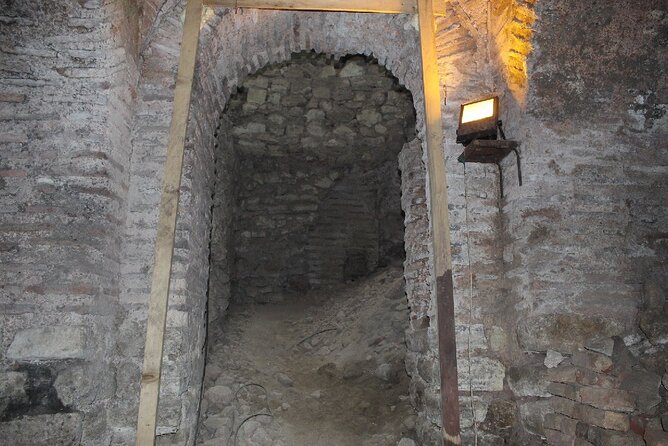
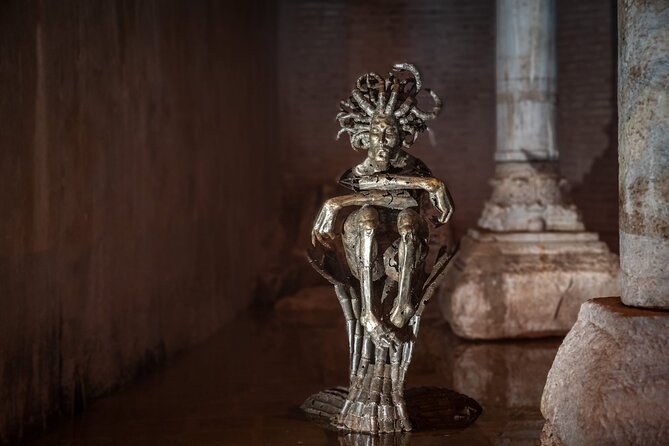
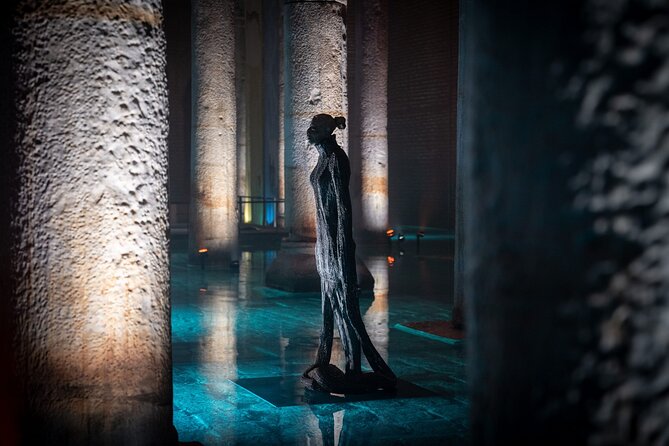
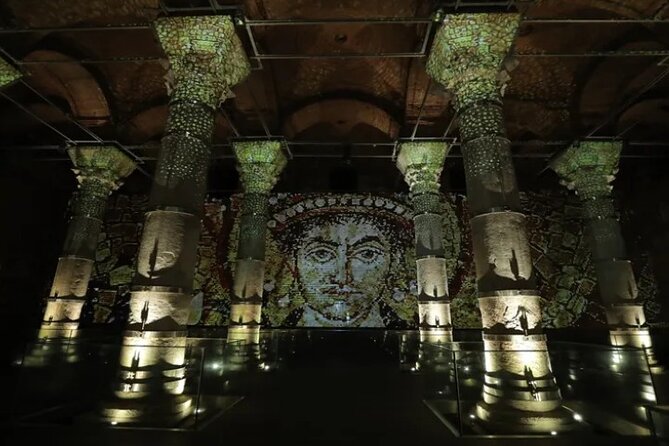
Now for the underground part: the Cistern of Theodosius. This is presented as an underground Byzantine-era water reservoir with elegantly arched columns and a serene pool setting. It is also described as less crowded than the more famous Basilica Cistern, which is exactly the kind of trade-off that makes a guided route feel worth it.
This stop is about 30 minutes, and admission is not included in the tour price. So you’ll need to pay entry separately when you arrive.
What you should expect inside: dim lighting, a slow shift in atmosphere, and a space that feels made for listening. You might find the air cooler and the sound carries in a different way than outside, even if you are not chasing a horror-movie vibe.
Why it is valuable: it gives you a cistern experience that feels more intimate. The guide can point out how Byzantine builders turned storage into something almost ceremonial, not just practical.
Basilica Cistern near Hagia Sophia: the big underground room with serious atmosphere
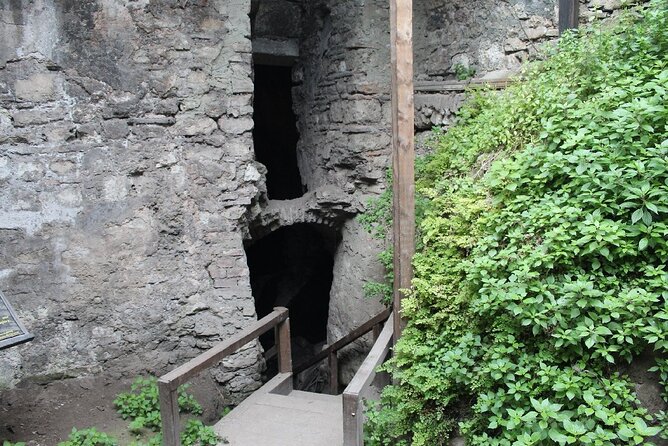
Then you step into the Basilica Cistern, which is described as recently renovated and as one of Istanbul’s most mesmerizing underground treasures. It sits close to Hagia Sophia, so it is in the same broad historic orbit where so many visitors try to cram in too much.
Time here is again about 30 minutes, and admission is not included. It is also a site with a reputation, so you will want to use your guide time well, not just take quick photos and move on.
What makes this one special is scale. You’ll see 336 marble columns rising from the water, creating that famous forest effect. Even if you have seen photos, this is one of those places where photos can never fully show how the space changes your sense of distance.
If you enjoy architecture, you will likely spend extra moments looking upward and then back down again. The light is intentionally dramatic, and the room has a “hold your breath” quality.
Gülhane Park Sarnıcı: where cisterns meet a public park
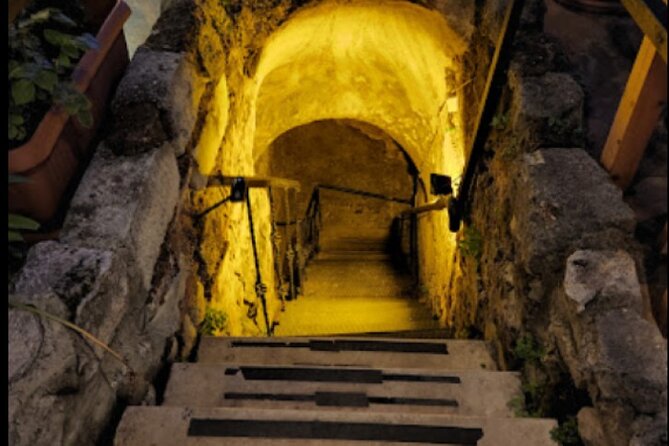
The tour ends with Gülhane Park Sarnıcı. This is another cistern-related stop, described as a place that used to be used as an aquarium, which is part of why it has its current configuration, and it is now open to the public.
Time here is about 10 minutes, and it is listed as free.
This stop is a good palate cleanser after the darker cistern interiors. You shift from heavy stonework to a more public, daylight-adjacent setting where you can regroup, take a last look, and then head on with your day.
Price and value: what $64.46 covers, and what you still need to pay
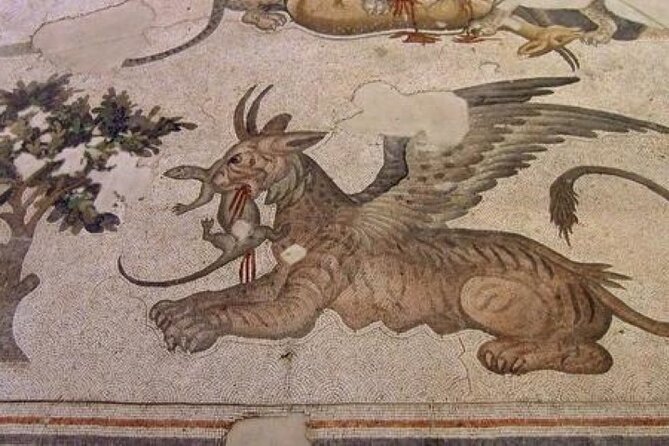
The tour price is $64.46 per person. Included are professional guidance and all local taxes. You also get a mobile ticket, and there are group discounts.
What is not included: tickets/entry admissions and tips. In practical terms, that matters most for the Theodosius Cistern and the Basilica Cistern, which are explicitly listed as admission not included.
So is this good value? I think it is, if you want more than “walk in, look around, walk out.” The strongest part of the experience is the storytelling and how it links symbols to real locations. In the reviews you supplied, Rose was praised as warm, enthusiastic, and especially engaging. One specific example from her explanation is a connection between the Medusa story and the evil eye, plus a myth about Turkey’s own queen of snakes. Whether you are already into mythology or you are new to it, those kinds of explanations help you remember what you saw after you leave.
If you are the type who only wants to pay for entry and then self-guide with your phone, you might feel the tour part is extra. But if you care about interpretation and want to understand why these cisterns matter, the guidance component is the value driver.
How to make the most of a cistern-focused walk
I would plan your outfit for walking, not for “museum pace.” Even though the stops include short guided segments, you are still moving between them, and Istanbul sidewalks can be uneven in old areas.
Here are a few practical ways to get more out of the experience:
- Bring a fully charged phone for your mobile ticket, and consider downloading offline maps for the start and finish points.
- Expect that underground spaces can feel darker and cooler. If you get cold easily, a light layer is worth it.
- Have a short plan for photos: take wide shots outside first, then choose a few good moments inside when the lighting feels right.
- Budget for cistern admissions ahead of time. Since tickets are not included, you will save yourself any last-minute stress.
Who this tour fits best
This tour is ideal if you like:
- Istanbul history explained through places, not just dates
- Byzantine-era sites and the engineering behind them
- A route that mixes iconic monuments with a quieter, less crowded cistern experience
It is also a nice match for people who enjoy stories with cultural symbolism. The praise for Rose specifically mentioned how she connects myths and concepts to the landmarks you are standing near, and that is exactly the kind of guidance that turns a second-time visit into a first-time understanding.
If you are traveling with someone who gets restless in long indoor stops, the tour pacing helps because you have short segments plus breaks between sites.
Should you book the Ghost City Istanbul Walking Tour?
Yes, I would book it if you want a guided, cistern-centered walk that does not just show you the famous spots, but helps you understand what you are looking at. The combination of two cistern experiences, a quick imperial monument stop at Çemberlitaş Column, and a strong guide like Rose is the winning formula. The biggest reason to hesitate is simple: part of the main experience requires separate paid admissions, so you need to budget for tickets.
If you are comfortable planning for those entry fees and you like learning while you walk, this is a solid, time-efficient way to see a side of Istanbul most people rush past.
FAQ
How long is the Ghost City Istanbul Walking Tour?
It runs for about 2 to 3 hours.
What is included in the tour price?
The tour includes professional guidance and all local taxes.
Are entry tickets included for all stops?
No. Admission is not included for the Cistern of Theodosius and the Basilica Cistern. Serpent Column and Gülhane Park Sarnıcı are listed as free.
What are the start and end locations?
You start at the German Fountain on At Meydanı Cd, Binbirdirek, 34122 Fatih. You end at the Basilica Cistern on Alemdar, Yerebatan Cd. 1/3, 34110 Fatih.
Is the tour offered in English?
Yes, it is offered in English.
Can I cancel and get a full refund?
Yes. You can cancel up to 24 hours in advance for a full refund.
Private Guides, More Options


Recently reviewed in Istanbul



The rest of Private Istanbul Tours with a Guide.
 ★ 5.0Best of Istanbul 1, 2 or 3-Day Private Guided Istanbul TourFrom $1008,922 reviews
 ★ 5.0Sunset or Daytime Istanbul Guided Luxury Yacht Cruise with SnacksFrom $241,977 reviews
 ★ 5.0Istanbul E-pass: Top Istanbul Attractions with Skip The Ticket LineFrom $1991,379 reviews
 ★ 5.0Istanbul Private Transfer – IST Airport, Cruise Ports and HotelsFrom $53943 reviews
 ★ 4.52 Hours Bosphorus Cruise Boat Tour in IstanbulFrom $9713 reviews
 ★ 5.0All in One Day Istanbul – Historical Tour of Istanbul with Bosphorus CruiseFrom $164489 reviews
 ★ 5.0The Award-Winning PRIVATE Food Tour of Istanbul: The 10 TastingsFrom $192462 reviews
 ★ 5.0Istanbul Private Guided Tour for Layover Flight. Transfer incl.From $175316 reviews