
REVIEW · KONYA, RUMI AND CENTRAL ANATOLIA
Gobeklitepe, The World’s First Temple
Ten thousand years in one day. This tour is interesting because you connect Göbeklitepe to the later stories and cities around Şanlıurfa, all in about 8 hours. I love the focus on the site itself, especially the chance to see the carved pillars and reliefs, and I also like the calm logistics of an airport meet-and-greet with a private, air-conditioned ride. One drawback to think about first, the stops are spread out, so you will lose a lot of time in the car, and that matters for a price of $377.30 per person.
You start at GAP Şanlıurfa Airport with a warm welcome and a guide who sets the stage for the day, including the idea of Urfa as the City of Prophets. In the car, you get onboard Wi-Fi, bottled water, and soda or pop, which is a small thing that helps when it is hot outside. At dusk, you end with a traditional Turkish dinner before your drop-off back to the airport.
This is a private tour in English. It has a strong track record too, with a 4.9 rating and guides named Serdar, Murad, and drivers like Ishmar showing up in the praise, which gives you a good sign that the storytelling side is handled with care.
In This Review
- Key things to know before you go
- From GAP Şanlıurfa Airport to Urfa’s Prophets, in One Clean Step
- Göbeklitepe: The Site That Changes How You Think About Early Society
- Abraham’s Cave and the Holy Fishpond Near the Citadel
- Harran: Beehive Houses, the Moon God Connection, and a Big Mosque Walk
- Harran Ruins and the Scholars Who Put the Region on the Map
- Price and Logistics: What You Actually Get for $377.30
- Comfort Tips That Make a Hot Day in Şanlıurfa Easier
- Who This Tour Is Best For (And Who Should Skip It)
- Should You Book This Göbeklitepe and Harran Day Tour?
- FAQ
- Where is the pickup point?
- How long does the tour take?
- Is transportation air-conditioned, and is Wi-Fi provided?
- Which entrance tickets are included?
- Is this a private tour?
- If I cancel, do I get a refund?
Key things to know before you go
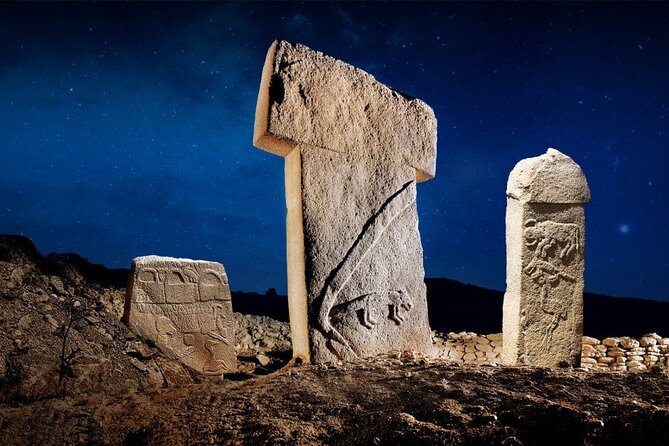
- Göbeklitepe’s carved T-shape pillars and detailed reliefs are the main event
- Private airport pickup and drop-off makes the day feel smooth
- Harran’s beehive-style Altınbaşa houses plus a walk to the Grand Mosque
- Abraham’s Cave and the fishpond legend near the Urfa citadel
- AC vehicle with Wi-Fi and included water keeps the long ride more tolerable
- Traditional Turkish dinner included at the end of the day
From GAP Şanlıurfa Airport to Urfa’s Prophets, in One Clean Step
Your day kicks off at GAP Şanlıurfa Airport with meet-and-greet help. The tour includes pickup and drop-off, so you are not trying to sort out taxis, timing, or where to park while you are thinking about the next stop. In practice, that kind of handoff matters, because the itinerary covers three major areas plus a dinner at dusk.
Once you are with your guide, you get a short introduction to Şanlıurfa and why it carries the City of Prophets nickname. The background also touches on modern Turkish history under Atatürk, including education reforms and expanded civil rights. That blend, ancient sites plus modern context, makes it easier to understand why this region matters to different eras.
Practical note: you will want a moderate physical fitness level. You are doing walking inside and around historic areas, and you will also spend time seated during transfers. If you are sensitive to long drives, plan your expectations around that.
Göbeklitepe: The Site That Changes How You Think About Early Society
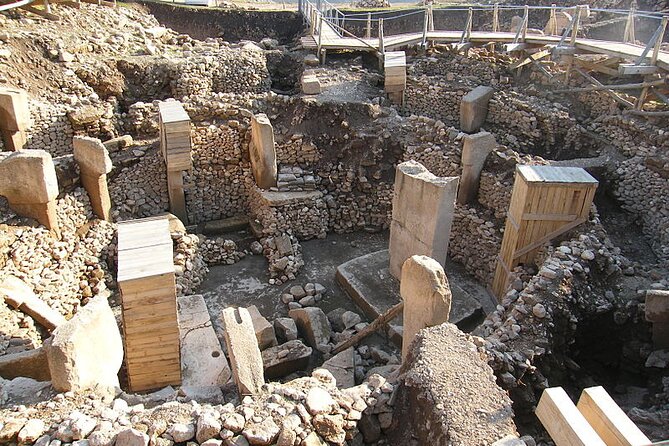
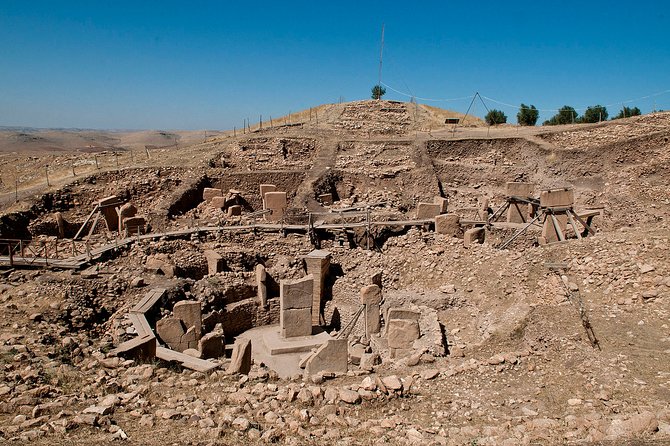
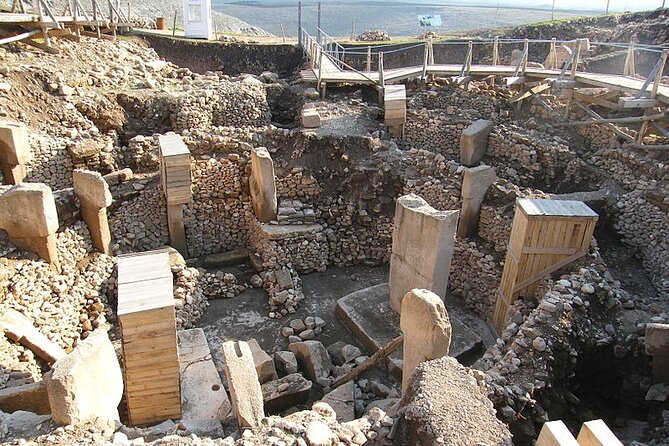
Göbeklitepe is the anchor of the day, and it is still very much alive as an active excavation project. You visit a site excavated by a German and Turkish team led by Dr Klaus Schmidt, and you get the feeling that archaeology is not just museum glass. It is work happening in real time, with interpretive questions still in play.
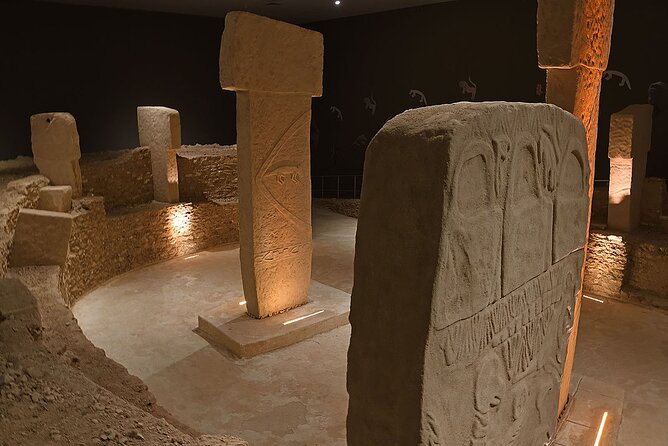
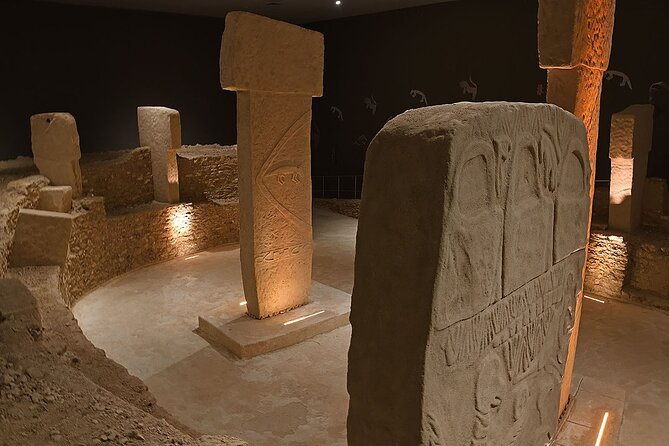
I love how Göbeklitepe is presented as more than impressive rocks. The pillars are carved with wild plants and animals, T-shaped obelisks, stylized human figures, and relief scenes that include details like a bird with a human face and a female figure engraving. You will also see central pillars, decorated belts on pillars, and other named features like the Urfa Statue and various human head and predator relief references that help you connect the carvings to a larger idea.
Here is the value for you: even if your background is casual, you can follow the big argument. Göbeklitepe dates back roughly twelve thousand years, from the Mesolithic and Pre-Pottery Neolithic periods, which forces you to rethink what people were doing socially and spiritually at that time. You are not just touring a monument, you are building a mental model of how communities cooperated long before writing or cities.
The one consideration is that not every visitor wants this much explanation. If you prefer a quiet, photo-only visit, the guided interpretation style could feel like information overload. On the other hand, multiple praised guides, including Serdar and Murad, were specifically praised for making the history and ideas understandable, including the big-picture links around geography, technology, and climate.
Abraham’s Cave and the Holy Fishpond Near the Citadel
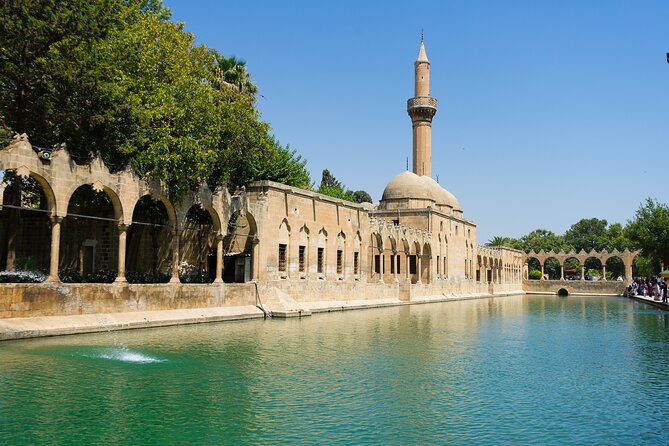
After Göbeklitepe, you return toward Sanliurfa and head to Abraham’s Cave next to the Urfa citadel area, where the holy fishpond is found. The tour frames the story through local legend: there was a great fire where the pond is now, and when Abraham fell into it, it turned into a huge pond, with the surrounding woods becoming fish.
This stop is shorter than Göbeklitepe, but that is part of its charm. You get a quick, focused look at how religious storytelling attaches to a specific physical place in Şanlıurfa. It also gives you a useful bridge between the ancient prehistoric world you just saw and the later religious traditions linked to Abraham.
One practical thing: this stop is listed as admission free, so it does not add to the cost side of the day. If you are deciding whether this is worth squeezing in, it functions as a mood shift, from carved stone symbolism back to living legend in the city center.
Harran: Beehive Houses, the Moon God Connection, and a Big Mosque Walk
Harran is a fascinating change of pace. You travel there after Abraham’s Cave, and the tour puts you in a place with layers: biblical references, Abraham-linked traditions, and even older religious connections like a moon deity connection tied to Sin. You also get the surreal feeling of the Altınbaşa beehive houses, a style that looks ancient even if the existing examples are not from the earliest centuries you might expect.
Then comes a walk to the Grand Mosque area. The square tower is described as built by an Arab Caliph in the 18th century, which is a helpful detail because it shows you how much later history can be standing in front of you while older ideas sit just beneath. You also stroll around a central pool and see remnants tied to an Arab university, described as among the oldest in recorded history.
What you will likely enjoy as a visitor is the mix of architecture and story. Harran has been shaped by many empires, and you get the sense of why it became a religious and learning center. If you like geography as a driver of history, this stop helps you connect why cities like Harran matter beyond dates in a textbook.
The main drawback for some people is time pressure. Harran is one more place where the most meaningful parts are best taken slowly, but your day schedule keeps moving. Still, Harran is listed as an hour here, which is enough to get bearings and capture key sights without dragging the day out.
Harran Ruins and the Scholars Who Put the Region on the Map
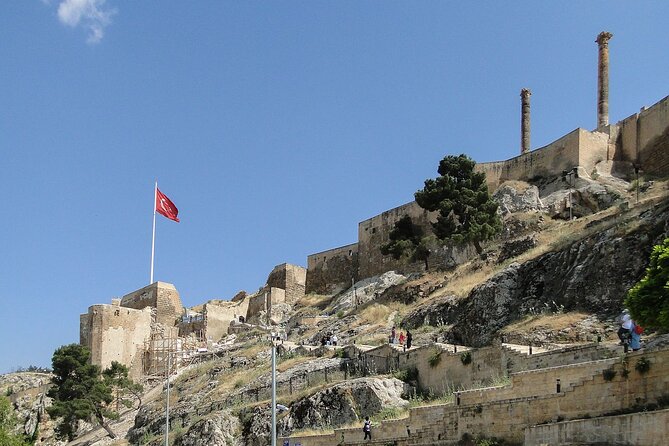
The Harran Ruins stop turns your attention to the city as a knowledge and cultural hub. You hear how Harran was known for cotton, honey, sweets, and measuring tools, and how it had a golden era from 718 to 913. That period is where the tour shines for history-minded visitors, because you get specific scholar names tied to the region, like Thabit Ibn Qurra, Al-Battani, and Ibn Taymiyyah.
Then the tour moves through decline and recovery, which helps you understand the bigger pattern. Harran’s influence is described as fading during Abbasid rule, and it suffers further disruption with Crusades expeditions in 1098. Later, Saladin, or Salahaddin Al-Ayyubi, is credited with restoring power, and the city sees construction of hospitals, bazaars, schools, and bathhouses. The Mongol invasion in 1260 is described as the final major blow, including destruction of sites like the Grand Mosque and city gates.
This is the kind of stop that can quietly become a highlight. It is only listed as about 45 minutes, but the information density is high, and it gives your earlier stops more meaning. Instead of treating Göbeklitepe, Abraham’s legend, and Harran as separate boxes, you start to see Şanlıurfa as a region where people kept redefining what mattered.
Price and Logistics: What You Actually Get for $377.30
At $377.30 per person for a private day tour, this is not a budget pick. And yes, one concern you should factor in is travel time. One review specifically mentioned around 3 hours in the car total, because the sites are far enough apart that you will not hop between them like a city walk.
So where does the value come from?
You get a private, air-conditioned vehicle with Wi-Fi onboard, plus bottled water and soda or pop. You also get a guide-led experience that includes admission tickets for multiple key stops. Admission is included at the airport welcome stage, for Göbeklitepe, for Harran Ruins, and for the dinner stage. Other areas in the route are listed as admission free, like the Abraham’s Cave stop and the Harran Grand Mosque walk.
You also get included dinner at dusk, plus parking fees and fuel surcharge. For many people, that combination reduces extra spending and last-minute scrambling. You are essentially buying a managed day with transport, key entrance fees, and a meal, not just a driver.
If you are cost-sensitive, the best strategy is to compare against what it would take to arrange private transport plus guides plus site admissions on your own. If your group size is small, it will feel expensive, and if you are a history and archaeology-focused traveler, it is easier to justify because you are paying for interpretation time.
Comfort Tips That Make a Hot Day in Şanlıurfa Easier
This itinerary runs long enough that comfort really matters. The vehicle is air-conditioned with Wi-Fi, and bottled water is included, which helps you stay functional during transfers. If you are visiting during hot weather, you will probably appreciate the way this kind of schedule builds in breaks between active stops.
I also like that hygiene items are provided in the vehicle, with hand sanitizer and masks available. The practical intent is simple, keeping the day smoother.
One small but useful detail: the pickup instructions are handled as a meet-and-greet at the arrival gate, and you are expected to look for your name. That is worth doing carefully because airports can be chaotic, and it helps you avoid wasting time before your guide can pull you into the next stage.
Who This Tour Is Best For (And Who Should Skip It)
This tour is a strong fit if you want a guided, structured day that connects prehistory, religious tradition, and major historical layers in the same region. I especially think it works well for travelers who like explanations, because guides like Serdar and Murad were praised for clear English and strong storytelling, including ideas about human cooperation and how people organized themselves.
It is also good if your schedule starts or ends with a flight, since pickup and drop-off at GAP Şanlıurfa Airport are included. If you have limited time in town and want maximum site coverage, this is built for you.
Skip it or reconsider if you dislike long drives for the price, or if you prefer an unguided, slower pace. Also, if you struggle with moderate walking and uneven historic surfaces, you might want to plan for that, since the tour does include walking at the sites.
Should You Book This Göbeklitepe and Harran Day Tour?
Book it if Göbeklitepe is a must-see for you and you want it handled with a real guide, in a private, air-conditioned setup, starting with airport pickup and ending with dinner. The mix of Göbeklitepe’s carved pillars plus Harran’s beehive-house atmosphere is a rare combo, and the admission coverage helps you keep the day from turning into a bundle of extra costs.
Do not book it if you are on a tight budget or you hate spending hours in the car. With a private format and a spread-out route, the cost only feels fair when you truly value guided history and want this full circuit in a single day.
FAQ
Where is the pickup point?
Pickup starts at GAP Şanlıurfa Airport, with a meet-and-greet at the arrival gate. You will see your name along the way so you can find your transfer personnel.
How long does the tour take?
The tour runs about 8 hours.
Is transportation air-conditioned, and is Wi-Fi provided?
Yes. You travel in a private air-conditioned vehicle, and Wi-Fi is included on board.
Which entrance tickets are included?
Admission ticket inclusion is listed for the airport welcome stage, Göbeklitepe, Harran Ruins, and the dinner stage. Abraham’s Cave and the Harran area where the Grand Mosque is visited are listed as admission free.
Is this a private tour?
Yes. It is a private tour, and only your group participates.
If I cancel, do I get a refund?
No. The experience is non-refundable and cannot be changed for any reason.
The rest of Konya, Rumi and Central Anatolia.
 ★ 4.0From Istanbul: Sapanca and Masukiye Day Trip with LunchFrom $291,036 reviews
 ★ 4.4From Istanbul: Sapanca & Maşukiye Full-Day Tour with LunchFrom $22226 reviews
 ★ 4.5Istanbul Whirling Dervish Ceremony, A Mystical Sufi ExperienceFrom $42123 reviews
 ★ 3.8Istanbul: Sapanca Tour, Cable Car, Quad, & ZiplineFrom $22121 reviews
 ★ 3.4Sapanca Lake and Masukiye Full-Day Tour from IstanbulFrom $2977 reviews
 ★ 5.0Highlights of KonyaFrom $10069 reviews
 ★ 4.5From Istanbul: Sapanca & Masukiye Tour with LunchFrom $2268 reviews
 ★ 5.02-Days Private Tour to Gobeklitepe and Karahantepe from IstanbulFrom $2,76062 reviews
Also filed under