
REVIEW · KONYA, RUMI AND CENTRAL ANATOLIA
2-Days Private Tour to Gobeklitepe and Karahantepe from Istanbul
Go back 12,000 years, fast. This private two-day route from Istanbul brings you to the crucial Pre-Pottery Neolithic sites around Sanliurfa, plus a mix of sacred places and city time in Urfa.
I especially like the way the trip pairs big-name archaeology with real context. You start at the Sanliurfa Archaeological Museum with major Gobeklitepe pieces, then you visit Göbeklitepe itself while it is still fresh in your mind.
One consideration: the price is steep at $2,760 per person, and the itinerary is weather-dependent. Also, only breakfast is explicitly included, so you will want to plan for meals and drinks on your own.
In This Review
- Key highlights worth knowing before you go
- Sanliurfa as your base for Göbeklitepe and Karahantepe
- Day 1 starts at the Sanliurfa Archaeology and Mosaic Museum
- Göbeklitepe: the big ritual complex, explained in plain terms
- Balikligol and Abraham’s cave: history mixed with sacred story
- Kizilkoyun Necropolis tombs, carved into bedrock
- Urfa bazaar on Day 2: local shopping with real context
- Sumatar (Soğmatar): the hill of temples, prayers, and legend
- Han el Barur caravanserai: trade along the Silk Road
- Karahantepe Orenyeri: 11,000 years and the T-shaped pillars you want
- Price and value: what you are paying for at $2,760 per person
- What the flow of two days feels like in real life
- Who this tour suits best (and who should consider another plan)
- Should you book 2-Days Private Tour to Göbeklitepe and Karahantepe?
- FAQ
- Is this a private tour?
- How long is the tour?
- What is included in the price?
- What about hotel pickup?
- What language is the tour offered in?
- Are there mobile tickets?
- What sites are visited?
- Is food included besides breakfast?
- What are the tour operating hours?
- What is the cancellation policy?
- Does the tour require good weather?
Key highlights worth knowing before you go
- Private, just your group, so questions and pacing are easier.
- Sanliurfa Archaeology and Mosaic Museum connects the dots with Gobeklitepe artifacts and the Enclosure D replica.
- Göbeklitepe and Karahantepe give you two extraordinary sites, one famous and one often less crowded.
- Balikligol and Abraham’s cave add a spiritual stop with story-driven meaning.
- Sumatar (Soğmatar) mixes religious legend with visible ruins on a hill.
- Urfa bazaar time is built in, so you get the living local side, not only stones.
More of the Anatolian interior
- From Istanbul: Sapanca and Masukiye Day Trip with Lunch★ 4.0 · 1,036 reviews
- From Istanbul: Sapanca & Maşukiye Full-Day Tour with Lunch★ 4.4 · 226 reviews
- Istanbul Whirling Dervish Ceremony, A Mystical Sufi Experience★ 4.5 · 123 reviews
- Istanbul: Sapanca Tour, Cable Car, Quad, & Zipline★ 3.8 · 121 reviews
Sanliurfa as your base for Göbeklitepe and Karahantepe
Sanliurfa is not a one-stop museum town. It is a living city where ancient sites sit within reach of everyday life. That is why this tour works. You are not just hopping between landmarks, you are getting a feel for the region’s layers, from Neolithic ritual spaces to Ayyubid caravan trade.
This is also a private format, and that matters more than people expect. With a small group, you spend less time waiting and more time asking direct questions. It helps at places like Göbeklitepe, where the meaning can be hard to fully grasp from distance.
You can also expect a practical rhythm. The tour includes hotel or address pickup and runs within a broad daily window (5:00 AM to 8:00 PM). Day 1 leans toward major sites, while Day 2 gives you Urfa city life plus more archaeology nearby.
Day 1 starts at the Sanliurfa Archaeology and Mosaic Museum
Your first real wow moment comes indoors at the Sanliurfa Archaeological Museum. This is not a quick hallway stop. The visit focuses on an extensive collection spanning from the Neolithic era all the way to Crusader Edessa, so you can frame what you will see outdoors later.
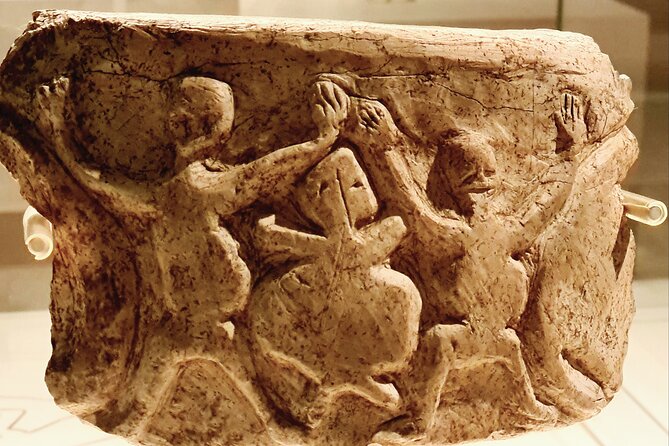
The museum is especially valuable for Gobeklitepe connections. You will see important artifacts from Göbekli Tepe, including Urfa Man, often described as the world’s oldest statue. That alone sets the tone, but the museum also includes a replica of Enclosure D.
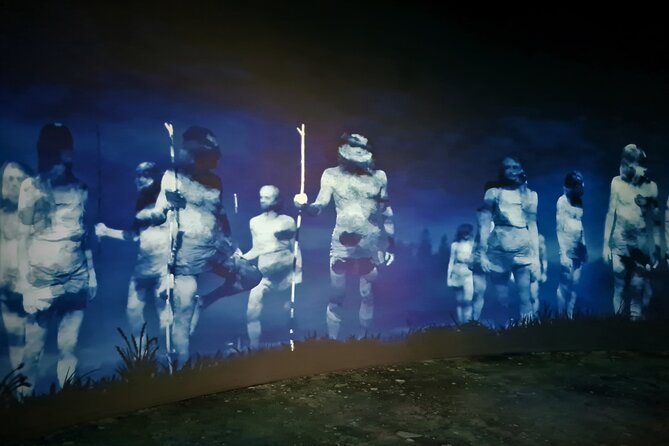
Even better, you get a direct link to a major modern event that changed how these stones survived. The museum houses a cult site connected to Nevali Cori, which was submerged by the Ataturk Dam and moved into the museum with original stones. That detail is not just interesting. It helps you understand why archaeology here can feel both fragile and dramatic at the same time.
The stop runs about 2 hours, and the admission ticket is included.
Göbeklitepe: the big ritual complex, explained in plain terms
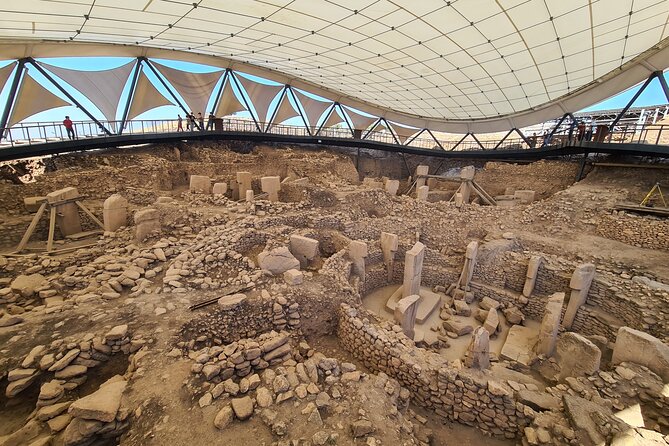
After the museum, Göbeklitepe lands differently. You are not walking in cold. The site is dated as far back as about 12,000 years and is widely discussed as the world’s oldest ritual complex. It predates writing and pottery, which is exactly why it forces people to rethink early human history.
You get around 2 hours at Göbeklitepe. That is a good amount of time to slow down, notice the T-shaped pillars and animal carvings, and then ask questions about how archaeologists interpret ritual architecture.
A key benefit of going with a guide in English is translation beyond words. These sites are visual arguments. Your guide can help you read what you are seeing, without turning it into an exam. In the feedback I reviewed for this tour, guide Taha and a colleague were praised for friendly, clear English and for making sure the trip ran on track from site to site.
Practical note: admission is included for this stop, so you can keep your brain on the archaeology and not on ticket logistics.
Balikligol and Abraham’s cave: history mixed with sacred story
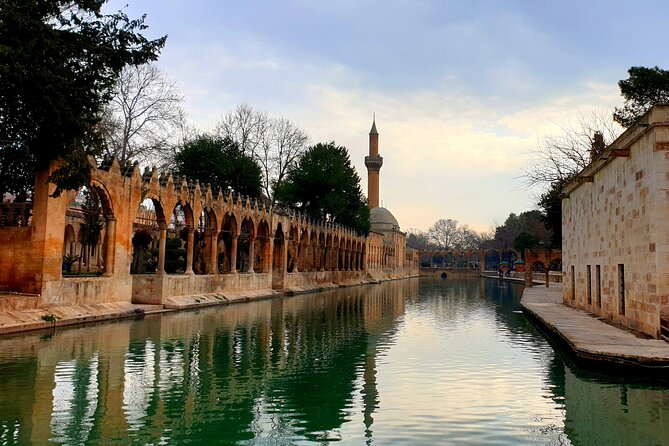
Day 1 shifts from museum explanations to a more emotional, story-based stop at Balikligol. Here you visit Abraham’s cave, described as the birthplace of the prophet Abraham, and the Pool of Prophet Abraham.
The narrative centers on the biblical account that Abraham was thrown into the fire by Nimrod, and the site is treated as a sacred reminder of that turning point. You also have a free admission stop for Balikligol.
This part of the itinerary is not about archaeology facts alone. It is about how the region remembers. Even if you are not religious, this is a good moment to slow down and notice how people live with older belief systems in the landscape.
It lasts about 1 hour, so it stays from becoming a time sink. It also breaks up the intensity of Göbeklitepe with something calmer and more human-scaled.
- Istanbul: Daytime or Sunset Sightseeing Cruise & Audio Guide
★ 4.8 · 14,430 reviews - Best of Istanbul 1, 2 or 3-Day Private Guided Istanbul Tour
★ 5.0 · 8,922 reviews - Istanbul: Basilica Cistern Fast-Track Entry and Audio Guide
★ 4.6 · 7,521 reviews - Istanbul: Hagia Sophia Skip-the-Line Ticket & Museum Option
★ 3.7 · 4,958 reviews - Istanbul: Hodjapasha Whirling Dervishes Show & Exhibition
★ 4.4 · 4,790 reviews
Kizilkoyun Necropolis tombs, carved into bedrock
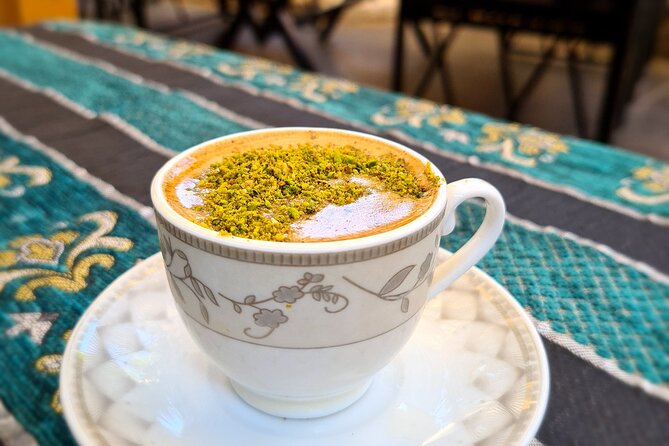
Right after Balikligol, you visit the newly excavated tombs of the Kizilkoyun Necropolis. These are dated to between the 2nd and 4th century AD, and the tombs are carved into bedrock limestone.
The description is specific: more than 61 excavated tombs. Even if you do not count them on your own, that number helps you picture scale. This stop gives you a different kind of time depth than the Neolithic sites. It is later, but it is still serious, still deliberate, still built into the local geology.
Time is tight here at about 30 minutes, and admission is free. That is enough to see what is there and keep the day from feeling like a marathon of stone.
Urfa bazaar on Day 2: local shopping with real context
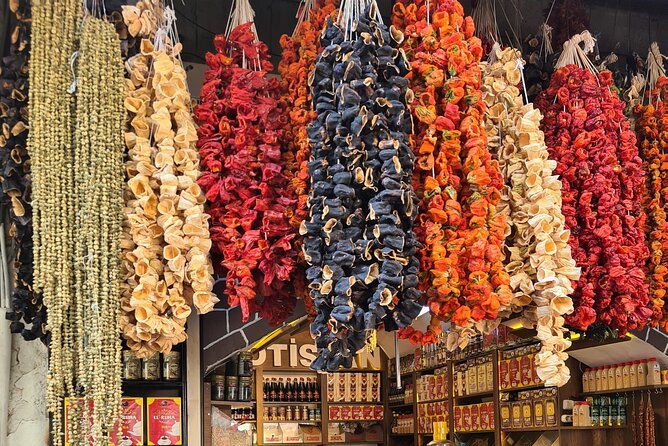
Day 2 starts with Urfa bazaar time. This is one of the best balancing acts in the whole schedule. The bazaar is not presented as a random shopping break, it is positioned as part of the city experience after you have seen the region’s ancient past.
You get about 2 hours here. Expect stalls selling practical goods and local textiles, including sheepskins and jeans, plus colorful scarves. The bazaar is also where you can spot workshops and craftsmen you might not notice elsewhere.
If you like souvenirs that feel connected to daily life, this is your moment. If you do not, you can still enjoy it as a people-and-street scene after two days of sites and stones.
Keep your expectations realistic. A bazaar is lively and sometimes chaotic, but you get what you put in. Go slow. Look up. Ask quick questions. And if you plan to buy, it helps to know you will likely negotiate.
Sumatar (Soğmatar): the hill of temples, prayers, and legend
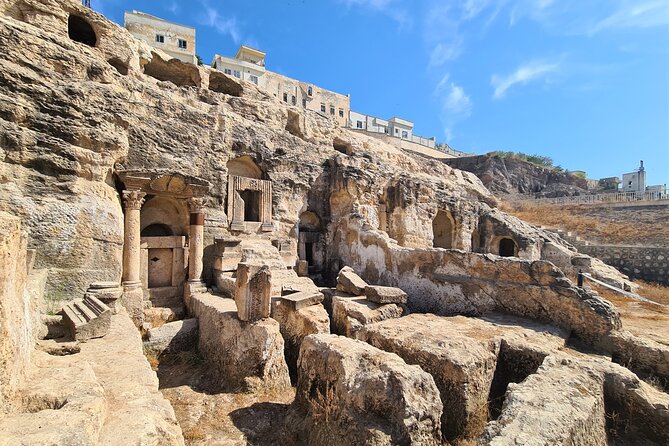
Sumatar, also spelled Soğmatar, is a stop that comes with story layered over ruins. The name is tied to Arabic meaning rain, and the area is linked to the idea that Prophet Moses escaped Pharaoh and even farmed there. The account also mentions a well hole opened by a miraculous scepter.
The physical site is centered on a hill with remnants of a civilization that dates back to the 2nd century. It is described as originally a pagan center and it connects to a sacred layout tied to seven temples: the Sun, Moon, Saturn, Jupiter, Mars, Venus, and Mercury.
Then comes the interesting twist: more investigation interpreted the hill as a grave monument and sacred area, representing Mare-late, the Lord of Gods. People praying toward the center are compared to modern prayers toward Mecca.
You will visit Pognon’s Cave, a sacred hill, and Mars temple. This part of the tour runs about 2 hours, and it is listed as free admission.
If you like interpretation, this is the stop that rewards it. The ruins can look simple at first glance, but the guide can help you see how the shape and the symbolism fit together.
Han el Barur caravanserai: trade along the Silk Road
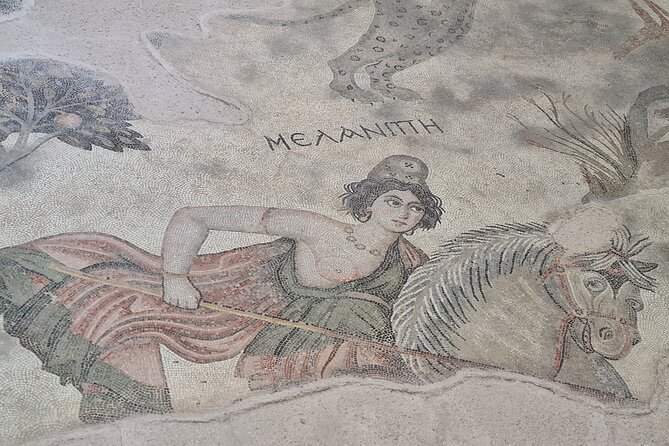
Between the spiritual story stops and the big archaeology finale, you get a compact culture stop at Han el Ba’rur. This is the remains of an Ayyubid dynasty caravanserai built in 1228, meant to service trade caravans on the way along the Silk Road.
It is only about 30 minutes, and admission is listed as free. Still, it matters. Neolithic sites are about ritual and architecture. Caravanserais are about movement, logistics, and long-distance human networks. This stop gives you a mid-point that connects the region to broader history in a grounded way.
It is a good breather, too. You can photograph stone textures and think about how trade routes overlapped with older sacred geography.
Karahantepe Orenyeri: 11,000 years and the T-shaped pillars you want
Near Göbeklitepe, you visit Karahantepe Orenyeri. This site is dated to over 11,000 years and belongs to the Pre-Pottery Neolithic period. If Göbeklitepe is the famous headline, Karahantepe often plays like the companion chapter.
The features described here are specific. You can see T-shaped pillars, plus human and animal carvings, and elaborate stone structures. This stop is listed as about 2 hours, with free admission.
This is the part of the tour that I think archaeology fans will love most. By the time you arrive, you have context from the museum and the first site. Then Karahantepe expands the story. You start thinking about patterns, not just monuments.
Also, a second site can make the trip feel like more than a single-site tour. Even if the sites are related, they still let you compare details and feel the scale of what humans were building so long ago.
Price and value: what you are paying for at $2,760 per person
Let’s talk money honestly. At $2,760 per person for two days, this is not a budget trip. It is priced like a high-touch private experience.
So what are you really buying?
- Private access and pacing: you are not sharing your schedule with unrelated strangers, and that reduces time lost to group logistics.
- Pickup offered and coordinated movement across multiple stops.
- English guidance across two full days of complex material.
- Site admissions: Sanliurfa Archaeological Museum and Göbeklitepe tickets are included in the itinerary, and several other stops are listed as free admission.
You also get breakfast included. But food and drinks are not mentioned as fully covered, so treat the price as including the core experience rather than every meal.
One more note on value: this tour tends to be booked about 47 days in advance on average. If you are flexible, you might catch better timing. If you are locked in on certain dates, book earlier to avoid losing your preferred slots.
What the flow of two days feels like in real life
This trip is structured in a way that avoids the worst-case scenario of archaeology fatigue. Day 1 hits the museum and Göbeklitepe first, then follows with sacred story stops and tombs. Day 2 shifts into Urfa life and continues into another ancient site plus a trade-era stop.
The pacing makes sense because the sites are conceptually different. You need breathing space to process Neolithic ritual architecture before you get pulled into later sacred tradition and then into city crowds and market life.
It also helps that the tour includes tickets for the major money stops and has several free-admission sites. That keeps you from constant minor spending and constant stops for ticketing.
If your goal is seeing both Göbeklitepe and Karahantepe with a guide, this is a more efficient use of your time than building it yourself. If you are the type who wants to park on one site for hours and wander alone, a private guide may feel a bit structured. But for most people, the structure is exactly what makes the experience click.
Who this tour suits best (and who should consider another plan)
This tour is a strong fit if:
- You care about two major Pre-Pottery Neolithic sites rather than just one.
- You want a guide to connect museum pieces to what you see outside.
- You like a balanced mix of sacred sites, archaeology, and Urfa city time.
- You want private convenience with hotel or address pickup.
It may feel less ideal if:
- You want lots of free time for your own wandering in each city block, because the schedule is site-forward.
- You expect meals and drinks to be fully handled beyond breakfast, since only breakfast is explicitly included.
- You are sensitive to early starts, since the operation window starts as early as 5:00 AM.
Overall, it is built for travelers who want meaning, not just photos. The combination of Gobeklitepe context, sacred local tradition, and the second Neolithic site is the whole point.
Should you book 2-Days Private Tour to Göbeklitepe and Karahantepe?
If your top priority is a guided, private two-day route to the most important sites around Sanliurfa, this is an easy yes. The museum-to-Göbeklitepe pairing is smart, and Karahantepe gives you the extra layer that makes the trip feel complete.
Book it if you:
- Want English guidance for complex sites.
- Prefer a plan that handles admissions where listed and keeps days organized.
- Like mixing archaeology with a real city experience in Urfa bazaar.
Skip it if you:
- Have a tight budget and need a cheaper format.
- Want full control over meals, since only breakfast is stated as included.
- Cannot travel when weather is poor, since the experience requires good weather.
FAQ
Is this a private tour?
Yes. This is a private tour/activity, and only your group will participate.
How long is the tour?
The tour duration is approximately 2 days.
What is included in the price?
Breakfast is included. The Sanliurfa Archaeology and Mosaic Museum and Göbeklitepe admission tickets are listed as included. Other listed stops show admission as free.
What about hotel pickup?
Pickup is offered. The tour says pickup from your hotel or address is to be confirmed and agreed by both sides.
What language is the tour offered in?
The tour is offered in English.
Are there mobile tickets?
Yes, mobile tickets are offered.
What sites are visited?
You will visit the Sanliurfa Archaeological and Mosaic Museum, Göbeklitepe, Balikligol (Abraham’s cave and the Pool of Prophet Abraham), the Kizilkoyun Necropolis tombs, the Urfa bazaar, Sumatar (Soğmatar), Han el Barur, and Karahantepe Orenyeri.
Is food included besides breakfast?
Breakfast is included, but food and drinks are not mentioned as included. Personal purchases are not included.
What are the tour operating hours?
The opening hours listed are Monday through Sunday, 5:00 AM to 8:00 PM.
What is the cancellation policy?
You can cancel up to 6 days in advance for a full refund. The policy details partial refunds if you cancel 2 to 6 days before, and no refund if you cancel less than 2 days before.
Does the tour require good weather?
Yes. The experience requires good weather. If it is canceled due to poor weather, you will be offered a different date or a full refund.
More Across Central Anatolia

Recently reviewed in Istanbul

The rest of Konya, Rumi and Central Anatolia.
 ★ 4.0From Istanbul: Sapanca and Masukiye Day Trip with LunchFrom $291,036 reviews
 ★ 4.4From Istanbul: Sapanca & Maşukiye Full-Day Tour with LunchFrom $22226 reviews
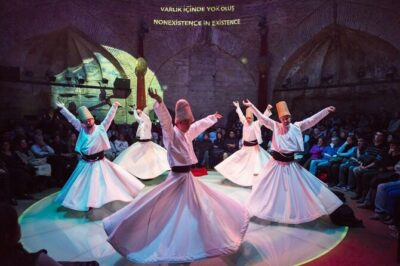 ★ 4.5Istanbul Whirling Dervish Ceremony, A Mystical Sufi ExperienceFrom $42123 reviews
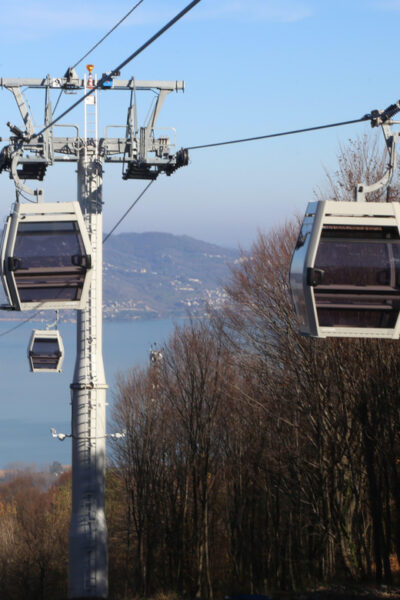 ★ 3.8Istanbul: Sapanca Tour, Cable Car, Quad, & ZiplineFrom $22121 reviews
 ★ 3.4Sapanca Lake and Masukiye Full-Day Tour from IstanbulFrom $2977 reviews
 ★ 5.0Highlights of KonyaFrom $10069 reviews
 ★ 4.5From Istanbul: Sapanca & Masukiye Tour with LunchFrom $2268 reviews
 ★ 5.0Private Sufi TourFrom $10060 reviews
Also filed under