
REVIEW · HAGIA SOPHIA AND THE BLUE MOSQUE
Istanbul: Whirling Dervish Ceremony next to Hagia Sophia
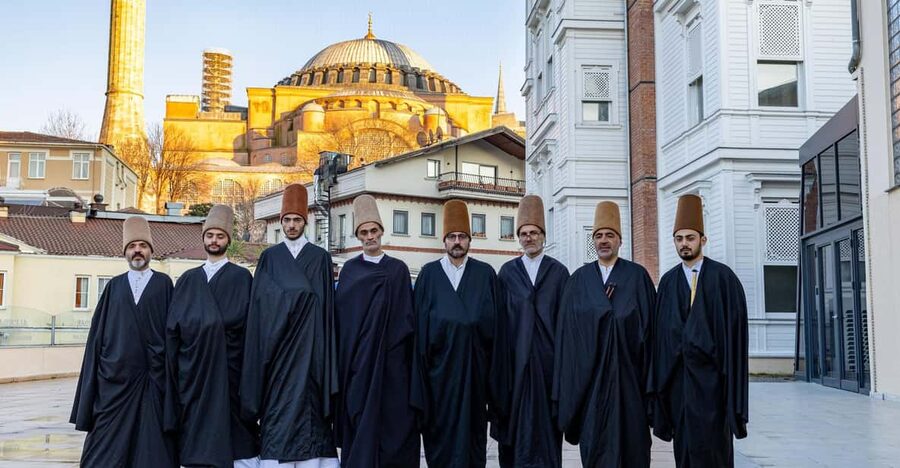
Spinning prayers beside Hagia Sophia can change your evening pace fast. This Whirling Dervish Ceremony (Sema) is staged in a traditional wooden-house setting, with live Turkish classical music and an explanation before and after so you know what you are watching. I especially liked the UNESCO Intangible Cultural Heritage context and the way the music and silence work together. One possible drawback: the sound for the spoken introduction can be hit or miss, so you may not catch every word at the very start.
The location is also a big win. You meet near the Basilica Cistern, then walk into a “giant white wooden house” where the gate opens 30 minutes before the ceremony. Then it is straight into the ritual: instrumental music (strings, drums, flutes), the dervishes arrive in serenity, and the turning gradually accelerates with the rhythm. It is not a loud, theatrical show. It is quiet, focused, and very intentional, which some people love and some people find too slow.
At about 55 minutes and for around $17 per person, this feels like strong value for what you get: entrance, live music, a live English host, and a smart audio guide in multiple languages, plus tea or sherbet. The respectful, religious tone matters here, though, so follow the rules on silence and keep distractions down.
In This Review
- Key things I’d circle before you go
- Where the ceremony starts: the white wooden house near Basilica Cistern
- The 55 minutes of Sema: what happens before, during, and after
- 1) Salon welcome, then the setup
- 2) Instrumental music sets your baseline
- 3) The dervishes arrive, then the turning accelerates
- 4) Silence and attention are part of the ritual
- 5) After the ceremony: more meaning, sometimes Q&A
- Live Turkish classical music: why the soundtrack does the heavy lifting
- The meaning layer: host explanations plus a smart audio guide
- Tea or sherbet: the included pause that brings you back
- Value in Istanbul terms: what $17 gets you, and what it does not
- Who this fits best, and who might want a different plan
- Practical tips so you get the best seats and the best experience
- Should you book the Whirling Dervish Ceremony next to Hagia Sophia?
- FAQ
- Where do I meet the host for the whirling dervish ceremony?
- How long is the ceremony?
- What is included with the ticket?
- What languages are available on the smart audio guide?
- Is there a live guide, and is it in English?
- What drink do I get?
- Is the experience wheelchair accessible?
- Is there a minimum age?
- Are there rules about noise or silence?
- Can I cancel and get a full refund?
Key things I’d circle before you go
- UNESCO Sema: You are not just watching dancers, you are seeing an internationally recognized cultural ritual.
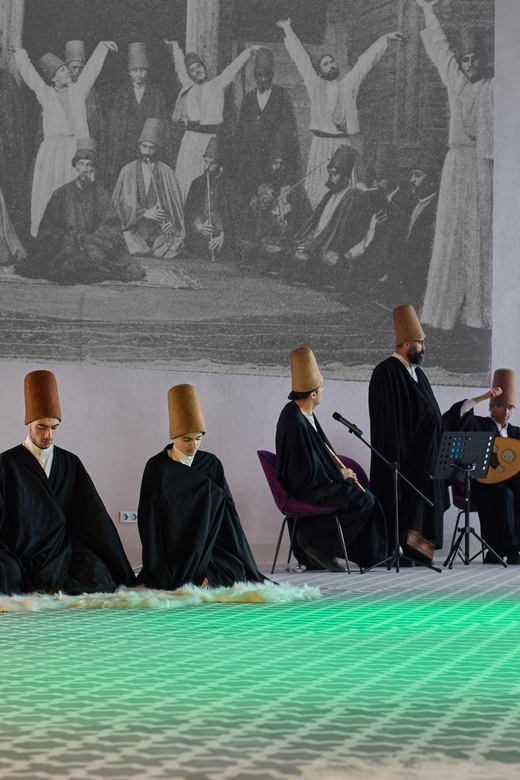
- Live Turkish music: Traditional instruments like strings, drums, and flutes set the pace for the ceremony.
- Before-and-after explanations: A licensed professional frames the meaning, then you get clarity after.
- 7-language smart audio guide: Spanish, French, English, German, Italian, Russian, and Arabic support you during the experience.
- Tea or sherbet included: A simple local drink helps you land after the ritual ends.
- A quiet room by design: You are told making noise is not allowed, so the experience stays focused.
Other visits to Hagia Sophia and the Blue Mosque. Both are working mosques, so cover shoulders and knees and take your shoes off inside
- Istanbul: Hagia Sophia Skip-the-Line Ticket & Museum Option★ 3.7 · 4,958 reviews
- Istanbul: Blue Mosque & Hagia Sophia Guided Tour w/ Tickets★ 4.8 · 3,600 reviews
- Istanbul: Hagia Sophia Skip-the-Line Ticket and Audio Guide★ 4.3 · 2,246 reviews
- Istanbul: Basilica Cistern & Hagia Sophia Combo Ticket★ 4.6 · 1,990 reviews
Where the ceremony starts: the white wooden house near Basilica Cistern
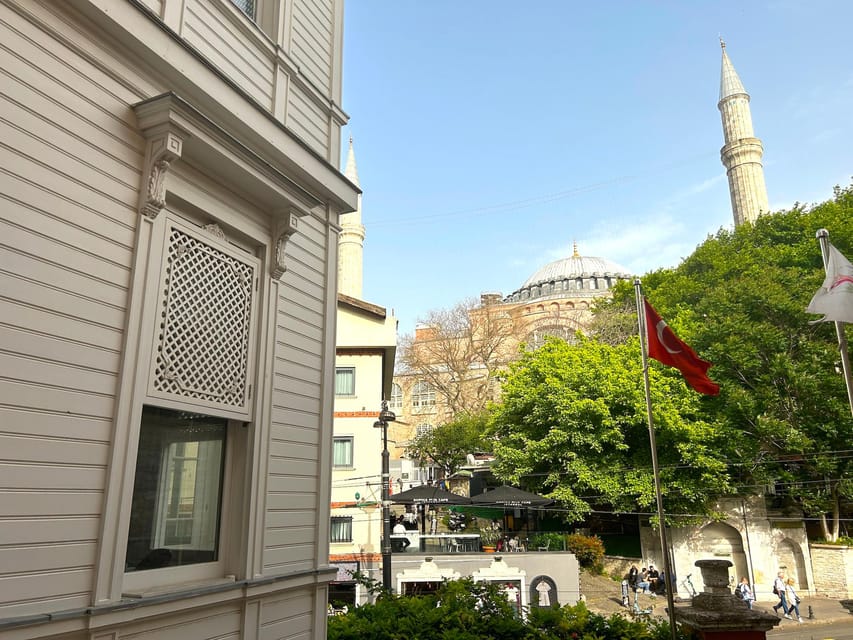
Istanbul has a way of making every stop feel crowded and complicated, but this one is surprisingly straightforward. Your meeting point is right next to the entrance of the Basilica Cistern. The reception desk sits at the gate of a large white wooden house.
Two practical tips make this easier:
- Arrive a bit early so you can find the gate without stress.
- Plan your time so you do not rush into the restroom. The experience specifically asks you to visit before or after the ceremony.
Because this is a cultural, religious-style event, the venue runs on attention. You are not wandering around a marketplace first. You are settling in. That difference matters when your day is packed with big sights.
The 55 minutes of Sema: what happens before, during, and after
This is a 55-minute experience built around the rhythm of the Sema. Here is how it tends to unfold, in the order you will feel it:
1) Salon welcome, then the setup
You begin in a traditional salon, described as a beautiful wooden house. That matters because it changes the mood from tourist theater to ritual space. A professional host gives context before the ceremony, and there is also a digital info guide available in seven languages.
2) Instrumental music sets your baseline
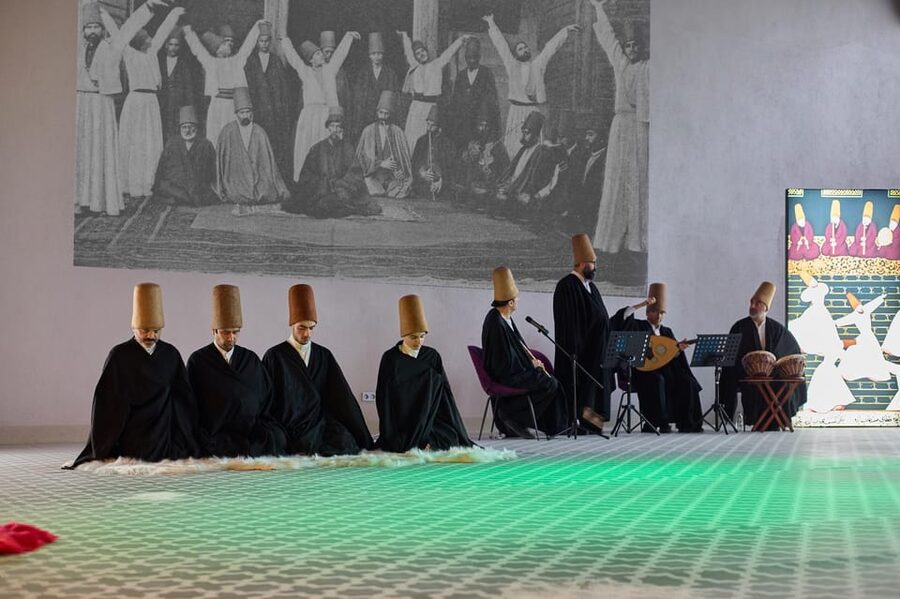
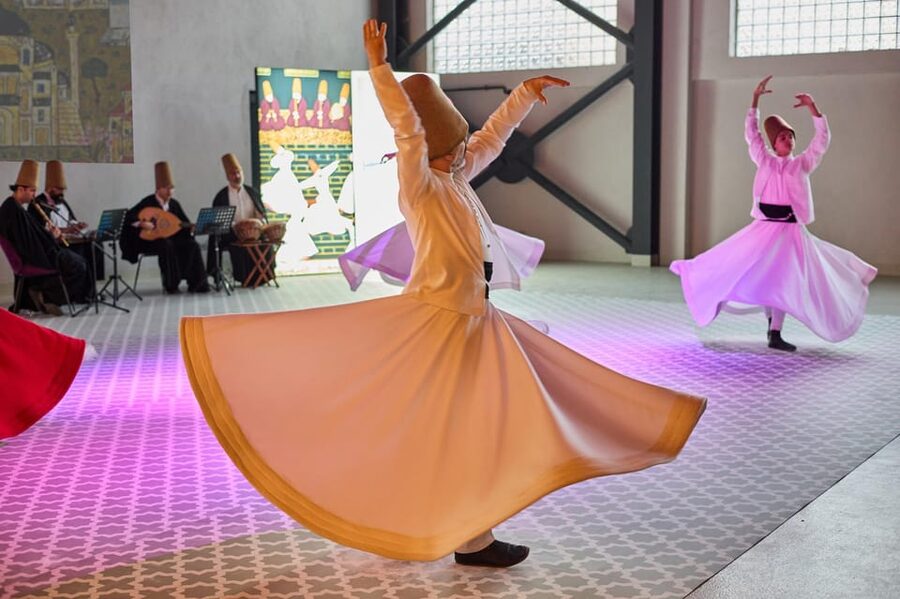
The ceremony begins with instrumental pieces performed live using traditional instruments such as strings, drums, and flutes. The listing notes the musical pieces are composed between the 1400s and early 1800s, which gives you a sense of time depth, even if you do not study old music.
This part is not just background. It is when your ears start to calibrate to the Sufi style and the ceremony’s cadence.
Other evenings out. The sema is a religious ceremony rather than a floor show, and audiences stay quiet through it
- Istanbul: Hodjapasha Whirling Dervishes Show & Exhibition
★ 4.4 · 4,790 reviews - Istanbul: Whirling Dervishes Ceremony and Mevlevi Sema
★ 4.3 · 1,694 reviews - Istanbul: Hodjapasha Rhythm of The Dance Show
★ 4.7 · 1,451 reviews - Istanbul Bosphorus Dinner Cruise: Live Folk Dance & DJ Experience
★ 4.5 · 1,437 reviews - Istanbul: Whirling Dervish Ceremony next to Hagia Sophia
★ 4.5 · 906 reviews
3) The dervishes arrive, then the turning accelerates
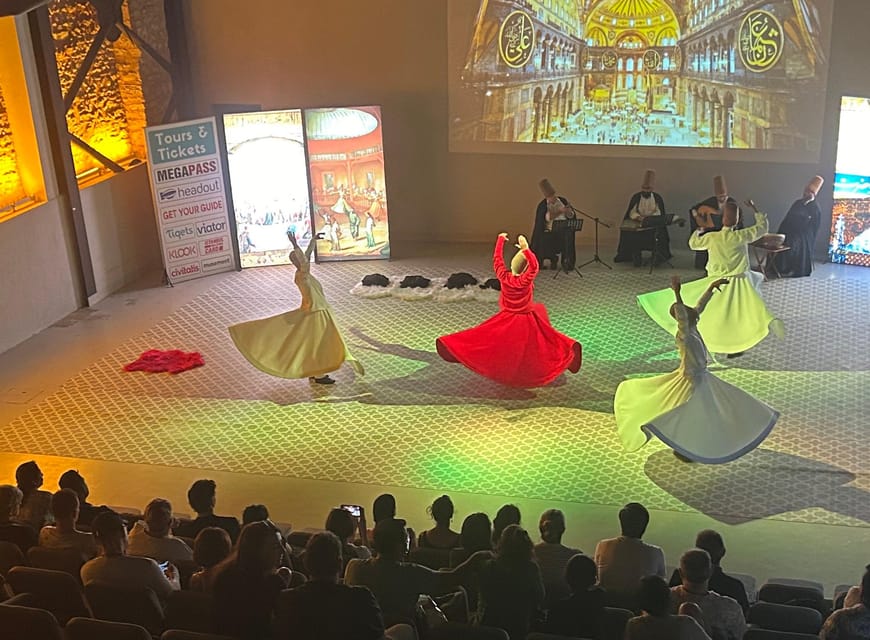
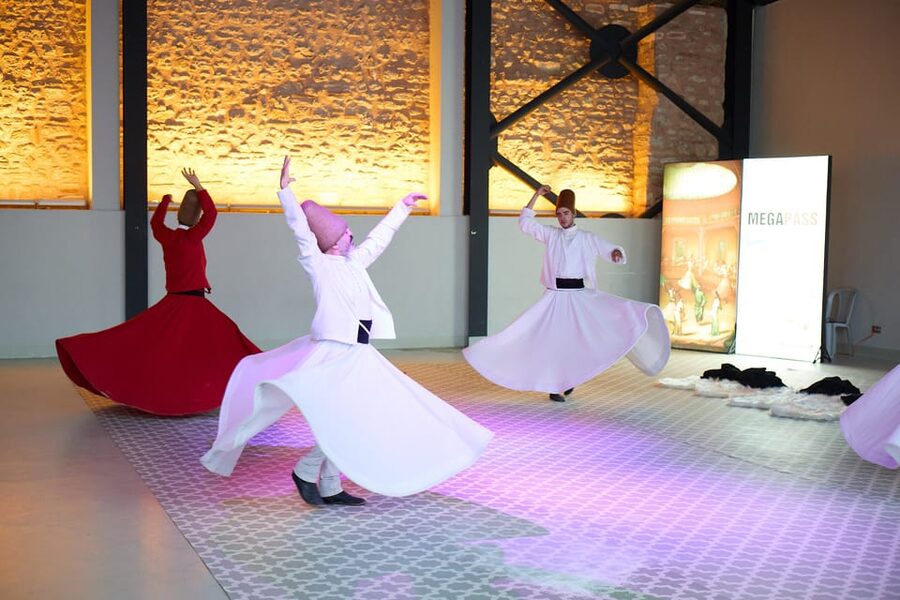
When the dervishes enter, they do so in serenity. Then, in accordance with the rhythm, the turning accelerates. The turning is the visual language of the Sema, and the explanations before and after help you connect the movements to ideas like letting go of the self and seeking unity.
You may also hear symbolic gestures explained, such as one hand raised toward the heavens and the other pointing to the earth, showing receiving blessings and sharing them. The host framing makes it easier to follow beyond just watching spin.
4) Silence and attention are part of the ritual
One of the strongest signals you get from the rules is that quiet is essential. Making noise is not allowed, and silence is important. That shapes your whole experience. If you come in ready to treat it like a concert, you might feel like something is “missing.” If you come in ready to treat it like a ritual, you usually feel the difference fast.
5) After the ceremony: more meaning, sometimes Q&A
Afterward, the host continues with explanations and interpretation. Some sessions include a chance to ask questions. In recent feedback, people praised the explanations and the chance to interact with the guide at the end, including answers from hosts such as Kasl, who gets named for being helpful and responsive.
Live Turkish classical music: why the soundtrack does the heavy lifting
If you only care about the spinning, you can still enjoy it. But the reason this ceremony keeps earning high scores is the way the music and the ceremony structure work together.
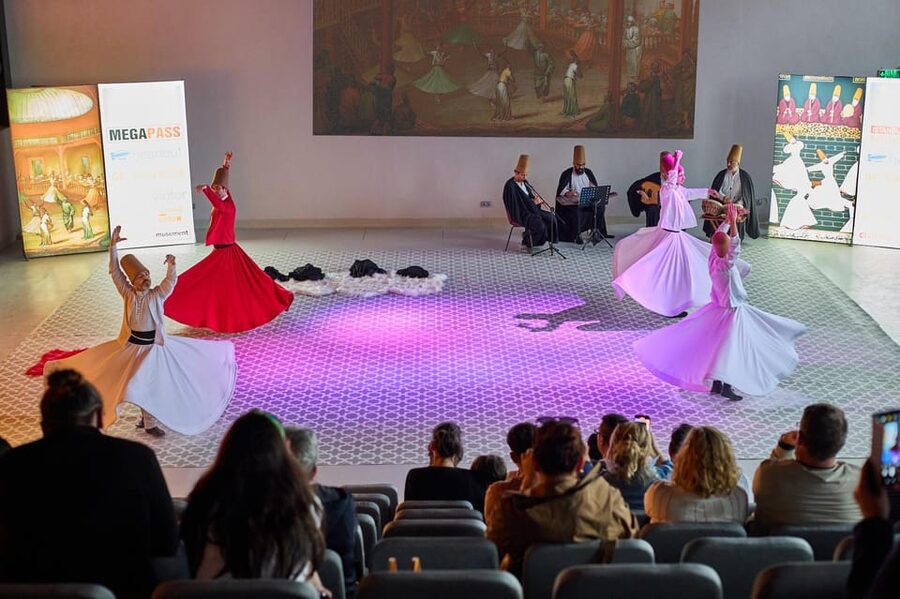
Live Turkish classical music is performed with traditional instruments, and the music is played as part of the ritual, not as a separate entertainment layer. That is why the experience can feel slow in a good way. It builds.
A practical reality: sound can affect how much you catch. One review flagged that the speaker at the beginning was hard to hear because of sound quality. So, if you are sensitive to audio clarity, come with patience and try to sit where you can see and hear the host’s face when the introduction starts.
Also, do not underestimate the value of going in prepared to listen. One of the best pieces of advice from feedback is to avoid using your phone during the ceremony. Silence is the point, and phone light and alerts break your attention instantly.
The meaning layer: host explanations plus a smart audio guide
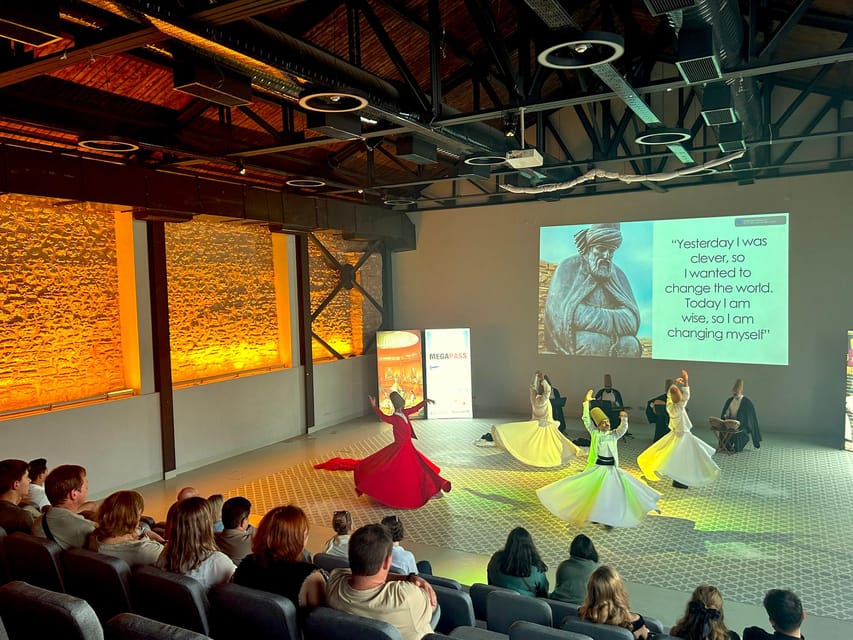
This experience is not built for total beginners. It is built for people who want to understand what they are seeing, without turning it into a lecture.
You get:
- A live English tour guide
- Explanations given before and after the ceremony by a professional host
- A smart audio guide available in ENG, DE, FR, ITA, RUS, ESP, and ARB
That audio guide support is a big practical value. You can follow along even if the host speaks quickly at certain moments. It also means you can enjoy the ritual without constantly scanning for translations on the screen.
If you want to go one step further, a few people recommend arriving with a bit of background on Rumi and Shams Tabrizi. That is not required, but it makes the poetry and themes feel less like abstract talk and more like familiar language once you hear it referenced.
Tea or sherbet: the included pause that brings you back
At the end, you are offered a local drink of the day, with options listed as tea or sherbet, plus water. This is a small thing, but it is not random.
The timing matters. You finish the turning, you leave the ritual state, and then you get something familiar in your hands and throat. It also gives you a moment to reset your senses before you step back into Istanbul traffic, crowds, and noise.
Several reviews mention the drink as a thoughtful touch, and it is the kind of detail that makes a short event feel complete.
Value in Istanbul terms: what $17 gets you, and what it does not
For roughly $17 per person and a 55-minute runtime, you are paying for:
- Entrance to the whirling dervish ceremony
- Live music plus the authentic ritual structure
- A live English guide and professional explanations
- A smart audio guide in multiple languages
- A local drink (tea or sherbet) and water
What is not included is food and other drinks, so plan to eat before or after your ceremony block.
Now the key value question: is it worth it compared to other Istanbul evening options? In my view, it is one of the better “cultural evening” deals because you are not just buying a ticket to watch movement. You are getting context, translation support, and a setting where silence is part of the format.
The other value angle is purpose. Multiple pieces of feedback state the tickets support an NGO or arts center and help fund scholarships. That does not change the ritual itself, but it does mean your money is feeding arts education rather than only going to rent and lights.
Who this fits best, and who might want a different plan
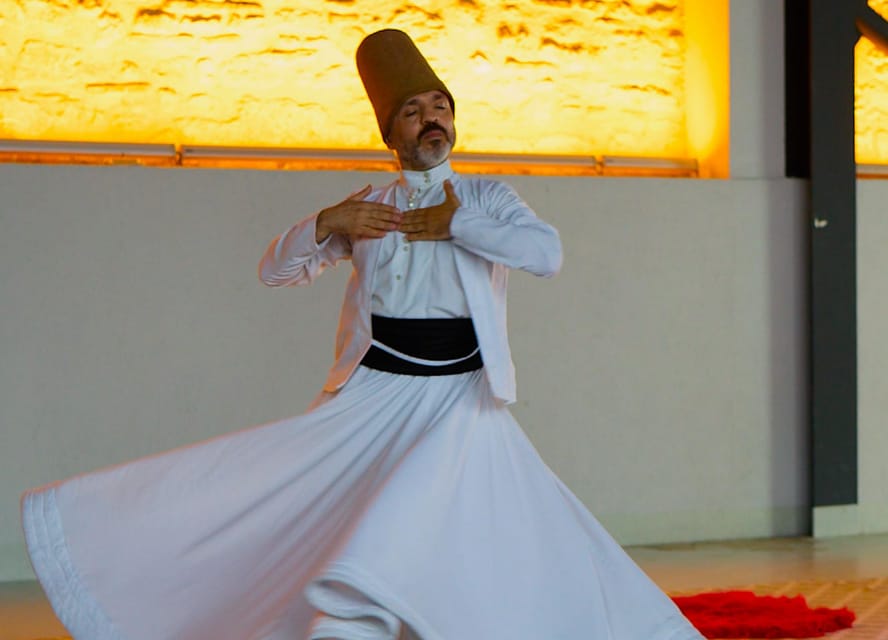
This is a religious-style ceremony, even if it is presented in a cultural context for visitors. It is quiet. It is slow. It is spiritual in tone.
You’ll probably love it if:
- You prefer meaningful cultural experiences over loud nightlife
- You want live traditional music tied directly to the ritual
- You like ceremonies where explanations help you follow the symbols
- You enjoy meditative pacing and can respect the silence rule
You might want to skip it if:
- You want something fast, dramatic, or interactive
- You do not do well with strict quiet expectations
- You are coming mainly for crowds and spectacle
It also is not suitable for children under 2 years, and the rules around noise and silence may not feel natural for very young kids anyway.
Practical tips so you get the best seats and the best experience
A few details from feedback can save you headaches:
- Phone use: Keep it off or away during the ceremony. People specifically advise against using your phone during the ritual because it pulls you out of the moment.
- Restroom timing: Use the restroom before or after the ceremony. There is a specific reminder to do this.
- Watch the lighting if you care about photos: One review mentions illuminated panels on the sides that caused harsh reflections and were not helpful for photography.
- Expect comfort and good sightlines: Reviews frequently describe good views from seats and comfortable seating.
- Respect the tone: Making noise is not allowed. Treat this like a quiet room, not a concert hall.
One more helpful mindset: approach it with respect. People who enjoyed it most talk about not reducing the ceremony to a gimmick. If you come in ready to listen and watch carefully, it tends to land.
Should you book the Whirling Dervish Ceremony next to Hagia Sophia?
Book it if you want a short, high-impact cultural evening in Istanbul that is structured around the real Sema ritual, not a stage show. With live Turkish classical music, an English host, and a smart audio guide in seven languages, you have the tools to understand what you are seeing even if you start from zero.
Skip it if you are looking for a loud entertainment product or if you know you struggle with quiet rules and slow pacing. This experience runs on silence and attention, and that is not negotiable.
If your goal is value, meaning, and a UNESCO-listed ritual in a historic-feeling venue, this is one of the easier “yes” decisions you can make in Istanbul.
FAQ
Where do I meet the host for the whirling dervish ceremony?
You meet your host next to the entrance of the Basilica Cistern. The reception desk is at the gate of the giant white wooden house.
How long is the ceremony?
The experience runs for 55 minutes.
What is included with the ticket?
The ticket includes entrance to the whirling dervish ceremony with live music and authentic ritual, a local traditional drink (tea or sherbet) plus water, and a smart audio guide.
What languages are available on the smart audio guide?
The smart audio guide is available in ENG, DE, FR, ITA, RUS, ESP, and ARB.
Is there a live guide, and is it in English?
Yes. There is a live tour guide, and English is the listed language.
What drink do I get?
You get a local traditional drink of the day, choosing from tea or sherbet, plus water.
Is the experience wheelchair accessible?
Yes, it is listed as wheelchair accessible.
Is there a minimum age?
Yes. It is not suitable for children under 2 years.
Are there rules about noise or silence?
Yes. Making noise is not allowed, and silence is important.
Can I cancel and get a full refund?
Yes. Free cancellation is available up to 24 hours in advance for a full refund.
More Evening Performances in Istanbul


Hagia Sophia and the Blue Mosque, Other Visits


Recently reviewed in Istanbul


The rest of Hagia Sophia and the Blue Mosque.
 ★ 4.8Istanbul: Blue Mosque & Hagia Sophia Guided Tour w/ TicketsFrom $393,600 reviews
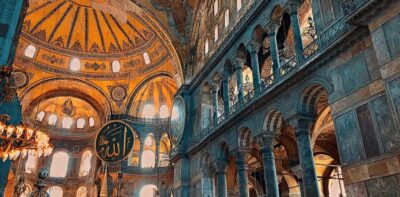 ★ 4.3Istanbul: Hagia Sophia Skip-the-Line Ticket and Audio GuideFrom $352,246 reviews
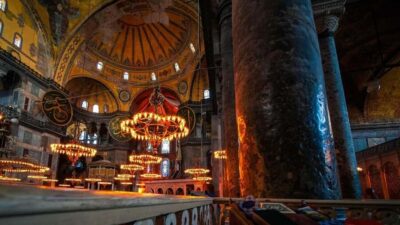 ★ 4.6Istanbul: Basilica Cistern & Hagia Sophia Combo TicketFrom $711,990 reviews
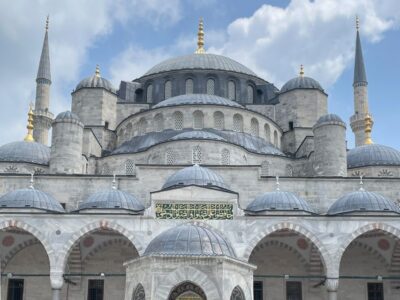 ★ 4.5Istanbul: Blue Mosque Guided TourFrom $191,910 reviews
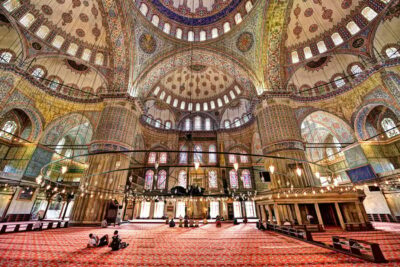 ★ 4.7Istanbul: Blue Mosque, Hagia Sophia, & Basilica Cistern TourFrom $581,806 reviews
 ★ 4.4Istanbul: Hagia Sophia Skip-the-Line Ticket with Audio TourFrom $421,767 reviews
 ★ 4.3Istanbul: Blue Mosque, Basilica Cistern, & Hagia Sophia TourFrom $781,634 reviews
 ★ 4.3Istanbul: Hagia Sophia Skip-the-Ticket Line & Audio GuideFrom $411,469 reviews