

REVIEW · PAMUKKALE AND HIERAPOLIS
Pamukkale and Hierapolis
White terraces and Roman ruins in one long day. A trip to Pamukkale and Hierapolis turns a long drive into a real wow moment, with calcium-rich thermal water forming those white cascades and a guided sweep through major Roman sites.
I especially like the way the day is structured for first-timers, with an English-speaking local guide who ties the natural wonder to what the Romans did with the healing waters. I also appreciate the calm size, capped at 15 travelers, so you can actually hear the guide and move at a reasonable pace.
The main tradeoff is simple: this is a long day from Izmir, so if you’re hoping for lots of free time or a slow stroll, you might feel time pressure once you’re on the road.
In This Review
- Key things to know before you go
- Setting Off From Izmir: What the Long Drive Really Means
- Pamukkale Travertines: The White Cascades, and Why They Keep Growing
- Seasonal reality check
- Cleopatra Pool and the Best Swimming Plan
- Hierapolis on a Plateau: Apollo Temple, Theater, and Roman Power
- How much time do you get?
- Necropolis and Nymphaeum: The Quiet Awe Part of the Day
- Guide Energy, Small-Group Comfort, and Photo Strategy
- Photo timing that makes sense
- Value for $160: Two Big Sites Without the Headaches
- Who This Tour Suits Best
- Should You Book Pamukkale and Hierapolis From Izmir?
- FAQ
- How long is the Pamukkale and Hierapolis tour?
- What time does the tour start from Izmir?
- Where is the pickup point?
- Will I have transportation included?
- Is an English-speaking guide included?
- Are admission tickets included?
- Is food included on the tour?
- How big is the group?
- Can I cancel and get a refund?
Key things to know before you go

- Early 6:30 am start means you’ll enjoy the sites while the day is still getting going
- Pamukkale travertines take center stage, with about 3 hours on the thermal terraces
- Hierapolis is more than one monument, you’ll cover Apollo Temple, Theater, Necropolis, and the Nymphaeum
- Small-group pacing helps you get questions answered and avoid feeling rushed
- Air-conditioned coach + pickup/drop-off makes the logistics easier than DIY
- Bring a bathing suit if you want to swim, especially if Cleopatra Pool is on your wish list
More trips out to the white terraces
- Pamukkale Tour from Izmir★ 5.0 · 806 reviews
- From Izmir: Guided Pamukkale Full-Day Tour with Lunch★ 4.5 · 190 reviews
- From Izmir: Pamukkale Guided Tour with Lunch★ 4.8 · 143 reviews
- Pamukkale and Hierapolis★ 4.0 · 63 reviews
Setting Off From Izmir: What the Long Drive Really Means

This tour runs from early morning pickup around 6:30 am and loops back to the same meeting point in Izmir. Expect a full day, roughly 9 hours total, because Pamukkale and Hierapolis sit far enough inland that you will spend serious time on the road.
That doesn’t automatically make it a bad deal. I like that the tour gives you a guide for the whole journey, not just a quick handoff at the sites. If you’re the type who likes to understand what you’re looking at while you’re looking at it, the drive becomes part of the experience.
Still, time is the currency here. Some departures can feel tighter depending on the day’s conditions, so you should go in with the right mindset: you’re buying access to two headline stops, not a relaxed, linger-all-day vacation.
For best results, confirm your pickup time before you leave your hotel. One practical tip: when pickup is confusing, it usually comes from a mismatch between what the voucher says and what the driver expects, so it’s worth double-checking that your hotel pickup details are clearly set.
Pamukkale Travertines: The White Cascades, and Why They Keep Growing
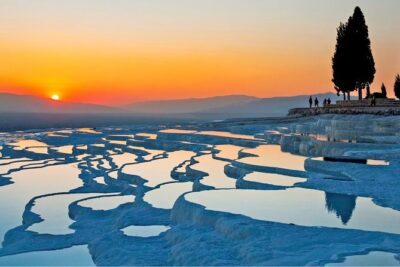
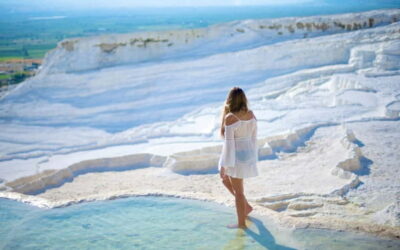
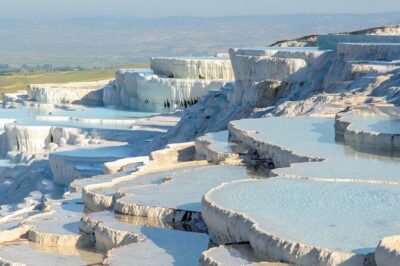
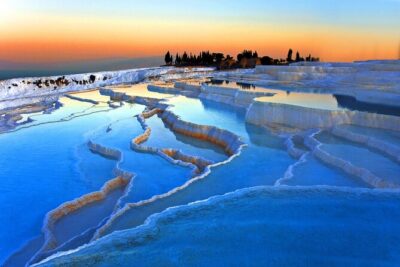
Pamukkale’s “wow” comes from physics and time, not spectacle. The terraces are formed by thermal spring water rich in calcareous minerals. As that mineral-laden water flows downhill and cools, it deposits calcium, creating the famous white formations that look almost too perfect to be real.
Your guide explains how the water produces cataracts, stalactite-like shapes, and basins, and why the area feels like a natural outdoor sculpture. I really like this part because it helps you look beyond the photos. Once you understand that the whiteness is built up mineral deposit, you can start seeing the patterns and flow of the water.
The tour gives you about 3 hours at Pamukkale. That’s enough time to do the main terraces, take your photos, and still have moments where you can stand and just watch the water movement. It also means you’re not forced into the “one quick look and sprint” style schedule.
Seasonal reality check
If you’re planning this trip in colder months, go in expecting that the look can change. Pamukkale is still Pamukkale, but the visuals may not match peak-season water flow. Since this is a long-day trip, it’s wise to temper expectations and treat it as a natural wonder, not an Instagram guaranteed outcome.
Cleopatra Pool and the Best Swimming Plan
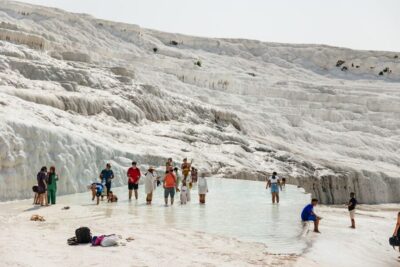
One reason people love Pamukkale is that you can actually soak. The Cleopatra Pool option is the common add-on idea, and it tends to be deeper than the shallow terrace areas. A practical tip: the terrace sections you walk on can be more knee-deep in places, while the Cleopatra Pool area is typically where you get the warmer, more relaxing soak.
If swimming is on your list, bring a bathing suit and plan for a change of clothes. You might also want a little cash for any extra entry that’s not included in the main tour sites. Even when the tour covers the core entrances, the swim area can cost extra.
Also, don’t treat the water like a spa bubble bath. This is mineral-rich thermal water on travertine, so your shoes and movement matter. Wear a style of footwear you can manage on slick surfaces, or be prepared to go very slow when you’re walking close to the water.
- Ephesus and St. Mary’s House Day Trip from Izmir with Lunch
★ 4.5 · 210 reviews - From Izmir: Full Day Boat Trip around Cesme with BBQ Lunch
★ 4.5 · 208 reviews - From Izmir: Guided Pamukkale Full-Day Tour with Lunch
★ 4.5 · 190 reviews - Daily Ephesus & Virgin Mary House Tour from Izmir
★ 5.0 · 174 reviews - From Izmir: Pamukkale Guided Tour with Lunch
★ 4.8 · 143 reviews
Hierapolis on a Plateau: Apollo Temple, Theater, and Roman Power

After Pamukkale, the trip shifts to Hierapolis, a Roman city built on a raised plateau created over centuries by limestone deposits. The city’s name is tied to the idea of a sacred city, and you’ll hear stories connected to how the name is explained through ancient references.
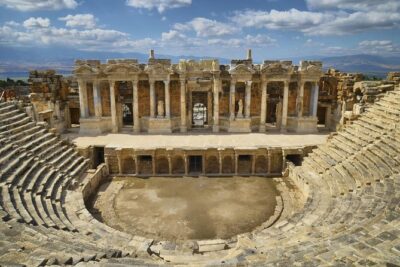
At Hierapolis, you’ll focus on major public buildings and views that show how Romans staged culture, religion, and gatherings. You’ll visit the Apollo Temple, then move on to the Theater and other standout ruins. The theater stop is a big one because it helps you picture the city as a place where speeches and performances mattered, not just a cemetery and a detour.
If you like architecture, you’ll probably enjoy the sense of scale here. Hierapolis sits on limestone that’s been shaped by water over long periods, and the ruins feel like they belong to the same story as the travertines. It’s not just Roman stone on a random hill, it’s Roman building on a landscape with a natural history.
How much time do you get?
The day is guided with time split between Pamukkale and Hierapolis highlights. You should expect a guided overview rather than a full, independent archaeological wandering session. That said, the core sights are covered well enough that first-timers usually leave satisfied.
Necropolis and Nymphaeum: The Quiet Awe Part of the Day

The most striking feeling in Hierapolis is often the necropolis area. It’s described as the biggest ancient graveyard in Anatolia, and that scale hits you in a way most single-grave monuments just can’t. The ruins here communicate something very human: this was a city where death was part of how people organized belief and memory.
I like that the guide doesn’t treat it like a rushed stop. The necropolis gives you time to slow down, look at the stonework, and understand why Hierapolis mattered beyond temples.
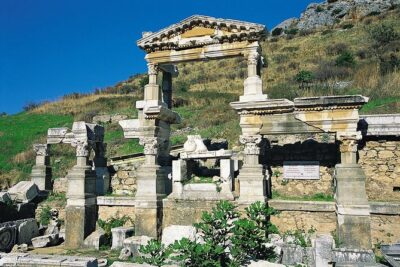
You’ll also see the Monumental Nymphaeum, a 4th-century structure connected to water and public space. A nymphaeum is basically a grand fountain or monumental water-related building, and it fits the theme of the day perfectly. You start with thermal water sculpting the world at Pamukkale, then you see how Roman urban life used water as a statement at Hierapolis.
Guide Energy, Small-Group Comfort, and Photo Strategy

The strongest variable on any day trip is the guide. Here, guides get consistent praise for being friendly and making the day fun, with names like Erman, Mehmet, and Engin showing up in stand-out experiences. That matters because the content is not just “look at ruin, take picture.” You want someone to connect the dots, like why Romans were drawn to these waters and what the structures meant in a city built around temples and public life.
With a max of 15 travelers, you also get better pacing than big-coach tours. In practice, you’re more likely to hear explanations clearly and be able to ask questions without feeling like you’re competing with a crowd.
Photo timing that makes sense
- At Pamukkale, plan to spend time first on the main terraces, then save your most patient viewing for later in your visit. Mineral deposits look different as the light shifts.
- At Hierapolis, aim for a slower pass at the necropolis so you can really absorb the scale rather than just snapping and moving.
If you’re serious about photos, wear sun protection. You’ll be outside, you’ll be walking, and you’ll want your eyes to focus, not squint.
Value for $160: Two Big Sites Without the Headaches

At $160 per person, this tour is not “cheap,” but it can be good value if you add up convenience. You’re paying for a full-day bundle: hotel pickup and drop-off, air-conditioned transport, an English-speaking guide, and guided access to the big attractions.
The site admissions are partly covered in the itinerary details. Pamukkale’s admission is listed as free, and the Hierapolis-related stop shows admission included. That helps the price feel more grounded, because you’re not paying full price for everything on top of the tour fee.
Where you might feel the cost more is food. Food and drinks are generally not included unless specified. That means you should budget for lunch and water. If you’re relying on bottled water, bring cash or a card you can use easily.
One more value note: the alternative to a day trip is often a DIY drive, which means you manage transportation, timing, ticket lines, and a lot of “where do we go now?” stress. If you want the easy day and you’re okay with a full schedule, this tour is a sensible way to get both Pamukkale and Hierapolis in one shot.
Who This Tour Suits Best

This is a great pick if you want:
- A guided day covering the top hits: Pamukkale and Hierapolis core ruins
- Enough time at Pamukkale to actually enjoy the terraces, not just look from a distance
- A comfortable transport setup with pickup and an air-conditioned coach
- A day paced for moderate fitness, since you will walk and move around ancient sites
It may not be the best fit if:
- You hate long drives and want a slow, no-rush itinerary
- You’re traveling with very young kids. It’s not recommended for children aged 4 and under, and anyone 18 or younger must be with an adult
For solo travelers, couples, and small groups, the cap of 15 travelers usually helps it feel manageable. If you’re coming from Izmir and you’ve got only one day for these sights, this is one of the most efficient ways to do it.
Should You Book Pamukkale and Hierapolis From Izmir?
I’d book this tour if your priority is seeing the highlights without juggling logistics. You get a full guided day with Pamukkale’s travertine terraces, then the Roman scene at Hierapolis, including the Apollo Temple, Theater, Necropolis, and the Nymphaeum.
Skip it or look closer at your expectations if you are very sensitive to travel time, since the drive is a real part of the day. Also, if you’re going in a season where Pamukkale’s water looks less dramatic than peak photos, the long day can feel more frustrating. In that case, treat the experience as mineral wonder plus Roman ruins, not a guaranteed waterfall-like postcard.
If you want my simple decision rule: if you’d happily trade one long day for two of Turkey’s most famous sites, this is a solid choice.
FAQ
How long is the Pamukkale and Hierapolis tour?
It runs about 9 hours.
What time does the tour start from Izmir?
The start time is 6:30 am.
Where is the pickup point?
Pickup is offered from central Izmir hotels, with a listed meeting point at DoubleTree by Hilton Izmir – Alsancak İsmet Kaptan.
Will I have transportation included?
Yes. You get hotel pickup and drop-off plus transport in an air-conditioned vehicle.
Is an English-speaking guide included?
Yes. The tour includes a local guide and is described as an English-speaking guide.
Are admission tickets included?
Pamukkale admission is listed as free in the schedule, and the Hierapolis-related stop shows admission included.
Is food included on the tour?
No, food and drinks are not included unless something specific is stated.
How big is the group?
The group size has a maximum of 15 travelers.
Can I cancel and get a refund?
Yes, you can cancel for a full refund if you cancel up to 24 hours in advance of the experience start time.
More Pamukkale and Hierapolis


Recently reviewed in Izmir

The rest of Pamukkale and Hierapolis.
 ★ 5.0Pamukkale Hierapolis and Cleopatra’s Pool Tour with lunch from AntalyaFrom $842,188 reviews
 ★ 4.6From Antalya/Kemer: Pamukkale and Hierapolis Tour with LunchFrom $411,853 reviews
 ★ 4.7From Antalya/Kemer: Pamukkale & Hierapolis Day Trip w/MealsFrom $411,387 reviews
 ★ 5.0Antalya Pamukkale Hot Springs & Hierapolis Tour With LunchFrom $501,092 reviews
 ★ 5.0Pamukkale Tour from IzmirFrom $133806 reviews
 ★ 5.0Full-Day Tour of Pamukkale from Antalya with LunchFrom $89640 reviews
 ★ 4.2Antalya: Full-Day Pamukkale and Hierapolis Tour & LunchFrom $47589 reviews
 ★ 5.0Full-Day Tour to Pamukkale From Marmaris w/ Breakfast & LunchFrom $35564 reviews
Also filed under