
REVIEW · TOURS
Tour to Byzantium
A Byzantine trail through Istanbul starts with one view. This tour strings together Golden Horn landmarks and the Byzantine city walls in a way that helps the city’s long Christian era make sense. I particularly like how you move from big-picture geography to specific sacred and political sites. One thing to note up front: the stop at St. Savior in Chora (Kariye Museum) is an outside visit only.
I also like the way the tour focuses on places tied to power and belief, not just postcard scenes. You’ll see the Church of Panagia of Blachernae with its Hagiasma holy water and Hagion Lousma sacred bath traditions, then shift to the Blachernae Palace area with Anemas Dungeons and Tekfur Palace. The Anemas Dungeons detail, with 14 dungeons and basements below sea level, is the kind of specific fact that makes the past feel real, not vague.
In This Review
- Key Points at a Glance
- A Byzantine Route That Keeps Istanbul Straight in Your Head
- From Hotel Pickup to the Golden Horn View
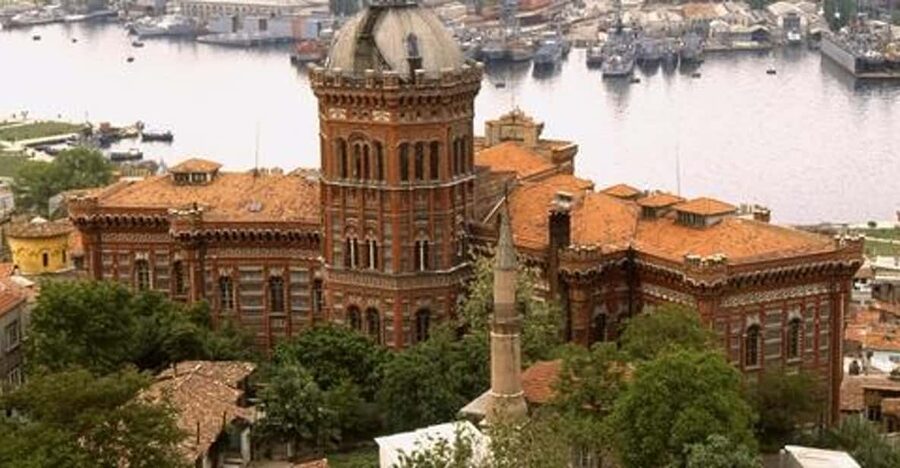
- Fener Patriarchate and Why Orthodox Christianity Took Center Stage
- Panagia of Blachernae: Hagiasma and Hagion Lousma
- St. Savior in Chora (Kariye Museum) and the Limits of an Outside Visit
- Anemas Dungeons: The Byzantine Prison Below Sea Level
- Tekfur Palace: A 12th-Century Pavilion Beside the Walls
- Byzantine City Walls: Seeing 5th-Century Scale in Real Space
- Price and What You Really Get for $85
- Who This Tour Suits Best (and Who Might Want More)
- Should You Book Tour to Byzantium?
- FAQ
- How long is the Tour to Byzantium?
- What are the main stops on the tour?
- Is there an interior visit to the Kariye Museum?
- What is included in the price?
- Do you include hotel drop-off at the end?
- What do I need to bring?
- Are there any restrictions on pets or smoking?
- Do I need to contact the supplier after booking?
Key Points at a Glance
- Golden Horn orientation: horn-shaped harbor with golden reflections that set the stage for Byzantine rule
- Fener Patriarchate context: how Orthodox Christianity took a central role after Constantine made Christianity official
- Blachernae shrine details: Hagiasma holy water and Hagion Lousma sacred bath traditions at Panagia of Blachernae
- Kariye Museum outside view: St. Savior in Chora stop shows the site, but you won’t go inside
- Anemas Dungeons uniqueness: 14 dungeons, each with basements below sea level, used as prisons for high-ranking statesmen
- Tekfur Palace and walls connection: 12th-century pavilion next to the remains of 5th-century city walls
Undecided? These Istanbul tours came up most often in the review pile.
- Istanbul: Bosphorus Dinner Cruise & Show with Private Table★ 4.8 · 44,561 reviews
- Istanbul: Daytime or Sunset Sightseeing Cruise & Audio Guide★ 4.8 · 14,430 reviews
- Istanbul: Bosphorus Dinner Cruise with Turkish Night Show★ 4.8 · 10,127 reviews
- Best of Istanbul 1, 2 or 3-Day Private Guided Istanbul Tour★ 5.0 · 8,922 reviews
A Byzantine Route That Keeps Istanbul Straight in Your Head
Byzantine Istanbul can feel like a blur if you only see domes and mosaics without context. This tour is built to fix that problem fast. In about half a day, you get the geography, the sacred sites, and the defensive walls, all tied to the empire that controlled this city for more than 1,000 years.
I love how the route starts with the Golden Horn. It’s not just scenery. It’s a naval harbor, hornlike in shape, famous for a golden reflection in sunlight when you look from the hills. That single detail helps you understand why Constantinople, as the Byzantines called the city, mattered so much.
You also end with the defensive bones of the city. The remains of the 5th-century Byzantine city walls stretch about 13 miles (22 kilometers), once running with 96 towers and nine main gates. When you see that scale in person, you stop thinking of walls as trivia and start seeing them as a survival system.
From Hotel Pickup to the Golden Horn View
The day starts with convenient pickup from centrally located Istanbul hotels, plus air-conditioned transportation to keep the route comfortable. This matters because you are covering several neighborhoods and sites that are best connected by a vehicle.
Once the group is gathered, you’ll head to the naval harbor of the Byzantines, the Golden Horn. The guide will frame it as the natural harbor shape that gave the city a strategic advantage. That means you’re not just looking at a waterway, you’re getting the why behind Constantinople’s power.
The tour also includes a live guide in English or Spanish, plus museum entrance fees. There’s even a skip the ticket line component, which helps when you’re working within a tight 4-hour window.
Practical tip: bring your passport or ID card. You’ll need it for the tour’s basic check-in requirements.
Fener Patriarchate and Why Orthodox Christianity Took Center Stage
Next comes the Patriarchate area at Fener, described as the seat of Orthodox Christianity after Constantine the Great declared Christianity the official religion of the Roman Empire. Even if you are not a deep theology person, this is still a key moment in the story of Istanbul.
Here’s what I like about this stop: it gives you a framework for the rest of the route. Once you understand that Orthodox Christianity became a central force, the later shrine sites like Panagia of Blachernae stop feeling random. They connect to a worldview where sacred locations carried political and cultural weight too.
The tour also works as a calm way to get your bearings. Istanbul can feel like a maze if you try to map everything on your own. A guide-led route gives you the “story order” so you can recognize what you’re seeing as you move.
If you’re sensitive to crowds, this route can feel reasonable because the stops are selected for historical continuity rather than the usual grab-bag of the most famous squares.
Panagia of Blachernae: Hagiasma and Hagion Lousma
The Church of Panagia of Blachernae is one of those sites where the details matter. This shrine is described as one of the best known and most celebrated in honor of the Holy Virgin. You’ll also hear about two specific traditions: the Hagiasma holy water and the Hagion Lousma sacred bath.
Why should you care about those names? Because they show how faith was experienced physically, not just spiritually. Sacred water and sacred bathing traditions were part of how people sought healing, protection, and blessing. You’re learning about the practical side of religion in daily life, not just the architecture.
This is also a turning point on the route. After Golden Horn and Fener, you shift into a place that functioned as a shrine, a magnet for devotion, and a symbol of Byzantine identity. The tour helps you connect that to the nearby palace zone you’ll visit next.
- Istanbul: Daytime or Sunset Sightseeing Cruise & Audio Guide
★ 4.8 · 14,430 reviews - Best of Istanbul 1, 2 or 3-Day Private Guided Istanbul Tour
★ 5.0 · 8,922 reviews - Istanbul: Basilica Cistern Fast-Track Entry and Audio Guide
★ 4.6 · 7,521 reviews - Istanbul: Hagia Sophia Skip-the-Line Ticket & Museum Option
★ 3.7 · 4,958 reviews - Istanbul: Hodjapasha Whirling Dervishes Show & Exhibition
★ 4.4 · 4,790 reviews
St. Savior in Chora (Kariye Museum) and the Limits of an Outside Visit
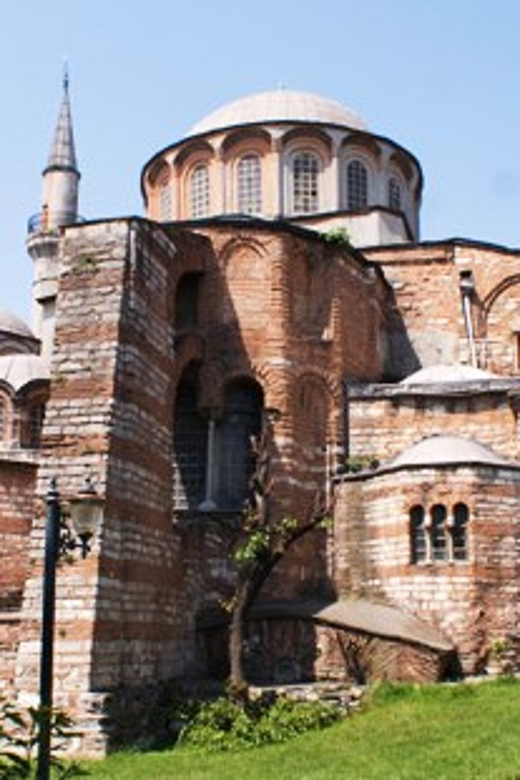
Then you reach St. Savior in Chora, now the Kariye Museum. The important detail here is that you visit it from the outside only. The site is still worth seeing, because it’s tied to a Byzantine monastery reputation and it’s famous for mosaics and frescoes showing scenes from the Bible.
But let me be straight: if your main goal is to study the mosaics up close, an outside-only stop can feel incomplete. The tour gives you a strong historical pointer and helps you spot the complex in context, yet you won’t get that full interior experience here.
This is the one possible drawback I’d watch for. If you want a mosaic-heavy day, you might pair this tour with extra time on your own later, or choose a different tour that includes interior access.
Anemas Dungeons: The Byzantine Prison Below Sea Level
The Anemas Dungeons are part of the Blachernae Palace area, and the tour treats them as a standout. It’s described as unique in the world due to its architectural structure. The big story is that it was used as a prison for high ranking statesmen.
Here are the details you should hold onto while you’re there:
- It consisted of 14 separate dungeons
- Each had two basements below sea level
That combination matters. It turns “prison” from a general idea into a physical system built into the palace zone. You can understand how control worked, not just that it existed.
This stop also helps you see Byzantium as an empire that managed power tightly. Sacred sites were important, but so were the mechanisms that kept officials and elites in line. Anemas Dungeons gives you that side of the story without needing a lecture that lasts all day.
Tekfur Palace: A 12th-Century Pavilion Beside the Walls
After the dungeons, you’ll tour Tekfur Palace, built in the 12th century and located adjacent to the city walls. The tour calls it the only surviving pavilion of the Blachernae Palace, which is a huge clue for why this is the one palace structure you get to focus on.
What makes Tekfur Palace powerful, even if you’re not a palace expert, is the location. It sits next to defensive walls, which is a reminder that palace life was tied to security. You’re not just seeing a building, you’re seeing the logic of where it sits.
When I’m deciding whether a history tour is worth my time, I look for stops that connect multiple themes. Tekfur Palace does that cleanly. It ties together the dungeons, the palace neighborhood, and the broader defensive perimeter you’ll see next.
Byzantine City Walls: Seeing 5th-Century Scale in Real Space
The tour ends with the remains of the 5th-century Byzantine city walls. You’ll learn they once surrounded the acropolis of Byzantium, running about 13 miles (22 kilometers) long, with 96 towers and nine main gates.
This is the moment where the story becomes visual. Even if you’re only seeing sections of the remains, the scale numbers are the point. Walls that big were not built for decoration. They were built for survival, trade control, and defense over long periods.
If you’ve ever wondered why Istanbul’s streets feel like they grew around older layers, this is part of the answer. The walls shaped movement, routes, and settlement patterns. By the time you finish this stop, you’ll likely notice how much the past still influences the city layout.
Also, since the tour includes air-conditioned transport, you can arrive at the walls stop without feeling completely worn out. It’s an efficient way to pack in the big defensive story without turning the day into a marathon.
Price and What You Really Get for $85
At $85 per person, this tour is priced like a half-day history experience with actual logistics handled for you. The value isn’t only the sites. It’s what’s bundled in.
What you get included:
- Air-conditioned transportation
- Museum entrance fees
- Skip the ticket line
- Pick-up service from centrally located hotels in Istanbul
- A live guide in English or Spanish
What you do not get included:
- Hotel drop-off
So your cost is partly buying time and partly buying access. Museum entrance fees included is a real benefit when you’re comparing tour costs. Skip the ticket line matters too, since it helps keep your schedule from melting away.
There’s also a small but important operational note: a minimum of 6 people are required for the tour to operate. If you’re traveling during a low season or you’re booking on a weekday, that can affect availability. On top of that, the departure is guaranteed on Tuesday afternoons.
Add to that the free shuttle window, offered between 13:00 and 14:00 depending on your hotel area, and taking 45 to 60 minutes. That helps if your hotel pickup timing lines up with the shuttle schedule, and it’s another reason it can feel smooth once you’re set.
Who This Tour Suits Best (and Who Might Want More)
This is a great choice if you want a structured Byzantine story in a short amount of time. You’ll get sacred sites, palace-adjacent political spaces, and the city defenses, all with a guide to connect the dots.
You’ll probably like it most if:
- You enjoy historical explanations tied to specific places
- You want to see places like Anemas Dungeons and Tekfur Palace without building a route yourself
- You’re okay with an outside-only visit at St. Savior in Chora
I’d think twice if your top priority is a full interior mosaic viewing experience at the Kariye Museum. Since the Chora stop is outside only, you might want a different tour or add your own time later if mosaics are your main reason for coming.
It also suits people who appreciate smaller group movement. The tour needs at least 6 people to run, which often leads to a group that is not huge, and that can make explanations easier to follow.
Should You Book Tour to Byzantium?
I’d book this tour if you want an efficient, guide-led walkthrough of Byzantine Istanbul that starts with the Golden Horn, moves through Panagia of Blachernae, and then lands on the darker side of power with Anemas Dungeons before finishing with the walls.
Hold off or pair it carefully if your heart is set on going inside the Kariye Museum. This tour gives the site and the context from the outside, but it doesn’t deliver the interior mosaic experience.
One more reason to consider booking: you can reserve with flexibility, and cancellation is offered up to 24 hours in advance for a full refund. That’s helpful when your Istanbul days are still evolving.
If you like your history with practical context and a clear route, this one is a solid value at $85.
FAQ
How long is the Tour to Byzantium?
The tour duration is listed as 4 hours. The description also frames the experience as a 3-hour journey, and starting times depend on availability.
What are the main stops on the tour?
You’ll see the Golden Horn area, the Patriarchate at Fener, the Church of Panagia of Blachernae, St. Savior in Chora (Kariye Museum, from outside), Anemas Dungeons, Tekfur Palace, and the remains of the Byzantine city walls.
Is there an interior visit to the Kariye Museum?
No. St. Savior in Chora (Kariye Museum) is described as an outside visit only, with no interior visit.
What is included in the price?
The price includes air-conditioned transportation, museum entrance fees, and pick-up from centrally located hotels in Istanbul. You also get a live tour guide in English or Spanish and skip the ticket line.
Do you include hotel drop-off at the end?
No. Hotel drop-off is not included.
What do I need to bring?
You should bring a passport or ID card.
Are there any restrictions on pets or smoking?
Pets are not allowed, and smoking is not allowed.
Do I need to contact the supplier after booking?
Yes. After booking, you need to call the local supplier to learn the exact time and free shuttle availability.
Recently reviewed in Istanbul


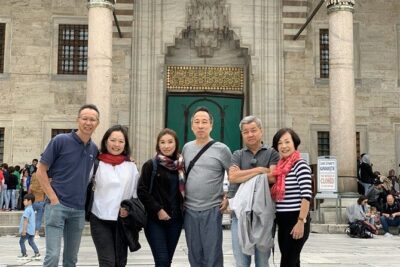
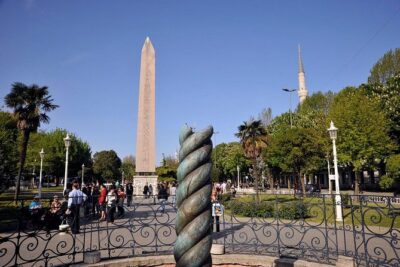
The rest of Tours.
 ★ 5.0Best of Istanbul 1, 2 or 3-Day Private Guided Istanbul TourFrom $1008,922 reviews
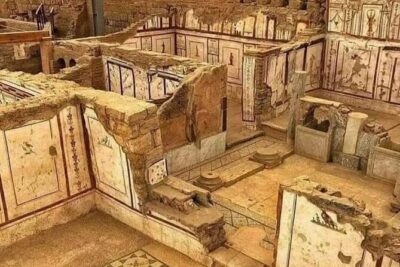 ★ 5.0FOR CRUISERS: Skip The Lines PRIVATE EPHESUS TOUR &On Time ReturnFrom $398,527 reviews
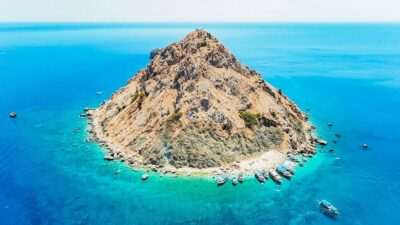 ★ 4.4Antalya/Kemer: Suluada Island Small-Group Boat Tour w/ LunchFrom $214,207 reviews
 ★ 4.8Istanbul: Blue Mosque & Hagia Sophia Guided Tour w/ TicketsFrom $393,600 reviews
 ★ 4.6Antalya: Ziplining, Rafting, Jeep Tour & Quad Safari w/LunchFrom $263,260 reviews
 ★ 5.0Cappadocia Sunset ATV TourFrom $182,984 reviews
 ★ 4.6Istanbul: Bosphorus Sightseeing Cruise Tour with Audio GuideFrom $82,694 reviews
 ★ 5.0PRIVATE NO HIDDEN FEES Ephesus, Mary’s House Guided Tour /GRP OPTFrom $992,455 reviews