
REVIEW · KONYA, RUMI AND CENTRAL ANATOLIA
Magic Explorer 13-Day Tour from Istanbul to Gobeklitepe Mt Nemrut
Turkey’s past moves at breakneck speed. This 13-day route links Istanbul to Göbekli Tepe and Mt Nemrut, with guided days at major sites plus hands-on stops like carpet making and Roman hot springs. I especially like the small group feel (up to 20) and the way the tour leans on professional English-speaking guiding and clear explanations you can actually follow, with names like Tamer, Fatih Karci, and Eda showing up repeatedly in the feedback. I also like the value math: hotel stays, breakfast most mornings, selected dinners, and a stack of entrance fees are built in, so you are not constantly doing surprise add-ons.
The tradeoff is pace. You will cover a lot of ground in 13 days, with long drives and early starts that work best if you enjoy structure and big days rather than slow sightseeing.
In This Review
- Top reasons this trip works
- The big picture: what you’re really buying
- Day 1 and 2 in Istanbul: get oriented, then get moving
- Gallipoli WW1 sites: memorials with an organized route
- Troy and Behramkale, then Kuşadası: myth meets a quieter shoreline
- Ephesus and the Temple of Artemis area: a full guided day with craft time
- Pamukkale travertines and Hierapolis hot springs: white terraces and Roman-style soaking
- Konya on the Silk Road theme: caravansary, museum, and an optional folklore night
- Cappadocia Göreme Valley: fairy chimneys plus underground space
- Mt Nemrut at sunset: the day trip that sells itself
- Harran and Sanliurfa: mud-brick history and Abraham sites
- Göbekli Tepe and the archaeology of early religion
- Gaziantep, Halfeti, Zeugma, then a flight back to Istanbul
- Day 13 Istanbul wrap-up: one more good morning, then fly
- Hotel quality, group size, and the guide factor that people rave about
- Price and value: when $3,560.68 makes sense
- Who this tour is for, and who should skip it
- Should you book Magic Explorer?
- FAQ
- What is the total duration of the tour?
- Where does the tour start and end?
- Is pickup included?
- How many nights of accommodation are included?
- Are entrance fees included?
- Does the tour include meals?
- Is there any flight included?
- Is it refundable if the tour is canceled?
Top reasons this trip works
- Small-group touring (max 20) keeps the experience personal when you want questions answered fast
- Icon-to-odd pairing, big names like Ephesus and Nemrut plus places like Behramkale and Harran for contrast
- Entrance fees are included across many stops, which helps your budget stay predictable
- Nemrut sunset timing is the kind of payoff that makes the early schedule worth it
- Halfeti sunken city boat trip breaks up the history days with a very different kind of scene
- A domestic flight back to Istanbul reduces the last leg of driving
More of the Anatolian interior
- From Istanbul: Sapanca and Masukiye Day Trip with Lunch★ 4.0 · 1,036 reviews
- From Istanbul: Sapanca & Maşukiye Full-Day Tour with Lunch★ 4.4 · 226 reviews
- Istanbul Whirling Dervish Ceremony, A Mystical Sufi Experience★ 4.5 · 123 reviews
- Istanbul: Sapanca Tour, Cable Car, Quad, & Zipline★ 3.8 · 121 reviews
The big picture: what you’re really buying
At $3,560.68 per person for about 13 days and 12 nights, this is not a cheap sampler. You are paying for the machine behind the scenes: transportation in a fully air-conditioned non-smoking vehicle, a professional English-speaking guide, hotel nights, and most of the entry tickets plus set meals. That matters because Turkey can stack costs quickly once you add museums, ruins, and guided time.
What makes the itinerary interesting is how it moves through themes. You start with Istanbul’s layered identity, then shift to conflict and memory at Gallipoli, then to archaeology and myth at Troy and Ephesus. From there you get Roman leisure at Pamukkale and Hierapolis, then the “other Turkey” of Konya and Cappadocia. The trip then turns east for two of the most mind-bending stops on the route: Göbekli Tepe and Mt Nemrut, followed by Sanliurfa and Gaziantep for more deep-time stories.
This is also a history-heavy trip, but it avoids only reading plaques. You do guided touring, and you get at least a couple of sensory breaks: hot springs, a boat on the water near Halfeti, and a village-style stop where you can watch traditional craft work.
Day 1 and 2 in Istanbul: get oriented, then get moving

On Day 1, you arrive and get transferred to your hotel, then you have the rest of the day free. That free time is practical. Istanbul can feel like a puzzle even when you know the map. Use this first evening to do something small but useful: pick up water, find your bearings, and decide which sights you will tackle first tomorrow.
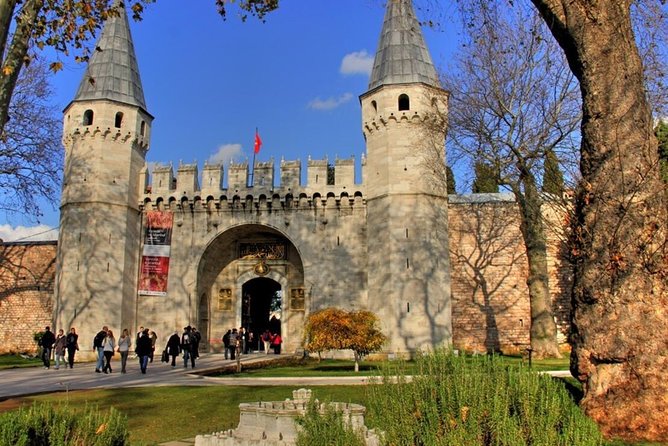
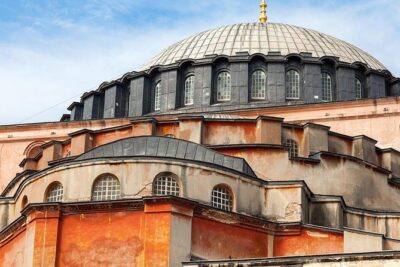
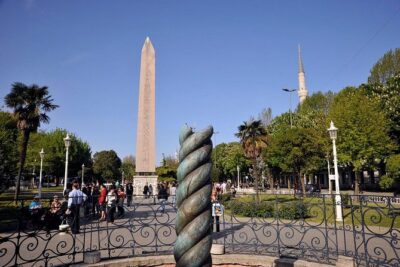
Day 2 is a full guided day built around the core Istanbul classics: the Blue Mosque, the St Sophia Museum, Topkapi Palace, and the Hippodrome. These are not just landmarks. They show you how the city keeps rewriting itself while the neighborhoods stay in place. You are also given an afternoon structure tied to the geography itself: you can cruise the Bosphorus on a half-day option, and you experience the waterway that separates Europe from Asia.
Potential drawback: Day 2 is packed, and Istanbul sites often bring crowds. If you hate lining up, go in with a calm mindset, bring your best walking shoes, and treat the guided time as your advantage. The guide helps you focus on what you should notice instead of trying to read everything alone.
Gallipoli WW1 sites: memorials with an organized route
Gallipoli is one of those places where the visit really needs context. On Day 3, you tour major WW1 battlefield memorials and locations including Lone Pine and Chunuk Bair Memorials, ANZAC Cove, The Nek, Johnston’s Jolly, plus original trenches and tunnels. The route gives you a sense of the scale and the human geography of the campaign.
What I like about this format is the sequencing. You are not just jumping between isolated viewpoints. You get a guided path through the same landscape that shaped those events, which makes the history feel less abstract.
Consideration: this day can be emotionally heavy, and it is also long. Build in patience for slow moments, and if you need breaks, take them. A good guide pace matters here, and the tour’s small group nature helps you avoid being lost in a crowd.
Troy and Behramkale, then Kuşadası: myth meets a quieter shoreline
Day 4 starts with the drive to Troy from Çanakkale. You explore the ancient city and also visit the newer Troy Museum, which helps ground the myths in artifacts and research. Then you shift gears to Behramkale, an older village of stone houses and narrow streets, where you get time to wander and even stop for tea or coffee.
From Behramkale you head south to Kuşadası. This matters because it positions you for Ephesus the next day while also breaking the day into two different moods: big ancient history, then small village life with sea views.
The watch-out here is timing. Day 4 runs long, and you might feel rushed in Behramkale if you arrive tired. If you want photos, plan them early in the village hour, not at the end.
- Istanbul: Daytime or Sunset Sightseeing Cruise & Audio Guide
★ 4.8 · 14,430 reviews - Best of Istanbul 1, 2 or 3-Day Private Guided Istanbul Tour
★ 5.0 · 8,922 reviews - Istanbul: Basilica Cistern Fast-Track Entry and Audio Guide
★ 4.6 · 7,521 reviews - Istanbul: Hagia Sophia Skip-the-Line Ticket & Museum Option
★ 3.7 · 4,958 reviews - Istanbul: Hodjapasha Whirling Dervishes Show & Exhibition
★ 4.4 · 4,790 reviews
Ephesus and the Temple of Artemis area: a full guided day with craft time
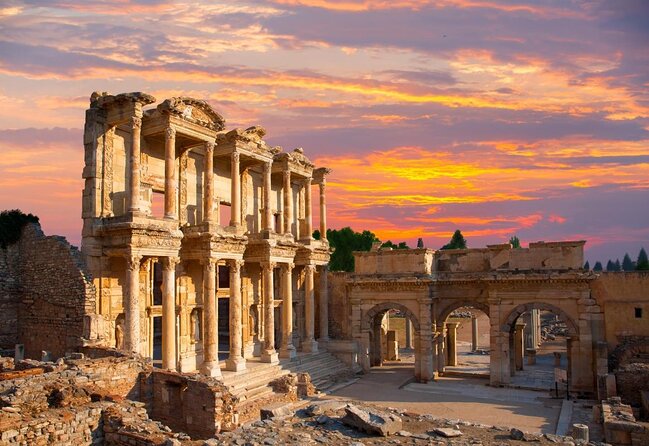
Day 5 focuses on the Ancient City of Ephesus with a guided tour, plus a stop tied to the Temple of Artemis site. You also have time around the theatre atmosphere of the city, then you visit the Ephesus Archaeology Museum, which is a helpful place to see artifacts with less guesswork than trying to identify everything on open ground.
One of the best practical touches on this day is the carpet village stop. You learn how carpets are made by hand and what affects their value. This turns a “shopping-adjacent” activity into something educational and grounded in process. If you have ever wondered why hand-knotted rugs take so long and why quality varies so much, this is the time to ask.
Pamukkale travertines and Hierapolis hot springs: white terraces and Roman-style soaking
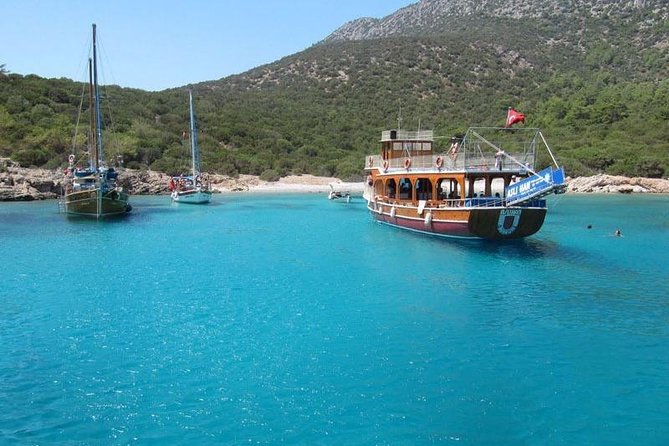
Day 6 gives you two linked experiences. First, you visit the travertines of Pamukkale, those famous white calcium terraces that look almost unreal. Then you continue to Hierapolis, including the chance to tour the ancient city and spend time in the hot springs used in Roman times.
This is a rare day that mixes high spectacle with real comfort. The terraces are visual drama, and the hot springs let you reset your body after multiple long days of walking.
Consideration: bring swimwear and a towel if you have them, and expect you will want time for photos even if the schedule is tight. Also, the light can be intense, so sunscreen is not optional.
Konya on the Silk Road theme: caravansary, museum, and an optional folklore night
Day 7 travels the Silk Road corridor with stops that explain what movement meant in the Ottoman and earlier periods. You visit Sultanhani Caravansary, a historic resting place for travellers, and then you make it to Konya for the Mevlana museum.
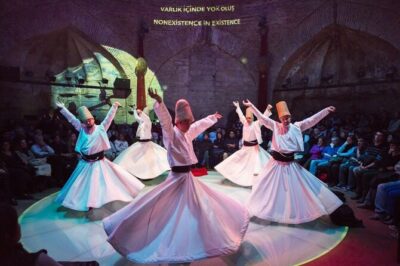
In the evening, you have an optional traditional Turkish folklore evening. This is not just entertainment. It gives you cultural texture after the stone-and-museum days.
Practical note: museum days can feel repetitive if you rush. Go slower than you think you need to, and use your guide to focus your attention on what changed and why, not just what you are looking at.
Cappadocia Göreme Valley: fairy chimneys plus underground space
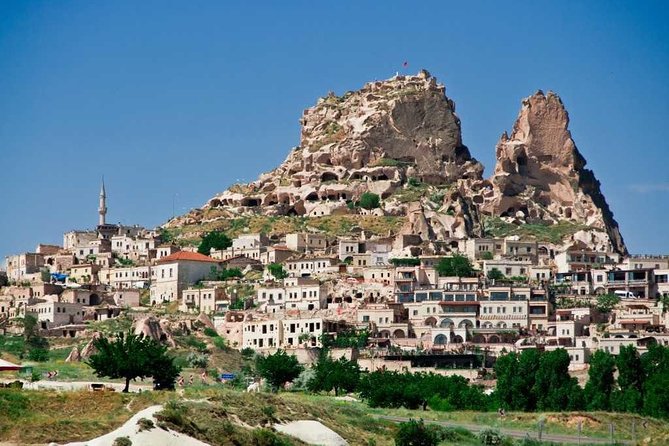
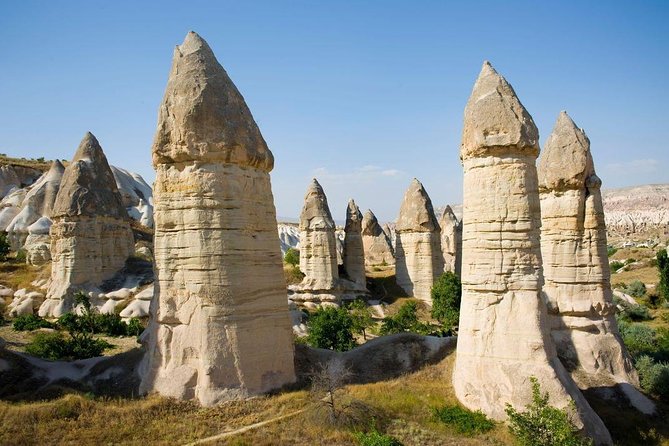
On Day 8, you head into Cappadocia’s Goreme Open Air Museum and explore the Goreme Valley with fairy chimneys. You also visit an underground city. That combination helps you understand why people lived underground in the first place: protection, temperature control, and a whole other way of designing space.
This is also one of the days where you will be tempted to try to see everything. Don’t. Pick the moments that interest you most, because the underground city and outdoor sites both reward calm attention.
Mt Nemrut at sunset: the day trip that sells itself
Day 9 is an early start from Cappadocia toward Adiyaman, passing through Kahramanmaras. Then your day culminates at Mt Nemrut for the famous sunset experience. You ascend to the Tumulus of Antiochos, the former capital of Kommagene, and see the towering colossal statues of gods.
The payoff is the way light transforms the ruins. You are looking at an ancient funerary monument that has survived for almost two millennia, and the timing is built around the sky changing color. That kind of schedule matters, because if you arrive late, you lose the point.
Weather matters here. The tour info says the experience requires good weather. So if you are booking near seasonal weather shifts, consider your own tolerance for change. If it cannot run safely or clearly, you may be offered a different date or a full refund.
Harran and Sanliurfa: mud-brick history and Abraham sites
Day 10 moves you from the Nemrut region toward Sanliurfa (Urfa) via a scenic route that includes Ataturk Dam and a stop in Harran. Harran is known for its mud-brick houses and ancient city walls, and it gives you a visual break from the marble-and-stone classics.
Then you reach Sanliurfa for Holy Pools of Abraham and a cave believed to be the birthplace of the Prophet Abraham. This is more than a quick stop. The way religious sites are woven into daily life there gives you a different Turkey perspective than you get in the western ruins.
Göbekli Tepe and the archaeology of early religion
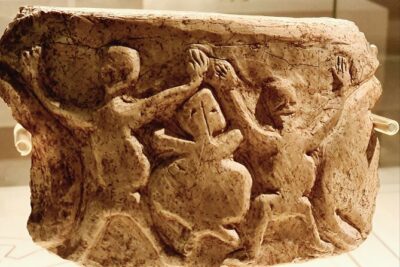
Day 11 is the centerpiece for many people: Göbekli Tepe. This site is described as reshaping our understanding of early human history, with structures dating back about 11,000 to 13,000 years. That alone would be enough for a special day, but you also get more context across additional stops in the Sanliurfa area, including the Haleplibahce Mosaic Museum, Kizilkoyun Nekropolis, and the Sanliurfa Archaeology Museum.
If you care about human origins, planning ahead helps you get more out of the visit. Wear layers, because this type of site visit can involve heat and walking. And give yourself permission to pause. The scale of time here can feel abstract until you let the reality of the place sink in.
Practical drawback: this day is long. Your brain will be full by mid-afternoon, so keep water close and avoid saving all your questions for the end.
Gaziantep, Halfeti, Zeugma, then a flight back to Istanbul
Day 12 is a two-stage day that avoids total repetition. You drive toward Gaziantep, enjoy a boat trip at Halfeti exploring the sunken city beneath the tranquil waters, then head to Zeugma Mosaic Museum.
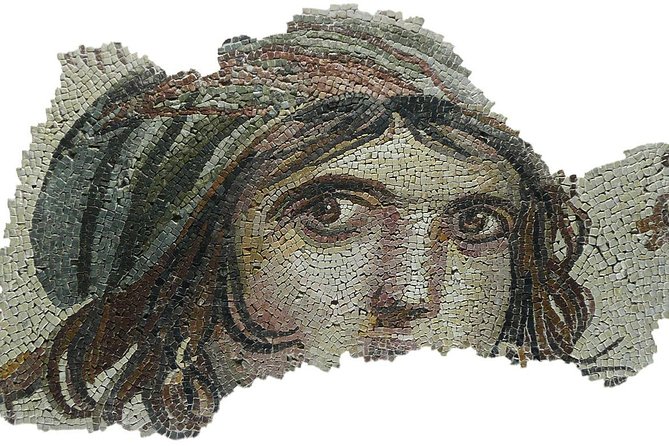
The Halfeti boat trip is one of the best “reset” moments on the trip because it is a visual change from stone ruins. Later, Zeugma brings you back to culture through art, with mosaics retrieved from the submerged city of Zeugma. This museum is the kind of stop that makes you look twice, because the mosaics reward time and close viewing.
Then, as the day ends, you catch a flight back to Istanbul. That domestic flight is a smart trade. It preserves energy and prevents a long late-night drive.
Day 13 Istanbul wrap-up: one more good morning, then fly
On Day 13, you have breakfast, the tour concludes, and you get transferred to the airport for your onward flight. This final structure is helpful. You are not stuck planning transit yourself after 12 nights of logistics.
Hotel quality, group size, and the guide factor that people rave about
The tour uses boutique and 4-star accommodations for 12 nights, plus daily breakfast and select dinners. In a trip like this, that matters more than you might think. You need sleep that is actually restful, especially when you have early starts and long drives.
The guide factor comes up again and again in the feedback: guides such as Tamer, Fatih Karci, and Eda are praised for making history feel understandable, and for patience when questions fly. When you are dealing with sites that can be overwhelming, a guide who explains clearly and keeps you moving at a human pace is not a bonus. It is the difference between remembering the trip and just surviving it.
Price and value: when $3,560.68 makes sense
Here is how I would evaluate the price as a buyer.
You get:
- 12 nights of accommodation
- Transportation in an air-conditioned vehicle
- A domestic flight back to Istanbul
- A professional English-speaking guide for the trip
- Entrance fees included for many of the key sites
- 12 breakfasts and 9 dinners
- Tips are included for the tour team except driver and guide
You might not love the cost if you are the type who only wants to buy a few tickets and spend the rest of the day wandering solo. But if you like a guided structure and you prefer paying up front instead of managing a long list of entries, this is strong value.
It is especially good value for people who want big geographic coverage without the stress of planning roads, tickets, and timing between distant regions like Cappadocia, Nemrut, and Sanliurfa.
Who this tour is for, and who should skip it
This is a great fit if you:
- love history and archaeology and want guided context, not just photos
- enjoy a full itinerary with minimal decision fatigue
- want a small group experience where you can actually talk to the guide
- want comfort built in, with breakfasts, select dinners, and included entry fees
You may want to skip or consider something slower if you:
- prefer lots of free time each day
- get cranky after long driving days and early starts
- hate weather-dependent viewpoints, especially around Nemrut sunset
Should you book Magic Explorer?
Yes, if you want one trip that covers western icons and eastern archaeology without the hassle of building it yourself. The best reasons to book are the combination of included logistics and the high-impact days: Göbekli Tepe, Mt Nemrut sunset, Ephesus with Artemis-area context, and the contrast of Pamukkale with Roman hot springs.
If you hate schedules, this might feel like too much. But if you like a guided path through Turkey’s major chapters, and you are okay with a fast pace, this itinerary is a very practical way to see a lot of the country in just 13 days.
FAQ
What is the total duration of the tour?
The tour runs for 13 days (approx.).
Where does the tour start and end?
It starts in Istanbul at the meeting point address in Beyoğlu. On the final day, you are transferred to the airport for your onward flight.
Is pickup included?
Inbound and outbound transfers in Istanbul are included.
How many nights of accommodation are included?
The tour includes 12 nights of accommodation.
Are entrance fees included?
Entrance fees are included for many of the scheduled sites (with some listed as ticket free and others included).
Does the tour include meals?
Yes. It includes daily breakfast (12 breakfasts) and 9 dinners.
Is there any flight included?
Yes. There is a domestic flight back to Istanbul on Day 12.
Is it refundable if the tour is canceled?
The experience is non-refundable and cannot be changed for any reason. If it is canceled due to poor weather, you will be offered a different date or a full refund. If the minimum number of travelers is not met, you will also be offered a different date or a full refund.
More Across Central Anatolia

Recently reviewed in Istanbul


The rest of Konya, Rumi and Central Anatolia.
 ★ 4.0From Istanbul: Sapanca and Masukiye Day Trip with LunchFrom $291,036 reviews
 ★ 4.4From Istanbul: Sapanca & Maşukiye Full-Day Tour with LunchFrom $22226 reviews
 ★ 4.5Istanbul Whirling Dervish Ceremony, A Mystical Sufi ExperienceFrom $42123 reviews
 ★ 3.8Istanbul: Sapanca Tour, Cable Car, Quad, & ZiplineFrom $22121 reviews
 ★ 3.4Sapanca Lake and Masukiye Full-Day Tour from IstanbulFrom $2977 reviews
 ★ 5.0Highlights of KonyaFrom $10069 reviews
 ★ 4.5From Istanbul: Sapanca & Masukiye Tour with LunchFrom $2268 reviews
 ★ 5.02-Days Private Tour to Gobeklitepe and Karahantepe from IstanbulFrom $2,76062 reviews
Also filed under