
REVIEW · GALLIPOLI AND TROY
Canakkale: Half-Day Troy Tour
Troy hits fast, even in a short visit. This half-day Troy tour from Çanakkale is built around walking the real site where myths became archaeology, plus a guided explanation of what each layer means. You also get a tight schedule that works if you have limited time but still want the bigger story.
I especially like the way the tour focuses on the 3,700-year-old city walls and the layered ruins, including everyday housing areas that go back more than 3,000 years. The second win is the English-speaking guide and the pacing, so you are not just wandering around thinking, so what am I looking at?
One possible drawback: you will spend most of your time on-site, and there is a souvenir shop stop, so if you want to browse the official gift shop, plan your timing carefully.
In This Review
- Key highlights you will actually feel on the ground
- From Çanakkale Harbor to Troy in One Smooth Half Day
- Walking the 3,700-Year-Old Walls and the City’s Layered Layout
- Schliemann, 150 Years of Digging, and What You’ll Notice on Arrival
- Trojan War Stories: Heroes and Helen, Tied to Real Places
- Timing, Comfort, and the Souvenir Shop Reality Check
- Price and Value: Is $93 Worth It for a 3-Hour Troy Tour?
- Who This Tour Fits Best (and Who Might Want Another Plan)
- Should you book the Canakkale half-day Troy tour?
Key highlights you will actually feel on the ground
- Hotel pickup around Çanakkale’s harbor area, then a simple drive to the site
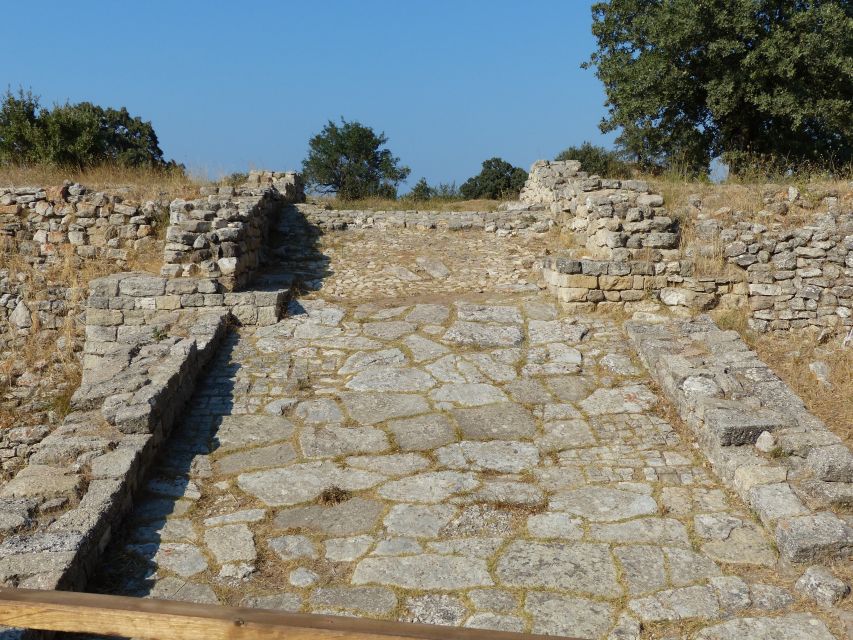
- Walk the defensive walls and see the layered city built one settlement over another
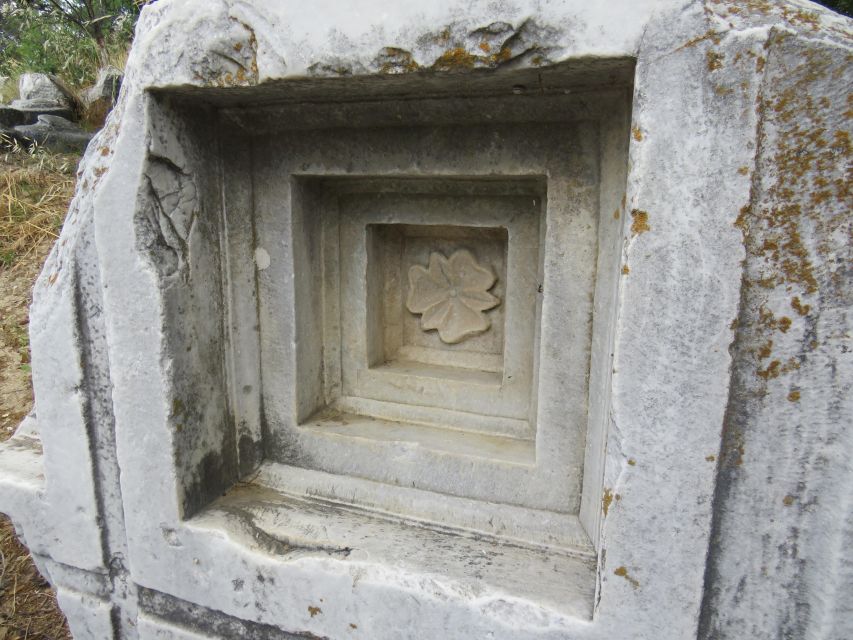
- See open-air theater and sacrificial altars, not just rocks in a field
- Schliemann and the excavation story, from the 1870s to today’s ongoing work
- Two hours of guided time at Troy, with enough walking to get the layout in your head
- Souvenir shop timing matters, since the official stop can be limited before the tour
Other visits to the Gallipoli battlefields and Troy. The peninsula is a war cemetery and memorial ground for the men who died there in 1915
- Canakkale: 6-Hour Gallipoli Tour with Lunch★ 5.0 · 168 reviews
- Gallipoli Tour from Çanakkale – Lunch Included★ 5.0 · 114 reviews
- Full Day Troy & Gallipoli Tour ( From Canakkale )★ 5.0 · 45 reviews
- Troy and Gallipoli Day Trip from Canakkale★ 5.0 · 33 reviews
From Çanakkale Harbor to Troy in One Smooth Half Day
Your day starts with pickup from your hotel in Çanakkale, generally around the harbor area. You will be collected in an air-conditioned, non-smoking vehicle, and the schedule is designed to keep the logistics simple: wait in the lobby about five minutes early, then you are off.
The drive takes about 30 minutes, which is just long enough for everyone to settle in, without eating your on-site time. That matters here, because the tour is short by design. When the group arrives, you shift from travel mode to walking mode quickly.
Once you meet your guide at Troy, the tone changes. You are not looking at Troy as a checklist. You are learning how the site works. The city is famous partly because Homer’s Iliad gave it a mythic spotlight, but it’s also famous because archaeology reveals a long sequence of settlements built one atop the next. That layered idea becomes your mental map for the rest of the walk.
When the guided portion ends, you reboard the bus for the return to Çanakkale. The total tour time is about three hours, so it is a good fit if Troy is one stop on a fuller day. If you are the type who wants to linger in museums, just keep in mind that this tour does not include a visit to the Museum of Troy.
Walking the 3,700-Year-Old Walls and the City’s Layered Layout
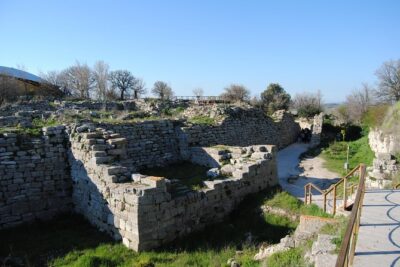
The star of the walk is the defensive character of Troy. You get to walk along the city walls and see how the builders used the landscape and fortifications to protect what mattered. Even if you are not an ancient-military history person, the wall route helps you understand why this place was worth fighting over in the first place.
What makes Troy different from other ruins is that you are seeing evidence of repeated life. The tour explains how nine cities have been discovered built one on top of another, reaching back to before 3500 B.C. That detail turns the site from a single-time snapshot into a timeline you can mentally step through.
As you move through the area, you also get to see remains of different kinds of spaces, including ruins of everyday houses that date back more than 3,000 years. That is a big deal for many people, because it is easy to think of Troy only as a stage for heroes like Achilles and Hector. But the houses pull you back to the reality that people lived here long before and long after the stories.
There is also a chance to stand in places tied to public life and religion. You visit sacrificial altars and an open-air theater. These stops help you see Troy as a functioning city, not just a dramatic backdrop.
If you like having structure while touring, you’ll appreciate how the guide keeps pointing back to the idea of layers, so you are not simply walking from one interesting ruin to the next. You leave with a clearer sense of how the site is organized.
Schliemann, 150 Years of Digging, and What You’ll Notice on Arrival
Troy’s story has two threads: myth and archaeology. This tour explicitly connects both, which is where the value comes from.
Your guide walks you through Troy’s discovery story, starting with Heinrich Schliemann in the 1870s. Even if you have only a passing familiarity with Schliemann’s name, the guide’s timeline gives you context for why the site became so internationally famous and why excavations took on such momentum.
Then you get the modern picture. The tour highlights the ongoing archaeological work at the site, including the fact that treasures have kept appearing for more than 150 years of excavation. You do not need to be a trained archaeologist to enjoy this part. What you are really learning is how interpretation changes over time, and how new discoveries keep reshaping what people think they know.
On the ground, this matters because the “why” behind the stones becomes clearer. When your guide points out what is being excavated or what a particular area might represent, you can better understand how archaeologists separate different periods of occupation. Instead of treating the ruins as an unchanging set, you start seeing a record with breaks, rebuilds, and layers of time.
One practical note: this tour includes entrance fees to the ancient city area, but it does not include the Museum of Troy. If you are the type who wants artifacts and object-focused displays, plan that separately. Consider it a good way to split your interests, ruins on one trip, museum objects on another.
Trojan War Stories: Heroes and Helen, Tied to Real Places
This tour sells Troy through stories, but it does not leave you floating in legends. The guide ties the mythology around Troy to what you are seeing.
You get the Trojan War backdrop and the connections to major figures like Achilles, Hector, and Helen. The point is not just to hear the plot. The point is to walk near the kind of locations where those stories became meaningful to later cultures, especially once Homer turned the setting into a literary icon.
In a place like Troy, it can be tempting to treat the myths as the only “real” part. This tour makes you balance that instinct with archaeology. The guide helps you understand the difference between Homeric fame and the actual long-term history of settlement and rebuilding.
Stops like the sacrificial altars and open-air theater add texture to the myths. Instead of asking, where did the heroes stand, you start asking, what did city life look like here? What kinds of rituals and public events shaped how people understood the world?
That balance is also why the guide matters so much. The reviews for this tour repeatedly highlight English delivery, patience with questions, and a well-paced explanation. You can usually expect a guide who keeps the group moving at a comfortable tempo while still explaining the big connections. It is the kind of tour that works for both first-timers and people who already know the basics and want the places to match the stories.
- Gallipoli Tour from Eceabat, Canakkale
★ 5.0 · 26 reviews - Canakkale: Full-Day Ancient Troy and Museum of Troy Tour
★ 4.9 · 17 reviews
Timing, Comfort, and the Souvenir Shop Reality Check
This is a half-day experience, so timing is the whole game. The guided visit at Troy runs about two hours, with the remaining time going to the drive. That schedule gives you enough room to walk the main parts and understand the site, but it will not turn into a long personal exploration.
Transportation is part of the comfort equation. You travel in an air-conditioned vehicle, and the setup is designed to be straightforward from hotel to site to hotel. That is especially helpful if you are juggling other plans in Çanakkale.
Now, here is the practical thing to pay attention to: the souvenir experience. There is a shop stop, and it is not treated as an open-ended browse at your convenience. One key tip is to use the brief break before the guided walk begins if you specifically want the official gift shop. After the tour ends, the group is taken to a different shop stop, so it can be too late for that official browsing.
If you care about shopping at the official venue, plan your minutes like you plan your walking shoes. Quick stop for postcards and small items, then get back to the ruins. If you do not care about souvenirs much, ignore this section and just focus on the site.
What about pacing inside the ruins? The tour is designed to be well paced. You get guided context while still having enough movement to keep your legs from going numb. Still, wear good walking shoes. The Troy terrain is outdoors and you will be on your feet for the walking portions.
Price and Value: Is $93 Worth It for a 3-Hour Troy Tour?
At $93 per person for about three hours total, the question is value, not just cost.
This price bundles several things that are hard to assemble easily on your own, especially if you do not want to spend time arranging transport and figuring out the site flow. You get:
- Round-trip transportation in an air-conditioned vehicle
- Pickup from your hotel area in Çanakkale
- A professional English-speaking guide
- Entrance fees to the ancient city of Troy
- About two hours of guided time at the site
If you were to self-arrange, you would likely spend time coordinating transit and then pay for admission separately. You might also miss the layer-by-layer explanation that turns the site into a coherent story. Here, the guide is not an optional add-on. It is the engine of the experience.
That said, there is a fair tradeoff. Because it is packaged and short, you do not get the same freedom as independent touring. And if you feel the souvenir shop component is more time than you would like, that can affect perceived value.
My take: if Troy is a priority and you want the guided story without committing to a full day, the package is a strong option. If you prefer to wander freely with no structure and you are very museum-focused, you might want to build your own schedule instead.
Who This Tour Fits Best (and Who Might Want Another Plan)
This half-day Troy tour is ideal if you:
- Have limited time in Çanakkale and want a high-impact Ancient Troy experience
- Want the myths and the archaeology explained together
- Like a guided route that helps you understand layered ruins without guesswork
- Prefer hotel pickup over figuring out transport
It may not be the best fit if you:
- Need wheelchair access, since it is not suitable for wheelchair users
- Want a long, slow exploration with lots of free time
- Are expecting a museum-style artifact focus, since the Museum of Troy is not included
If you are traveling as a couple, solo, or with friends, the format usually works well because you get group structure plus guided explanations. Families can often enjoy it too, as long as everyone is comfortable walking and listening for the two-hour guided portion.
Should you book the Canakkale half-day Troy tour?
If you want Troy’s major sights in a tight window, with English guidance and included admission, this is an efficient choice. The highlight for most people is the combination of walking the walls and understanding the layered city, with myth and excavation history linked in a way that makes the stones feel meaningful.
Book it if Troy is on your short list and you want clarity fast. Skip it or pair it with a separate museum visit if you want more time to roam, or if shopping at the official gift shop matters enough that you want maximum control over timing.
Gallipoli and Troy, Other Visits



Recently reviewed in Canakkale


The rest of Gallipoli and Troy.
 ★ 5.0Istanbul to Gallipoli Full Day Tour with Lunch and TransfersFrom $157567 reviews
 ★ 4.9Gallipoli Full-Day Tour from IstanbulFrom $154468 reviews
 ★ 4.9From Istanbul: Gallipoli and Anzac Full-Day TourFrom $159345 reviews
 ★ 4.7Troy: Full-Day Tour from IstanbulFrom $169312 reviews
 ★ 5.0Canakkale: 6-Hour Gallipoli Tour with LunchFrom $81168 reviews
 ★ 4.5Gallipoli Day Trip from IstanbulFrom $240147 reviews
 ★ 5.0Istanbul to Gallipoli, Canakkale and Troy. 2 Day Tour with HotelFrom $387144 reviews
 ★ 4.5Istanbul to Truva Troy Guided Day Tour with Lunch and TransfersFrom $172134 reviews
Also filed under