
REVIEW · GALLIPOLI AND TROY
Troy and Gallipoli Day Trip from Canakkale
Two worlds, one moving day of history. You’ll see Troy’s ancient layers and then walk through Gallipoli’s WWI ground, with memorials like ANZAC Cove and Lone Pine. I especially like how the tour keeps the facts clear while still honoring the human stories. One possible drawback is the length, about 10 hours, so you’ll want an early start mindset.
I also like the personal touch from real people running this day. Guides such as Ercan have a scholarly, friendly way of explaining Troy’s excavations, then shifting to Gallipoli’s emotional sites with care. And when planning needs a rescue, Ezgi at Hassle Free Travel is the kind of contact who helps you keep your trip from going sideways.
In This Review
- Key highlights worth getting excited about
- Quick snapshot: Troy and Gallipoli in one 10-hour loop
- Meeting at Anzac House Youth Hostel, then heading straight for Troy
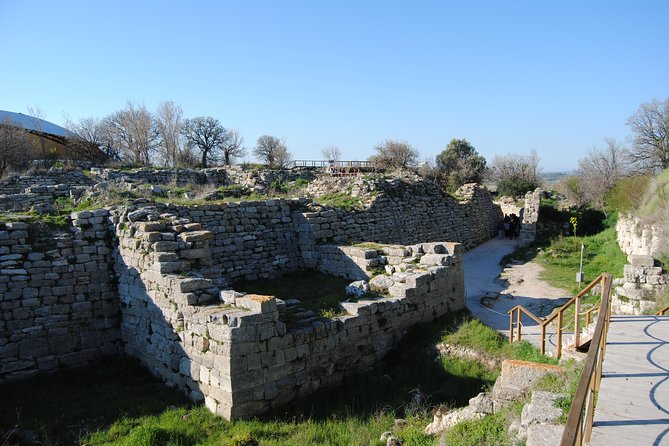
- Troy’s layered ruins: from 3,500 BC down to Troy IX
- The Trojan Horse replica and the myth that keeps attracting visitors
- How discovery in the 1870s still shapes what you see today
- Lunch in Çanakkale: fuel up before Gallipoli’s emotional sites
- Gallipoli battlefields: Brighton Beach, ANZAC Cove, and the Nek
- Ari Burnu and the cemeteries that make the ground feel sacred
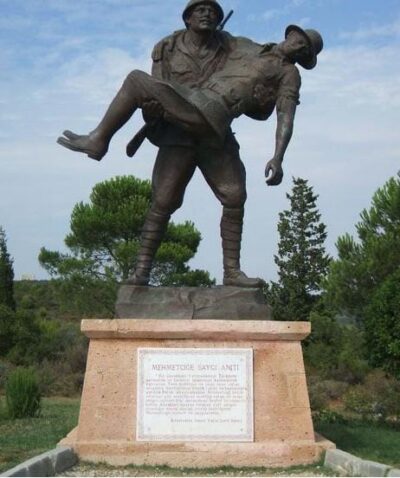
- Memorials for both perspectives: the Turkish Memorial and Chunuk-Bair
- Food, comfort, and smart packing for a long day
- Price and value: what $250 really buys you
- Who should book this tour, and who might want a different plan
- Should you book the Troy and Gallipoli Day Trip from Canakkale?
- FAQ
- How long is the Troy and Gallipoli day trip?
- What time does the tour start, and where do I meet?
- How much does the tour cost?
- What language is the tour offered in, and how many people are in a group?
- What is included in the price?
- Are drinks included with lunch?
- Which Troy and Gallipoli sites are visited?
- Can children join, and are service animals allowed?
- What happens if the tour is canceled due to weather or low demand?
- Is the tour refundable if I cancel?
Key highlights worth getting excited about
- Troy’s multi-layer ruins: nine cities reaching back to about 3,500 BC, plus the first house of Troy from 3,000 to 2,500 BC.
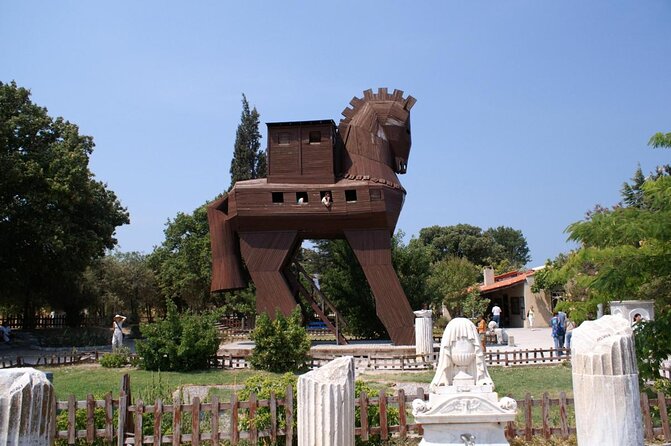
- Odeon and the Trojan Horse replica: see major site landmarks, then spot the wooden horse-style reenactment piece.
- WWI battle stops with context: Brighton Beach, Johnston’s Jolly, the Nek, and Walker’s Ridge, with the story behind each.
- ANZAC Cove and the burial grounds: Ari Burnu, Beach Cemetery, and Lone Pine Cemetery are part of the emotional core.
- Memorials for both sides: the Turkish Memorial and Chunuk-Bair help broaden the perspective beyond one nation’s story.
- Small group, comfortable travel: max 15 travelers, air-conditioned minivan, plus ferry ride as part of the day.
Other visits to the Gallipoli battlefields and Troy. The peninsula is a war cemetery and memorial ground for the men who died there in 1915
- Canakkale: 6-Hour Gallipoli Tour with Lunch★ 5.0 · 168 reviews
- Gallipoli Tour from Çanakkale – Lunch Included★ 5.0 · 114 reviews
- Full Day Troy & Gallipoli Tour ( From Canakkale )★ 5.0 · 45 reviews
- Troy and Gallipoli Day Trip from Canakkale★ 5.0 · 33 reviews
Quick snapshot: Troy and Gallipoli in one 10-hour loop
This is a full-day Troy and Gallipoli combination tour from Çanakkale, starting at 8:30 am and running about 10 hours. You’ll split your time between an archaeological site famous from Greek mythology and the WWI battlefields that shaped modern remembrance.
It’s designed for people who want more than photos. You’ll get a local guide, entrance fees are part of the deal, and lunch is included in Çanakkale so you are not scrambling for a meal between ruins.
Meeting at Anzac House Youth Hostel, then heading straight for Troy
You meet at Anzac House Youth Hostel in Çanakkale (Kemalpaşa, Cumhuriyet Blv. No:59, 17100 Çanakkale Merkez). The day starts right on time, 8:30 am, and you return to the same meeting point at the end.
You’ll travel by air-conditioned minivan, and the route includes a ferry crossing. That matters because it saves you from timing hassles and lets you stay focused on the story your guide is telling.
A small-group feel (maximum 15 travelers) also helps. You’ll be able to hear the guide without shouting over a bus full of voices, and the pacing feels more human.
Troy’s layered ruins: from 3,500 BC down to Troy IX
Troy is not just one ruin. The site holds layers from different eras, and that’s where the day gets interesting fast. You’ll learn that archaeologists have found remnants dating to roughly 3,500 BC, then later levels that span centuries, including Troy’s long archaeological sequence.
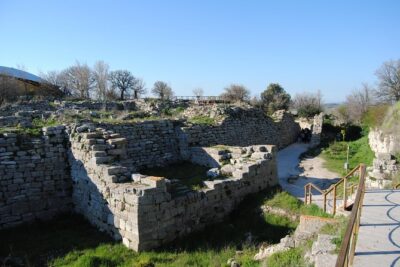
When you arrive, you’ll see the remains connected to the first house of Troy, from about 3,000 to 2,500 BC. Then the tour moves forward through the later phase known as Troy IX, with highlights such as the Odeon, a concert hall, and the overall layout that lets you grasp how the city grew and changed.
One of my favorite parts of how this tour is framed is that it doesn’t treat myth and archaeology like rivals. It helps you hold both ideas at the same time, because the setting of the Trojan War story is also a real place with real digging history.
The Trojan Horse replica and the myth that keeps attracting visitors
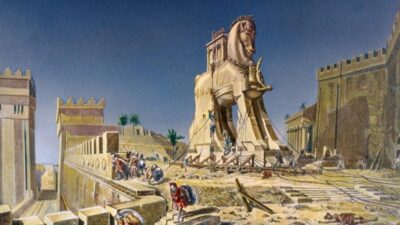
You’ll stop at a replica wooden Trojan Horse as a visual anchor. It’s the kind of detail that makes a myth-based site feel tangible, especially if you know the Homer story from school or bedtime reading.
But the good part is what comes with it: context. You’ll hear how Troy is often linked to the setting of the Iliad, the tale of a war triggered by the abduction of Helen by Paris. Then the guide connects that story to what excavators have uncovered at the mound over time.
The replica isn’t there to replace evidence. It’s there so you can mentally place the story on top of the physical site, without turning the whole thing into pure fantasy.
- Gallipoli Tour from Eceabat, Canakkale
★ 5.0 · 26 reviews - Canakkale: Full-Day Ancient Troy and Museum of Troy Tour
★ 4.9 · 17 reviews
How discovery in the 1870s still shapes what you see today
Troy’s discovery story is part of what makes the day feel alive. You’ll hear about the ruins being found in the 1870s and how excavations continue today.
That ongoing work is important for you to understand before you start wandering. The site is complex, with layers and shifting interpretations, so the guide’s job is to make sense of what the evidence suggests now, while still respecting the long-running legend.
You’ll also learn about key features like sacrificial altars and the older city walls, including the idea of 3,700-year-old walls. Even if you don’t memorize dates, you come away with the scale of time, and that changes how you look at everything from the Odeon to the open spaces between ruins.
Lunch in Çanakkale: fuel up before Gallipoli’s emotional sites
After your Troy time, you’ll head back into Çanakkale for lunch. Lunch is included, and the goal here is practical: you eat with enough time to reset before the WWI stops start pulling at your attention.
You should plan that drinks are not included. If you want coffee or water with your meal, budget for it separately, or grab water during the day so you’re not spending time searching for it later.
This is also a good moment to slow down. Troy is big and layered, Gallipoli is personal and heavy, and both are easier when you are not running on empty.
Gallipoli battlefields: Brighton Beach, ANZAC Cove, and the Nek
After lunch, the tour shifts to the WWI campaign sites around Gallipoli, especially the 1915 Allied-Turk clashes. The guide tells the stories behind the battles as you move between locations.
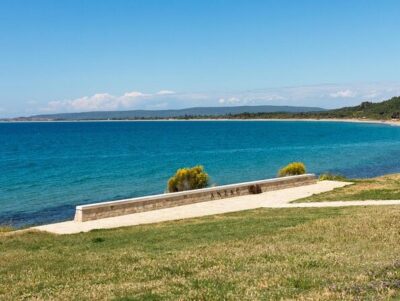
You’ll visit places including Brighton Beach and ANZAC Cove, plus Johnston’s Jolly. Those names can sound like history class terms, but the way the tour is organized helps you connect them to movement, strategy, and the terrain that shaped what happened.
Then you’ll continue to the Nek and Walker’s Ridge. These stops are where the geography starts to feel like part of the story. The guide’s explanations make it clearer why soldiers ended up where they did, instead of treating each point like a separate monument.
Ari Burnu and the cemeteries that make the ground feel sacred
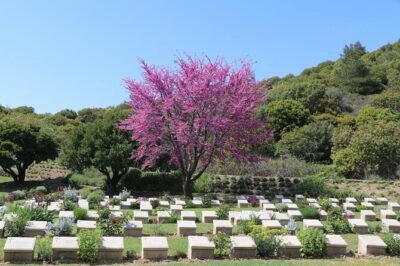
From the battle stops, the day turns toward remembrance. You’ll honor those who died at places including Ari Burnu, Beach Cemetery, and Lone Pine Cemetery.
This is the emotional center of the tour. The cemeteries hold the weight of young lives on both sides of the conflict, and the feeling you get is not about winning or losing. It’s about loss, and the long effort of keeping names and stories from disappearing.
If you prefer tours that stay factual and keep moving, this section still works. The pacing is built for reflection, and you’ll understand why silence makes sense here.
Memorials for both perspectives: the Turkish Memorial and Chunuk-Bair
The tour also includes the Turkish Memorial and Chunuk-Bair. That matters because Gallipoli isn’t only remembered in one national narrative.
Seeing these memorials helps you understand the campaign as more than a single storyline. It also balances the emotional experience, giving you a fuller picture of what these hills meant to multiple communities.
This is the part of the day that stays with you after you’re back in Çanakkale. Not because you collect more facts, but because you connect those facts to place, and place to people.
Food, comfort, and smart packing for a long day
You’ll be on the move for about 10 hours, with a full day built around two major sites. That means comfort is not optional.
Wear shoes you can walk in for uneven ground and stone paths. Bring sun protection, even when it feels cooler in the morning, because you’ll be exposed during the Troy and Gallipoli walks.
For drinks, remember that lunch includes food but not beverages. If you tend to get thirsty, carry a small water bottle and refill when you can.
A quick list that helps:
- Comfortable walking shoes with good grip
- Hat or cap and sunscreen
- Light layer for early morning in Çanakkale
- Water, since drinks are not included
Price and value: what $250 really buys you
At $250 per person for a 10-hour day, this isn’t a cheap outing. But you do get real value.
You’re paying for a guide, air-conditioned shared transportation from Çanakkale, a ferry ride, and entrance fees. Lunch is included too, which is a big deal on a day like this when food options between stops can cost time.
Then there’s the small group size (up to 15). That combination, guide time plus transport plus admissions, is usually where day trips either feel worth it or not worth it. In this case, the structure makes it feel closer to a guided day with less logistical stress.
One more factor: this tour needs good weather. If conditions are bad, plans may adjust or dates may change. That’s not unusual for outdoor sites, but it’s worth keeping in mind when you pick your dates.
Who should book this tour, and who might want a different plan
This is a great match if you love history but hate vague sightseeing. You’ll get clear stories about Troy’s excavations and the WWI campaign, plus specific stops that go beyond the headline names.
It also works well if you want both halves of the peninsula’s story. Many trips focus only on Troy or only on Gallipoli. Here, you get a full arc, myth layered on archaeology, then archaeology layered on remembrance.
If you have limited mobility, you should still check in, since “most travelers can participate” is the only guidance offered. The day includes walking at ruins and memorial grounds, so plan for that reality.
Should you book the Troy and Gallipoli Day Trip from Canakkale?
I’d book it if you want one guided day that connects two famous destinations without leaving you to figure out how they fit together. The best part is the balance: Troy’s ancient layers and the Trojan Horse replica on one side, and then Gallipoli’s battle sites and memorials, including ANZAC Cove and Lone Pine, on the other.
And based on the very high rating and the consistent praise for the guides, you’re likely to get a day that feels both informative and respectful. If you can handle a long day and a fairly early start, this is one of the more satisfying ways to experience this region.
FAQ
How long is the Troy and Gallipoli day trip?
It runs for about 10 hours.
What time does the tour start, and where do I meet?
The start time is 8:30 am. The meeting point is Anzac House Youth Hostel in Çanakkale.
How much does the tour cost?
The price is $250.00 per person.
What language is the tour offered in, and how many people are in a group?
The tour is offered in English, and the maximum group size is 15 travelers.
What is included in the price?
Round-trip shared transfer, transport by air-conditioned minivan, entrance fees, lunch, a local guide, and a ferry ride are included.
Are drinks included with lunch?
No. Lunch is included, but drinks are not.
Which Troy and Gallipoli sites are visited?
In Troy, you’ll visit the ruins and highlights including the Odeon and the replica wooden Trojan Horse. In Gallipoli, you’ll see sites including Brighton Beach, ANZAC Cove, Johnston’s Jolly, the Nek, Walker’s Ridge, Ari Burnu, Beach Cemetery, Lone Pine Cemetery, the Turkish Memorial, and Chunuk-Bair.
Can children join, and are service animals allowed?
Children must be accompanied by an adult. Service animals are allowed.
What happens if the tour is canceled due to weather or low demand?
The experience requires good weather. If it’s canceled due to poor weather, you’ll be offered a different date or a full refund. If it’s canceled because the minimum number of travelers isn’t met, you’ll be offered a different experience or a full refund.
Is the tour refundable if I cancel?
This experience is non-refundable and cannot be changed for any reason.
Gallipoli and Troy, Other Visits


Recently reviewed in Canakkale


The rest of Gallipoli and Troy.
 ★ 5.0Istanbul to Gallipoli Full Day Tour with Lunch and TransfersFrom $157567 reviews
 ★ 4.9Gallipoli Full-Day Tour from IstanbulFrom $154468 reviews
 ★ 4.9From Istanbul: Gallipoli and Anzac Full-Day TourFrom $159345 reviews
 ★ 4.7Troy: Full-Day Tour from IstanbulFrom $169312 reviews
 ★ 5.0Canakkale: 6-Hour Gallipoli Tour with LunchFrom $81168 reviews
 ★ 4.5Gallipoli Day Trip from IstanbulFrom $240147 reviews
 ★ 5.0Istanbul to Gallipoli, Canakkale and Troy. 2 Day Tour with HotelFrom $387144 reviews
 ★ 4.5Istanbul to Truva Troy Guided Day Tour with Lunch and TransfersFrom $172134 reviews
Also filed under