

REVIEW · GALLIPOLI AND TROY
Canakkale: 6-Hour Gallipoli Tour with Lunch
Gallipoli hits different with a guide. In this 6-hour day trip from Çanakkale, you connect the dots between ANZAC landings and the Ottoman defense, stop at major memorials, and hear the story told with both respect and perspective. I really like that the day covers the key sites in a smart route, and I also like that the guides bring the campaign to life with clear logistics and on-the-ground context, with names like Hassan, Burak, Charlie, Ibo, and Bulent mentioned for their storytelling. One consideration: the tour is intense and time is tight, so if you want a slow, quiet wander at every cemetery, you may prefer to add extra days and visit independently.
You start at the ferry harbor area around 10:45 AM, cross the Dardanelles, enjoy lunch in Eceabat, then spend the late morning through early afternoon on the peninsula. I like the balance here, because you are not only looking at beaches and ridges, you are also learning why these places mattered so much for both sides. The one possible drawback is lunch timing and pacing, since lunch happens in the middle of the day and some people feel it steals time they’d rather spend at the sites.
In This Review
- Key highlights at a glance
- Entering the Gallipoli story from Çanakkale
- Getting there: ferry crossing, Eceabat lunch, and timing that matters
- Brighton Beach: the landing plan meets the ground truth
- ANZAC Cove: walking the first landing ground
- Ariburnu Cemetery and the northern edge of ANZAC Cove
- Second Ridge and the trench lines you can still imagine
- Lone Pine Australian Memorial: remembering almost 5,000 with no known grave
- Johnston’s Jolly Cemetery: trenches and tunnel entrances
- The 57th Regiment Turkish Memorial: adding the defense story
- Chunuk Bair: the New Zealand National Memorial at a high point
- Price and value: is $81 a fair deal for 6 hours?
- Who this tour fits best (and who should look elsewhere)
- Practical tips for your day on the peninsula
- Should you book this Canakkale to Gallipoli day trip?
- FAQ
- What time does the tour start in Çanakkale?
- How long is the ferry part of the trip?
- Is lunch included, and where do you eat?
- What sights does the tour include?
- What is the guided portion like?
- Will I be picked up from my hotel?
- Is drinks at lunch included?
- Should you book this Canakkale to Gallipoli day trip?
Key highlights at a glance
- ANZAC Cove and Brighton Beach: see where the landing plans met the reality of April 25, 1915
- Second Ridge trench lines: follow the route where fighting stalled for months
- Lone Pine Australian Memorial: almost 5,000 Australians with no known grave are remembered here
- Johnston’s Jolly Cemetery: walk through abandoned trenches and tunnel entrances
- Chunuk Bair: the high point tied to the New Zealand National Memorial and some of the fiercest fighting
Other visits to the Gallipoli battlefields and Troy. The peninsula is a war cemetery and memorial ground for the men who died there in 1915
- Canakkale: 6-Hour Gallipoli Tour with Lunch★ 5.0 · 168 reviews
- Gallipoli Tour from Çanakkale – Lunch Included★ 5.0 · 114 reviews
- Full Day Troy & Gallipoli Tour ( From Canakkale )★ 5.0 · 45 reviews
- Troy and Gallipoli Day Trip from Canakkale★ 5.0 · 33 reviews
Entering the Gallipoli story from Çanakkale
This is a day trip built for people who want meaning, not just movement. Gallipoli is spread out and dramatic, but the sites can feel disconnected if you only visit one or two spots. What I like about this tour approach is that it gives you a mental map before you walk into the most sacred ground.
The schedule is also realistic for most visitors. You are not trying to do every viewpoint and every trail. Instead, you hit a sequence of places tied to the campaign, so the ride from coast to ridge and back to the water feels like a journey with a point.
A big part of the value is the way guides handle the tone. Several guide names come up in past participants’ comments, including Hassan, Burak, Charlie, Ibo (Ibrahim), and Bulent, and the consistent theme is a mix of detailed explanation and careful respect. Many people also mention a gentle sense of humor in the right moments. That matters, because Gallipoli is heavy. A guide who can keep you informed without turning the day into a lecture makes a real difference.
Getting there: ferry crossing, Eceabat lunch, and timing that matters

Your day starts in front of the Tourist Information Center at the ferry harbor in Çanakkale, around 10:45 AM. If you chose the pickup option, it runs from city center hotels around that same time window. From there, you head to the ferry terminal and cross the Dardanelles Strait.
That short ferry ride is more than transport. You are crossing the same kind of strategic water corridor that made this entire campaign possible. It’s a quick moment to shift gears from travel mode to history mode.
Once you arrive in Eceabat, lunch is part of the plan. Expect about 1 hour at a local restaurant. The menu described in real experiences tends to be straightforward and filling, such as lentil soup plus meat and rice dishes, with watermelon often mentioned. Drinks are not included, but you can typically order options like bottled water or other beverages once you’re there.
Here’s the practical consideration. Lunch is early in the overall arc of the day, and Gallipoli can be hot, especially if you’re traveling in warmer months. If you already ate a big breakfast, you might feel lunch timing could be shorter. If that would bother you, adjust your expectations and plan to enjoy lunch as a reset before the stronger sun and walking time.
Brighton Beach: the landing plan meets the ground truth
After lunch, you board a coach for the drive out onto the peninsula. The ride is short at first, around 15 minutes, then the tour begins its main run of sites.
One of the first major stops is Brighton Beach, the intended landing area for the April 25 landings. Even if you’ve seen photos, this place can surprise you. The coast looks calm from a distance, but the tour context makes it clear why these beaches became such fierce ground.
What you want from a guided visit here is orientation. A good guide helps you understand where the landing intentions ran into terrain, visibility limits, and defenses. That is the key. Without that, you may just look at sand and sea. With it, you start to understand how small differences in position and timing affected everything.
ANZAC Cove: walking the first landing ground

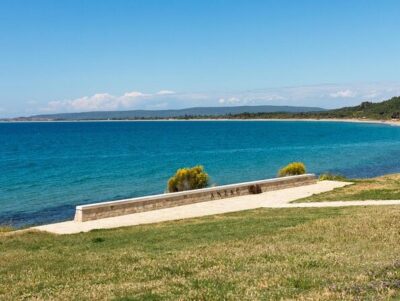
From Brighton Beach, the tour moves to ANZAC Cove, the site of the first landing on April 25. This is one of the emotional anchors of Gallipoli. The cove area is also where you feel the sheer closeness of the shoreline to the ridge terrain above it.
This is where the guided format shines. The tour doesn’t just point. It explains how the first landings shaped the opening day and why the fighting quickly turned into something far different than what planners expected.
If you care about hearing the guide clearly, position matters. Some participants note it can be hard to hear from the back seats on the coach when air conditioning is running. If you can, choose a spot closer to the front or side of your vehicle during travel segments. You’ll catch more of the story and make better sense of each stop.
- Gallipoli Tour from Eceabat, Canakkale
★ 5.0 · 26 reviews - Canakkale: Full-Day Ancient Troy and Museum of Troy Tour
★ 4.9 · 17 reviews
Ariburnu Cemetery and the northern edge of ANZAC Cove
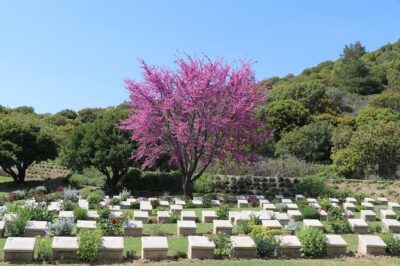
Next up is the Ariburnu Cemetery near the northern tip of ANZAC Cove. Cemeteries here are not just memorials. They are part of the geography, placed where lives were lost and where the lines of movement and resistance became real.
The value of stopping at Ariburnu is that it adds a quieter layer to the narrative. After beaches and coves, you slow down. You also start to see how the campaign’s drama played out along the edges, not only in the headline locations.
This is also a good moment to take a breath and look up. From these points, you can better picture why “up there” mattered so much, and why ridge fighting continued for months.
Second Ridge and the trench lines you can still imagine
The heart of the Gallipoli battlefield experience is the move from coastline into the hills. The tour traces the line of fighting along what became known as Second Ridge, where the Allied advance was halted on the first day and where the front line held for around seven months.
What I like most about this section is the way it ties terrain to outcome. When you stand near ridge lines, you can understand why defending forces had an advantage and why attacking units faced brutal constraints.
You’ll also see the trench lines still visible on either side. That physical evidence helps you build a mental model of how an advancing force meets resistance that is already established, already dug in, and already organized around the land.
At this stage, the pacing matters. The guided portion is about 4.5 hours total, and the tour uses a series of stops and brief walks to keep you moving. If you love history and photos, it can still feel a little compressed. Still, it’s a good pace for a one-day format.
Lone Pine Australian Memorial: remembering almost 5,000 with no known grave
One of the most meaningful stops is The Lone Pine Australian Memorial. It commemorates almost 5,000 Australians who have no known grave. That number is hard to absorb at first glance, which is exactly why the guided explanation matters.
This memorial isn’t only about loss. It’s also about memory and identity. A guide who explains how names are arranged and what the memorial represents makes it easier to connect emotionally and not just view a wall.
If you’re visiting from Australia or New Zealand, this stop often becomes the highlight because it’s so central to how the ANZAC story is remembered. Even if you don’t have a personal connection, the memorial helps you understand why Gallipoli holds cultural weight far beyond the battle itself.
Johnston’s Jolly Cemetery: trenches and tunnel entrances

Another stop that stands out is Johnston’s Jolly Cemetery, where you can walk through now abandoned trenches and tunnel entrances. This is one of those places where the ground shows you the engineering side of war, not only the courage side.
When you walk in this area, the story becomes more tangible. Trenches turn into routes. Tunnel entrances turn into survival and movement strategies. Suddenly, the campaign isn’t a sequence of dates. It’s physical decisions made in real time.
If you’re sensitive to the emotional weight of the day, this spot may feel intense. It can also be oddly clarifying, because the structures help you understand how fighting actually functioned.
The 57th Regiment Turkish Memorial: adding the defense story

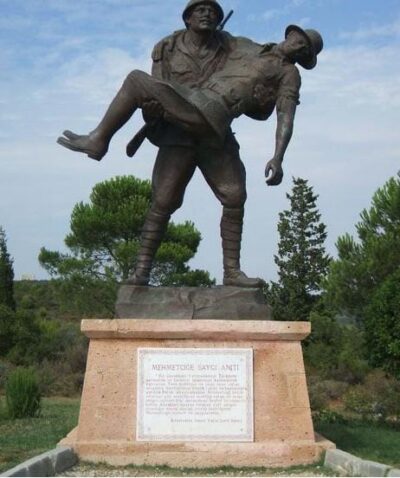
The tour also includes The 57th Regiment Turkish Memorial. This is important if you want a Gallipoli day that doesn’t feel one-sided.
The Ottoman defense story is not a footnote here. It is the other half of what you’re studying, because the campaign outcome depended on how Turkish forces held positions, managed movement, and responded to repeated assaults.
A good guide frames this in a respectful way that connects the two perspectives without turning it into an argument about who deserved what. In practice, that means you learn what defenders faced, why they were able to hold, and how leadership shaped the battles along the ridges.
Chunuk Bair: the New Zealand National Memorial at a high point
The final major stop is Chunuk Bair, one of the highest points on the peninsula. It’s also the site of the New Zealand National Memorial, tied to some of the fiercest fighting of the campaign.
Here’s what you learn that makes the place click: Chunuk Bair was captured in August by New Zealand troops and held for about two days. Then Ottoman forces under the personal command of Mustafa Kemal (later president of modern Turkey) recaptured it. The recapture effectively ended Allied hopes of victory at Gallipoli, so closing the tour here gives the day a clear storyline ending.
The memorial also lists names of more than 850 New Zealand soldiers who fell in the area. Seeing that in context helps you understand why high points like this mattered. Control of a ridge changes observation, artillery advantage, and how troops can move without being spotted.
When the tour ends, you return to Eceabat, then take the ferry back across the Dardanelles to Çanakkale and get dropped at one of the nearby locations close to hotels.
Price and value: is $81 a fair deal for 6 hours?
At $81 per person for a 6-hour trip, this tour is priced in the “value if you want the essentials with guidance” zone.
You are paying for several things bundled together:
- a professional English-speaking guide
- ferry crossings and local transport on an air-conditioned non-smoking vehicle
- lunch in Eceabat
- access to the key memorials and battlefield stops without you having to plan the route
If you tried to do this on your own, you’d spend time figuring out ferries, driving on the peninsula, and finding the most meaningful sequence of sites. Even if you did manage it, you’d lose the single-day advantage of having someone explain what you’re seeing and why it matters.
Where the cost can feel less worthwhile is if you already know a lot and you want more time at each spot. This is not a slow pilgrimage. It’s a focused tour built to cover the big names and the core terrain in one day.
So here’s the fair way to judge it. If you want a first or second-day Gallipoli experience that gives you context and a map for what to revisit later, it’s a strong use of money. If you’re the type who wants to linger quietly at every cemetery, consider adding independent time afterward and treat the tour as the guided foundation.
Who this tour fits best (and who should look elsewhere)
This works especially well if you are:
- visiting from Australia, New Zealand, the UK, the US, or anywhere where Gallipoli is a must-do on cultural memory
- short on time and want a clear, guided introduction
- the kind of traveler who benefits from someone connecting the dots between beaches, ridges, and memorials
It can be a weaker fit if:
- you plan to do serious independent hiking and want long walking windows at each site
- you hate group schedules, fixed stop times, and quick transitions
- you know you’ll be frustrated by lunch timing or a tight pace
A smart move is to do this tour first, then go back to your favorite memorial or the places that grabbed you most. Once you have the guide’s framework, your second visit often feels more personal and more detailed.
Practical tips for your day on the peninsula
Gallipoli can be hot and exposed. I recommend you treat it like an outdoor summer day, even though much of the experience is memorial-focused.
Pack the basics:
- Sunscreen and a hat. Shade can be limited on ridge and cove viewpoints.
- Comfortable shoes. Some stops involve short walks and uneven ground near memorial areas.
- Bring your own water if you can. Drinks at lunch are not included, and you might not want to rely on buying bottles during a tight schedule.
Also, plan your ears. If you end up in the back of the coach, the air conditioning can make it harder to hear. If your group arrangement allows it, aim closer to the front for clearer commentary.
Finally, give yourself permission to feel. This day is designed to be moving, and the best guides keep the tone respectful while still giving you concrete details. If humor shows up, it usually works as relief, not as disrespect.
Should you book this Canakkale to Gallipoli day trip?
I’d book it if you want a guided, first-hit Gallipoli experience that covers Brighton Beach, ANZAC Cove, Second Ridge, Lone Pine, Johnston’s Jolly, the 57th Regiment Turkish Memorial, and ends at Chunuk Bair with the New Zealand National Memorial. The price is fair for what you get: transport, ferry crossings, lunch, and a professional English-speaking guide who can connect the locations into one understandable story.
I’d think twice if you already know every detail and you crave long silent time at each site. In that case, you might do better with a more flexible self-guided plan plus short guided help where you need it.
If you’re on a time crunch, this tour is a practical way to make your Gallipoli day feel coherent, respectful, and genuinely worthwhile.
FAQ
What time does the tour start in Çanakkale?
You’ll meet in front of the Tourist Information Center near the ferry harbor around 10:45 AM.
How long is the ferry part of the trip?
The ferry crossings are short, about 25 minutes each way.
Is lunch included, and where do you eat?
Lunch is included and served at a local restaurant in Eceabat.
What sights does the tour include?
Key stops include Brighton Beach, ANZAC Cove, Ariburnu Cemetery, Lone Pine Australian Memorial, Johnston’s Jolly, The 57th Regiment Turkish Memorial, and Chunuk Bair with the New Zealand National Memorial.
What is the guided portion like?
You get a guided tour of the battlefield areas on the peninsula for about 4.5 hours, with multiple stops at cemeteries and memorials.
Will I be picked up from my hotel?
Pickup is optional. Pickup from city center hotels is between about 10:45 AM, or a meeting point is set closer to the ferry harbor if your hotel is far from the center.
Is drinks at lunch included?
Lunch is included, but drinks are not included during the meal.
Should you book this Canakkale to Gallipoli day trip?
Yes, if you want a structured, guided Gallipoli overview in one day with the main memorials and terrain covered, and you’d rather spend your time learning than routing around the peninsula. It’s especially worth it for your first visit.
Gallipoli and Troy, Other Visits


Recently reviewed in Canakkale


The rest of Gallipoli and Troy.
 ★ 5.0Istanbul to Gallipoli Full Day Tour with Lunch and TransfersFrom $157567 reviews
 ★ 4.9Gallipoli Full-Day Tour from IstanbulFrom $154468 reviews
 ★ 4.9From Istanbul: Gallipoli and Anzac Full-Day TourFrom $159345 reviews
 ★ 4.7Troy: Full-Day Tour from IstanbulFrom $169312 reviews
 ★ 4.5Gallipoli Day Trip from IstanbulFrom $240147 reviews
 ★ 5.0Istanbul to Gallipoli, Canakkale and Troy. 2 Day Tour with HotelFrom $387144 reviews
 ★ 4.5Istanbul to Truva Troy Guided Day Tour with Lunch and TransfersFrom $172134 reviews
 ★ 5.0Troy Full-Day Guided Tour incl. Transfer, Ferry Tickets w/LunchFrom $151126 reviews
Also filed under