

REVIEW · GALLIPOLI AND TROY
Gallipoli Tour from Çanakkale – Lunch Included
Anzac Cove turns facts into feelings. This Gallipoli tour from Çanakkale strings the landings, trench lines, and memorials into one clear half day, with a Dardanelles ferry and English guiding.
I especially like the way you get time at key viewpoints, not just quick photo stops. You’ll stand above ANZAC Cove and hear the landing story, including John Simpson Kirkpatrick, the Man with the Donkey. I also love that the day balances the Allied and Ottoman sides as the route climbs the peninsula toward memorials like Lone Pine.
One drawback to plan for: the schedule has some vehicle changes after lunch, so solo travelers who want to stay glued to one small group the entire day may find that tricky.
In This Review
- Key Highlights You’ll Want to Know
- Çanakkale to Eceabat: A Ferry Start That Makes the Day Feel Real
- Gallipoli, Explained Like a Story With a Route
- ANZAC Cove: The Landing Ground and the Man With the Donkey
- Second Ridge Trenches: Where the Front Line Stayed Put
- Lone Pine Memorial: When the Names Outnumber the Graves
- Chunuk Bair: The New Zealand Memorial at the Turning Point
- Eceabat Lunch: Traditional Set-Menu Energy, Not a Gastronomy Quest
- Price and Value: What $83.45 Really Buys
- Watch-Outs: Where This Tour Might Not Fit Every Style
- Who Should Book This Gallipoli Tour From Çanakkale?
- Should You Book This Gallipoli Tour From Çanakkale?
- FAQ
- Is lunch included on this Gallipoli tour?
- How long is the tour?
- Where do I meet the tour in Çanakkale?
- What language is the tour offered in?
- Do I get admission tickets included?
- Does the tour involve a ferry crossing?
- Are drinks and tips included in the price?
- What happens if the weather is bad?
- Can I cancel for a full refund?
Key Highlights You’ll Want to Know

- Ferry start across the Dardanelles to break up the journey and help you orient fast
- ANZAC Cove overlook plus Kirkpatrick’s grave tied to the April 25, 1915 landings
- Second Ridge trenches and cemeteries where the front line shape stays visible
- Lone Pine Memorial honoring Australians with no known grave
- Chunuk Bair finale at the NZ memorial marking the turning of the battle
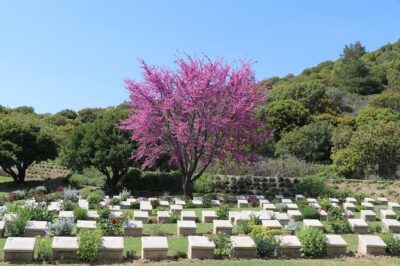
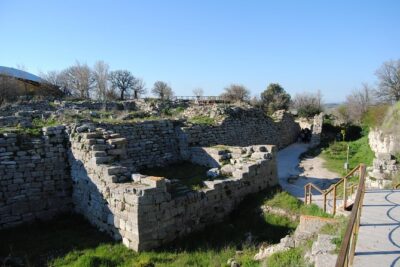
Other visits to the Gallipoli battlefields and Troy. The peninsula is a war cemetery and memorial ground for the men who died there in 1915
- Canakkale: 6-Hour Gallipoli Tour with Lunch★ 5.0 · 168 reviews
- Gallipoli Tour from Çanakkale – Lunch Included★ 5.0 · 114 reviews
- Full Day Troy & Gallipoli Tour ( From Canakkale )★ 5.0 · 45 reviews
- Troy and Gallipoli Day Trip from Canakkale★ 5.0 · 33 reviews
Çanakkale to Eceabat: A Ferry Start That Makes the Day Feel Real
The day begins with pickup arranged to match your hotel location in Çanakkale, with the meeting point centered around the Tourist Information Centers near İskele Meydanı. The timing can vary depending on where you’re staying, and the tour description points to a start around 10:30am, with the ferry crossing getting going later from hotel departure timing that’s described as around 11:30am. Either way, you’re not stuck figuring out connections. An escort meets you and gets you to the ferry terminal.
Once you’re on the ferry, you get that satisfying change from city life to water, and then water to coast. The short trip across the Dardanelles Strait helps you understand why this area was strategically important, even before the bus starts climbing. It’s a small detail, but it matters. On battlefield days, anything that keeps the fatigue down helps you pay attention at the stops that actually count.
The tour runs in English, and you’ll use a mobile ticket. You’re also traveling in an air-conditioned vehicle after lunch and on the peninsula drive, which I appreciate on a long day that includes both viewpoints and walks.
Gallipoli, Explained Like a Story With a Route

This tour does a rare thing for a battlefield day. It doesn’t treat Gallipoli like a list of plaques. Instead, the route follows the campaign along the ground: landing area first, then the line along Second Ridge, then the high point at Chunuk Bair.
At each stop, you’re given background before the details get specific, so the day feels connected instead of scrambled. You hear what led up to the April 25, 1915 landings, what happened during that historic day, and what followed for months. Then, as the tour climbs into the hills above the shore, the guide ties the terrain to the fight.
I like this approach because you can actually visualize what you’re seeing. When the itinerary talks about the front line lasting for months, you’re not just being told. You’re shown a peninsula where small changes in elevation mattered.
Also, the route is built to respect multiple perspectives. The day focuses heavily on the ANZAC story, but it also traces what Ottoman defenders did to halt the Allied advance at the start and hold ground for a long time. That balance is a big part of why the tour works for Australians, New Zealanders, and Turks, even if you came in with no family connection at all.
ANZAC Cove: The Landing Ground and the Man With the Donkey
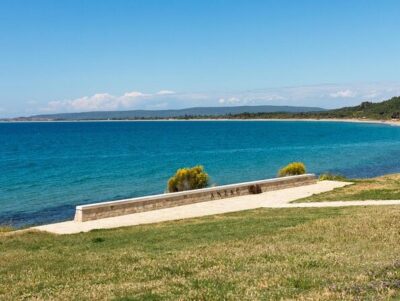
ANZAC Cove is the moment the day locks into focus. After lunch in Eceabat, the tour heads out across the Gallipoli Peninsula toward the coast, with a short drive that positions you near the landing area. The highlight here is being able to stand above ANZAC Cove, so you’re looking down toward the shore rather than staring at it from behind a fence.
From that viewpoint, the guide walks you through what the April 25, 1915 landings meant in real time. The point is not just to remember the date. It’s to understand the conditions and why the early landing became a fight that shaped months of fighting.
Then the itinerary includes a deeply human stop: the grave of John Simpson Kirkpatrick. He’s described as the Man with the Donkey, famous for carrying wounded soldiers using a stolen donkey to reach medical aid. This detail is one of the reasons I’d call the tour more than a sightseeing run. It brings the war down from strategy into daily courage and pain.
If you care about respectful, accurate storytelling, this is one of the best sections of the day. It’s also one of the few stops where you can feel how memory has formed local identity around the site.
Second Ridge Trenches: Where the Front Line Stayed Put
After ANZAC Cove, the tour moves up into the hills above and traces the battle line along Second Ridge. The description makes it clear that this is tied to the first day: the Allied advance was halted by Ottoman defenders, and then the front line stayed there for the next seven months.
That’s not trivia. When the itinerary mentions trench lines still being clear on either side of the road, it helps you understand why the fighting dragged on. Terrain that looks like “just a ridge” in a wide photo becomes something else when you’re actually standing near the contours and seeing where defenders dug in.
You also get multiple stops at cemeteries and memorials during this middle stretch. The pacing matters here. It’s enough time to absorb what you’re seeing, without feeling like the guide is racing you from one spot to the next. The day stays focused on sites that relate directly to the campaign route.
The tour also includes time at Johnston’s Jolly Cemetery, with a walk through abandoned trenches and tunnel entrances. This is the type of stop where you want to slow down and look around, because the atmosphere shifts. It’s not a dramatic viewpoint like a lookout. It’s evidence of how warfare works when it gets stuck.
- Gallipoli Tour from Eceabat, Canakkale
★ 5.0 · 26 reviews - Canakkale: Full-Day Ancient Troy and Museum of Troy Tour
★ 4.9 · 17 reviews
Lone Pine Memorial: When the Names Outnumber the Graves

Lone Pine is one of the memorials that hits hard, and it does it with a specific kind of sadness. The tour stops at the Australian memorial at Lone Pine, where nearly 5,000 Australians with no known grave are commemorated.
That number matters because it puts scale on the missing. It’s one thing to hear that soldiers were lost. It’s another to stand at a memorial built for people the world cannot locate. If you’re traveling with family members who study or honor their heritage, this stop can feel personal even when you do not share a direct connection.
It also helps that Lone Pine sits along the ridge-focused route. You’re not jumping randomly around the peninsula. You’re moving through the same geography where the fighting line formed, so the memorial feels like part of the story, not a detour.
From a value standpoint, this stop is also a win. It’s an included admission site during your route, and you get guided context that gives the memorial a purpose beyond reading words on stone.
Chunuk Bair: The New Zealand Memorial at the Turning Point
The final stop brings the day to a high point, literally. Chunuk Bair is described as one of the highest points on the peninsula and the site of the New Zealand national memorial.
The guide frames Chunuk Bair as a key turning point. The hill was captured in August by New Zealand troops and held for two days before being recaptured from the Allies by Ottoman forces under the personal command of Mustafa Kemal, later the president of modern Turkey. That sentence is doing a lot of work, and you feel it when you’re standing near the memorial. It turns the campaign from “a series of dates” into a struggle for control of ground.
You’re also told that more than 850 New Zealand soldiers who fell in the area are commemorated on the memorial. Like Lone Pine, this is not about sightseeing. It’s about recognition and remembrance in the middle of terrain that still looks like it could remember.
At the end, the return plan is straightforward. The bus heads back to Eceabat, and then your options split based on where you want to go next. If you’re heading toward Istanbul, there’s a specially configured bus route described as giving more space and leg room for the long trip. If you’re returning to Çanakkale, you’re escorted to the nearby ferry for the crossing back.
Eceabat Lunch: Traditional Set-Menu Energy, Not a Gastronomy Quest

Lunch happens in Eceabat, the town described as once the ancient city of Madytos. The important practical detail is that lunch is included as a set menu at a local restaurant.
There’s a vegetarian option, and that matters for battlefield days because you do not want to gamble on finding food you can eat near the sites. The listing also makes it clear that drinks are not included, so if you like to have bottled water, tea, or other drinks with your meal, budget for that extra cost.
I also like that the lunch is placed between the ferry crossing and the heavier driving and walking blocks. You’re not eating just before the most memorial-dense part of the day, which helps you stay comfortable for the rest.
Price and Value: What $83.45 Really Buys

At $83.45 per person, the key question is not whether it’s cheap, it’s whether it’s efficient. For a Gallipoli day, value comes from three things: guided interpretation, included transport, and not wasting time figuring logistics.
Here, you get round-trip structure built around the ferry crossing, plus air-conditioned vehicle travel on the peninsula. You also get lunch included with the set-menu meal. On top of that, the tour includes all fees and taxes, and it notes that an admission ticket is included.
Add those up and the price starts looking reasonable for a guided half-day route that hits multiple high-impact sites like ANZAC Cove, Lone Pine, Johnston’s Jolly Cemetery, and Chunuk Bair. The day is also offered in English, which can matter in this region where language can turn “information” into “confusing.”
What costs extra is simple: drinks at lunch and tips for the guide and driver. If you prefer full transparency, you’ll likely plan on those at the end.
Watch-Outs: Where This Tour Might Not Fit Every Style
This is a respectful, site-focused tour, but it’s still a group day. One possible consideration is that the schedule can involve changes after lunch, and the itinerary includes a bus leg to the battlefields after lunch and then a return leg with ferry. If you’re the type who likes a stable seat and a steady group with one guide the whole day, you may want to ask the operator how vehicles are handled on the day you book.
Another consideration is the fixed timing. The day starts in Çanakkale, moves to Eceabat for lunch, then drives back out to the peninsula for a tight run of memorials and battle terrain. If you’re late to pickup, the day doesn’t slow down for you.
Finally, the tour requires good weather. That’s not a problem if you’re flexible, but it matters if your trip is tight. If conditions are poor and the tour is canceled, you’ll be offered a different date or a full refund.
Who Should Book This Gallipoli Tour From Çanakkale?
Book this if you want a guided Gallipoli day that focuses on the sites tied to the ANZAC campaign and the Ottoman perspective along the same route. This is ideal for Australians and Kiwis making a pilgrimage, and it also works well for Turkish travelers who want the story told with context and respect.
You should also like this format if you value interpretation as you walk through the terrain. The itinerary is built around overlooks and memorial stops, plus the trench and tunnel walk at Johnston’s Jolly Cemetery. That means you’re not just reading about history later, you’re hearing it where it happened.
If, on the other hand, your must-do list includes a wider sweep of the peninsula beyond the route described here, you might need to pair this with another tour. The day is long enough to be meaningful, but it is still a half-day plan with a set sequence.
Should You Book This Gallipoli Tour From Çanakkale?
I’d book it if your goal is to understand the Gallipoli campaign in a structured way, without the stress of planning ferry times and sequencing sites yourself. The included lunch, the ferry crossing, air-conditioned transportation, and the admission coverage make it efficient. More importantly, the route is designed so you can follow the campaign on the ground, not just memorize dates.
Skip it or consider another option if you dislike any chance of vehicle changes mid-day, or if your travel dates depend on perfect weather with no flexibility.
If your heart is leaning toward ANZAC Cove, Lone Pine, and Chunuk Bair, this is a strong, practical way to spend your time in Çanakkale.
FAQ
Is lunch included on this Gallipoli tour?
Yes. Lunch is included as a set menu at a local restaurant in Eceabat. A vegetarian option is available. Drinks at lunch are not included.
How long is the tour?
The tour runs for about 6 hours 30 minutes.
Where do I meet the tour in Çanakkale?
You meet at the Tourist Information Centers at Kemalpaşa, İskele Meydanı No:1, 17100 Çanakkale Merkez/Çanakkale, Türkiye. Pickup from your hotel can be arranged depending on your hotel location.
What language is the tour offered in?
The tour is offered in English.
Do I get admission tickets included?
Yes. An admission ticket is included with the tour.
Does the tour involve a ferry crossing?
Yes. You board a waiting ferry for a crossing across the Dardanelles Strait, and you return by ferry as well for the trip back to Çanakkale.
Are drinks and tips included in the price?
Drinks at lunch are not included, and tips for the guide and driver are also not included.
What happens if the weather is bad?
The tour requires good weather. If it’s canceled due to poor weather, you’ll be offered a different date or a full refund.
Can I cancel for a full refund?
Yes. You can cancel up to 24 hours in advance for a full refund. If you cancel less than 24 hours before the start time, you won’t receive a refund.
Gallipoli and Troy, Other Visits


Recently reviewed in Canakkale


The rest of Gallipoli and Troy.
 ★ 5.0Istanbul to Gallipoli Full Day Tour with Lunch and TransfersFrom $157567 reviews
 ★ 4.9Gallipoli Full-Day Tour from IstanbulFrom $154468 reviews
 ★ 4.9From Istanbul: Gallipoli and Anzac Full-Day TourFrom $159345 reviews
 ★ 4.7Troy: Full-Day Tour from IstanbulFrom $169312 reviews
 ★ 5.0Canakkale: 6-Hour Gallipoli Tour with LunchFrom $81168 reviews
 ★ 4.5Gallipoli Day Trip from IstanbulFrom $240147 reviews
 ★ 5.0Istanbul to Gallipoli, Canakkale and Troy. 2 Day Tour with HotelFrom $387144 reviews
 ★ 4.5Istanbul to Truva Troy Guided Day Tour with Lunch and TransfersFrom $172134 reviews
Also filed under